
An IoT ecosystem that fails to scale is a liability. Data congestion, latency issues, and fragmented user experiences can turn even the most advanced networks into operational roadblocks. With 75 billion connected devices projected by 2025, businesses can no longer rely on architectures that simply accommodate more devices—they need systems that ensure real-time data processing, high performance, and seamless user interactions at scale.
To meet these demands, businesses are turning to modern frameworks that enhance both frontend and backend performance. By combining Flutter’s dynamic UI capabilities with NextJS’s server-side rendering and optimized data handling, companies can build IoT ecosystems that remain fast, responsive, and scalable—even under heavy loads.
This blog breaks down how these technologies solve IoT scalability challenges, offering real-world applications, technical insights, and strategies to future-proof IoT infrastructures.
The True Challenge of IoT: Scaling Without Compromise
As IoT ecosystems grow, the challenge is not simply adding more connected devices—it is ensuring that increasing data volumes, real-time processing demands, and potential system bottlenecks do not compromise performance. Without the right architecture, expanding IoT networks can lead to latency issues, inefficiencies, and operational instability.
To address these challenges, companies are shifting toward scalable frameworks that can handle exponential growth while maintaining reliability. Investing in modular architectures, edge computing, and intelligent data pipelines allows organizations to optimize resource allocation, minimize delays, and enhance system resilience. As IoT adoption accelerates, building for scalability is no longer an enhancement—it is the foundation for long-term efficiency and adaptability.
Flutter in IoT: Unified UI for Seamless Control
Flutter is an open-source UI toolkit. It enables developers to create natively compiled applications for mobile, web, and desktop from a single codebase. Its strength lies in its ability to rapidly develop and deploy visually appealing, responsive user interfaces.
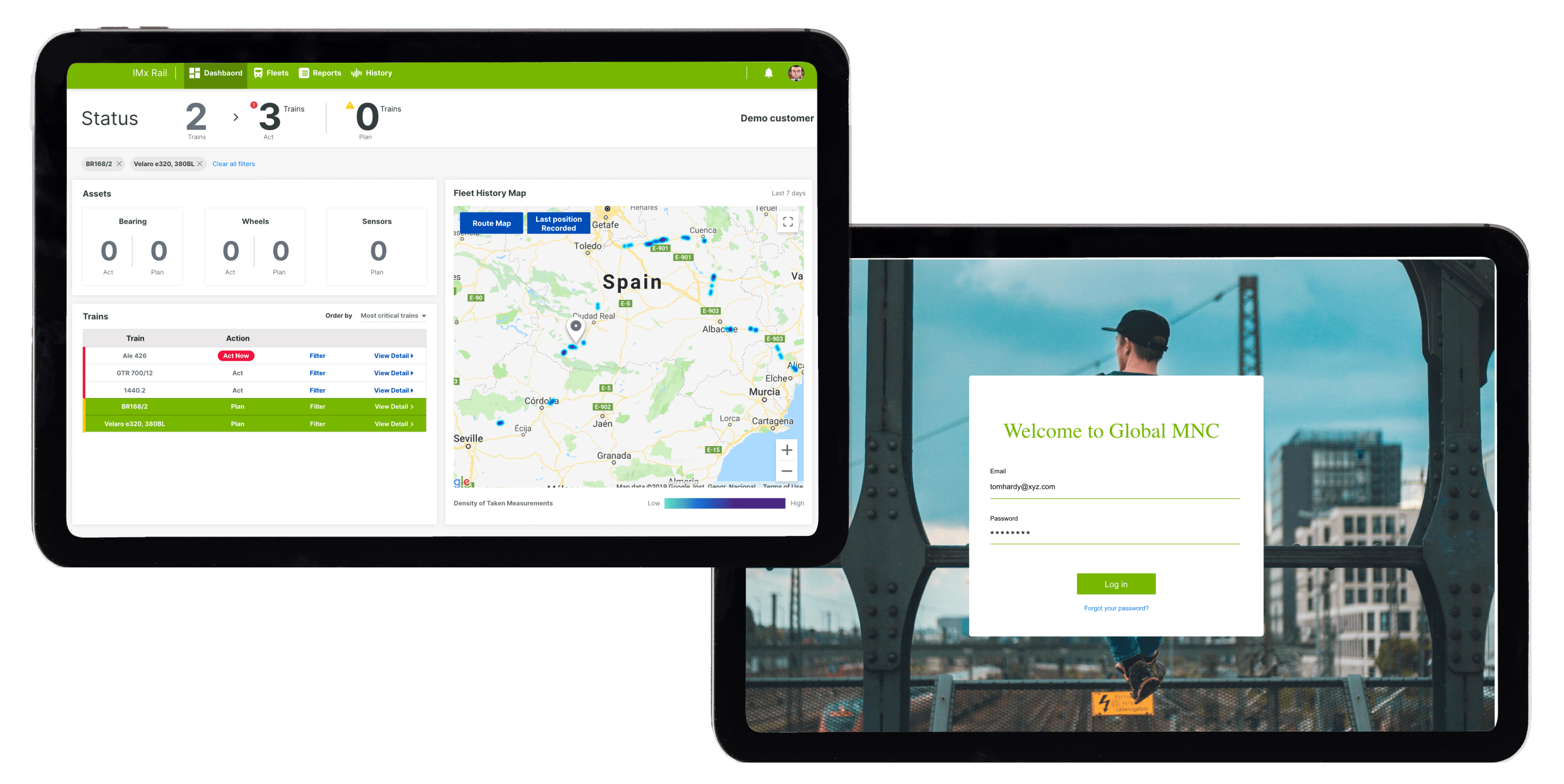
For IoT solutions, this translates into intuitive dashboards and control interfaces that allow users to monitor and manage complex systems with ease. The cross-platform capabilities of Flutter ensure a consistent user experience regardless of the device, thereby enhancing operational efficiency and reducing development costs. For instance, consider a smart factory scenario where real-time monitoring is critical. A Flutter-based dashboard can provide clear, interactive visuals that help operators quickly identify issues and make informed decisions, ultimately driving improved productivity and a quicker return on investment.
NextJS in IoT: Powering Scalable, Real-Time Intelligence
As IoT ecosystems grow, backend performance becomes a defining factor in scalability, responsiveness, and security. Managing high-volume data streams, API requests, and real-time analytics requires an architecture that ensures low latency, uninterrupted data flow, and efficient resource allocation.
NextJS is built for this complexity. With server-side rendering, static site generation, and optimized API management, it strengthens IoT backends by balancing API loads, securing data pipelines, and maintaining system resilience under heavy workloads. Unlike conventional backend frameworks, it delivers a structured, scalable approach to handling IoT’s evolving demands.
For example, in a city-wide environmental monitoring system, NextJS enables the real-time processing of air quality data from thousands of sensors, supporting instant analysis and rapid decision-making. By ensuring seamless backend performance, it allows IoT deployments to scale effectively without compromising speed, security, or reliability.
Integration of Flutter and NextJS: A Symbiotic Relationship
For scalable IoT applications, Flutter and NextJS provide a seamless user experience with backend efficiency. Flutter ensures real-time responsiveness in mobile apps, while NextJS processes vast IoT data streams with low latency, enabling smooth interactions even under heavy workloads.
Successful integration demands real-time data synchronization, secure API connectivity, and optimized processing. Addressing latency issues and data inconsistencies through caching, load balancing, and continuous monitoring ensures a high-performing system.
In smart logistics, Flutter enhances user engagement through real-time tracking in mobile apps, while NextJS handles live data processing and backend optimization. This integration streamlines operations, reduces costs, and delivers a frictionless IoT experience.
Business Implications & Future Trends
Adopting a Flutter and NextJS solution for IoT delivers tangible business benefits by improving efficiency, cost-effectiveness, and user experience.
- Operational Efficiency – Real-time data insights enable faster decision-making, reducing latency, system downtime, and performance bottlenecks. Businesses can optimize resources and improve response times in mission-critical IoT applications.
- Cost Reduction & Faster Time-to-Market – A unified framework for frontend and backend development minimises infrastructure costs, simplifies maintenance, and accelerates deployment cycles. This efficiency reduces development overhead and allows businesses to adapt quickly to market demands.
- Enhanced User Engagement & Retention – A seamless, high-performance user experience builds customer trust and engagement. In IoT-driven industries like smart logistics and connected healthcare, an intuitive mobile app ensures real-time interaction and control, differentiating businesses in a competitive market.
Future Trends Driving IoT Innovation
Beyond immediate benefits, emerging technologies will further amplify the impact of Flutter and NextJS in IoT:
- Edge Computing – Reduces data processing latency by bringing AI and analytics closer to devices, improving system responsiveness.
- AI-Driven Analytics – Enhances predictive maintenance and real-time decision-making for dynamic IoT ecosystems.
- 5G Connectivity – Enables faster, low-latency IoT communication, ensuring seamless data exchange across networks.
The integration of modern frameworks is not just a technological shift—it is a strategic move to future-proof operations, maximize innovation, and drive long-term business success.
Conclusion
Businesses navigating IoT’s growing complexity must move beyond scalability as an afterthought—it must be built into the foundation of their systems. The combination of Flutter and NextJS is more than a technical enhancement—it is a strategic investment in performance, efficiency, and long-term adaptability.
To remain competitive, companies must prioritize real-time user engagement, seamless data processing, and scalable architectures. Flutter ensures intuitive, high-performance interfaces, while NextJS delivers backend efficiency and stability. Together, they create an IoT infrastructure that can scale with demand, reduce costs, and enhance operational agility.
As IoT continues to evolve, businesses that fail to optimize their digital infrastructure risk being left behind. Leveraging Flutter and NextJS is not just about keeping up—it is about leading in a digitally connected future.
Ready to explore scalable IoT solutions? Let’s build the future together with GeekyAnts.