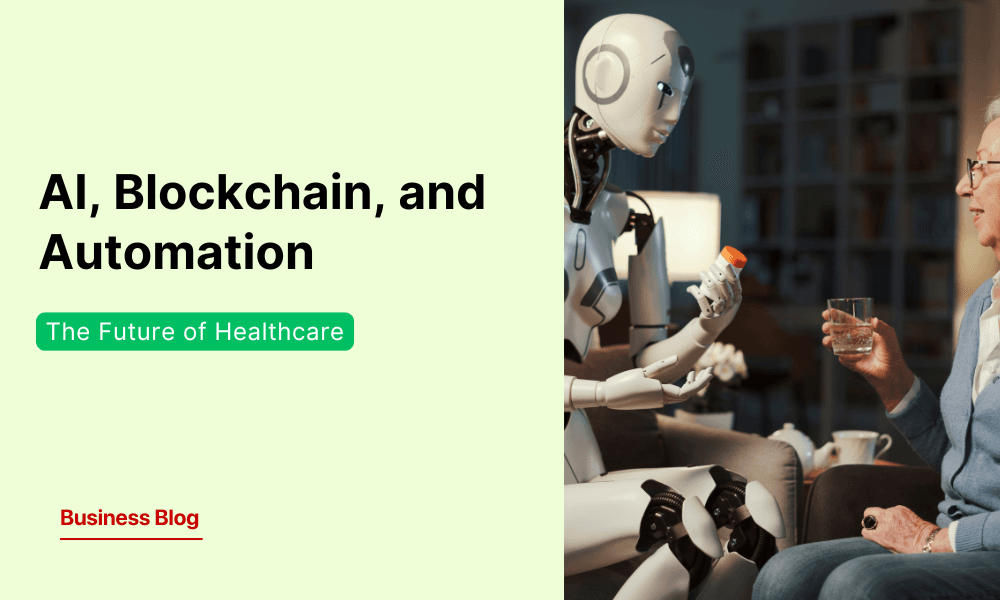

An overwhelmed healthcare system is a ticking time bomb. By 2030, global healthcare spending is expected to exceed $18 trillion, yet inefficiencies, fragmented data, and outdated infrastructure continue to stall progress. The solution is not increased spending—it’s smarter, technology-driven operations. AI, blockchain, and automation have moved beyond experimentation; they are now foundational to modern healthcare delivery.
From personalized diagnostics and tamper-proof medical records to automated hospital workflows, these technologies are being utilized in real-world, high-impact scenarios. This blog explores how each of these innovations is driving tangible, measurable improvements—and what a fully connected, tech-driven future could mean for healthcare systems worldwide.
AI in Healthcare: From Diagnosis to Personalization
AI is driving a shift towards precision and personalization in healthcare. In diagnostics, models trained on vast imaging datasets now detect conditions with accuracy comparable to expert radiologists. Google Health’s breast cancer AI and BlueDot’s early detection of COVID-19 highlight its potential.
Platforms like IBM Watson Health and Tempus analyze clinical and genomic data. They tailor treatments for each patient, driving personalized medicine forward. AI also helps with care delivery. Chatbots assist in triage and follow-ups, reducing clinician workloads and boosting patient engagement.
Yet, challenges remain. Many AI systems operate as black boxes, raising concerns about transparency and accountability. The push towards explainable AI is critical to building trust and ensuring ethical deployment. As adoption scales, AI’s role in improving outcomes and system efficiency continues to grow.
Blockchain: Restoring Trust and Security in Healthcare Data
Healthcare’s data problem is not scarcity—it’s chaos. Patient information is fragmented across hospitals, insurers, labs, and pharmacies, often stored in incompatible formats or outdated systems. Blockchain offers a way to bring structure, security, and trust to this ecosystem.
Blockchain creates secure, tamper-proof records, making patient data verifiable and portable. Estonia is a leader with its e-Health system, which uses blockchain for citizens’ medical records. Patients control access to their data, and all attempts to access it are logged permanently.
Smart contracts simplify insurance claims by automating approvals when specific conditions are met. This cuts down on fraud and reduces administrative work. In the U.S., the MediLedger project uses blockchain to track pharmaceuticals throughout the supply chain. It helps fight counterfeit drugs and ensures transparency from manufacturer to pharmacy.
These systems not only improve efficiency but also enhance regulatory compliance. By providing an auditable trail of consent and access, blockchain solutions can help meet stringent HIPAA and GDPR requirements.
Automation: Streamlining Operations and Workforce Efficiency
While AI and blockchain in healthcare reshape data and diagnostics, automation tackles the operational bottlenecks that often go unnoticed but deeply affect patient care. Hospitals are vast ecosystems of processes—from billing to inventory—that are ripe for optimization.
Robotic Process Automation (RPA) helps with repetitive tasks like insurance verification, patient onboarding, and appointment scheduling. At Cleveland Clinic, these tools have cut patient registration time. This allows staff to focus on more valuable interactions.
In clinical settings, automation improves workflow. For example, automated medication dispensers and inventory trackers keep supplies timely, reducing errors and delays. Virtual nursing assistants like Care Angel use automated check-ins to monitor chronic patients after discharge. This helps to lower hospital readmission rates.
However, automation raises important workforce concerns. While it boosts efficiency, it requires reskilling and redesigning roles. This ensures that healthcare workers can move from repetitive tasks to strategic, patient-facing duties.
The Synergy: Building a Future-Ready Healthcare Ecosystem
The convergence of AI, blockchain, and automation is redefining healthcare. AI-driven analytics generate precise treatment plans using blockchain-secured data, while automation streamlines follow-ups and insurance claims—minimizing delays and inefficiencies.
Real-time vitals from wearables feed AI models, enabling early intervention. Blockchain ensures data integrity, and automation orchestrates seamless care delivery. This integrated approach enhances accuracy, security, and efficiency.
However, large-scale adoption requires standardized interoperability, regulatory alignment, and cross-sector collaboration. Healthcare providers, regulators, and tech leaders must establish frameworks for ethical AI deployment, secure data sharing, and automated workflows—turning innovation into real-world impact.
Conclusion: A Roadmap to the Future
The future of healthcare will not be built on isolated technologies but on an integrated ecosystem that prioritizes precision, trust, and efficiency. AI will guide decisions, blockchain will protect data, and automation will power operations.
But this transformation demands more than technology—it requires vision, collaboration, and a patient-first mindset. The organizations that succeed will be those that invest not just in tools but in a strategy that aligns innovation with impact.
As healthcare systems worldwide brace for rising demand and tighter budgets, embracing this triad of transformation isn’t optional—it’s inevitable.
GeekyAnts specializes in building AI-driven, blockchain-secured, and automation-powered healthcare solutions that drive real impact. Get in touch to future-proof your healthcare ecosystem.