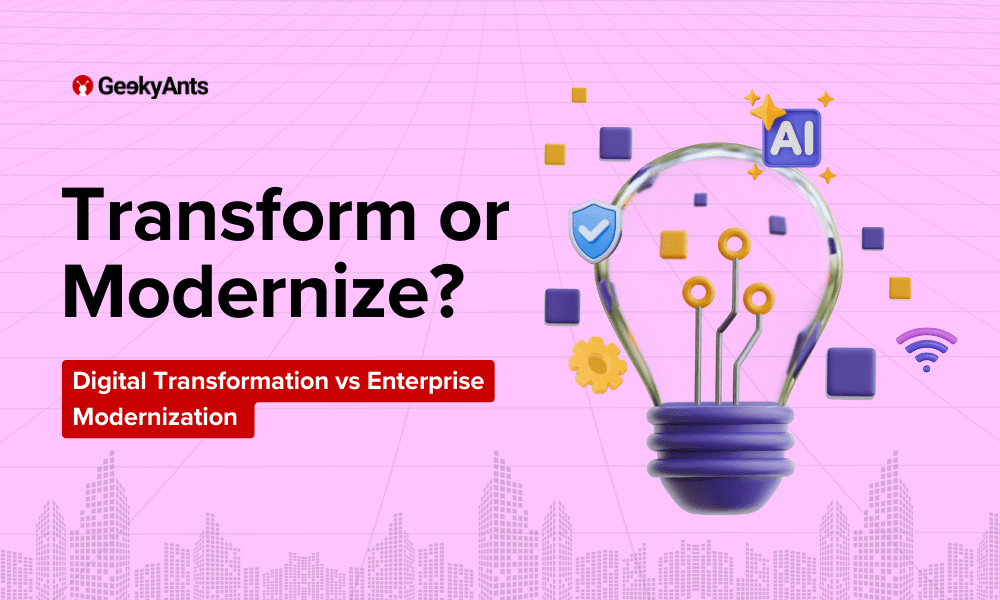

Digital Transformation and Enterprise Modernization are NOT synonymous. Unfortunately, many companies often blur the lines between the two influential theories. However, understanding their distinct roles is crucial for any business striving to stay ahead. Here are the differences –
Digital Transformation – Overhauling Business-As-Usual
Digital transformation involves leveraging advanced digital technologies to fundamentally change how a business operates, interacts with customers, and delivers value.
The Case of Netflix: Digital Transformation in Action
A prime example is Netflix, which shifted from a DVD rental service to a leading streaming platform. By adopting advanced digital technologies, Netflix revolutionized media consumption, enhanced customer experiences through personalized recommendations, and solidified its position in the entertainment industry.
Enterprise Modernization — Upgrading for Tomorrow
Enterprise modernization focuses on updating and optimizing existing business systems, processes, and infrastructure to enhance efficiency, reduce costs, and ensure they can support modern digital initiatives.
The Case of Ford Motor Company: Enterprise Modernization in Action
Ford Motor Company modernized its legacy systems to stay competitive. By migrating to the cloud and integrating advanced analytics, Ford improved scalability, reduced costs, and enhanced decision-making. The modernization streamlined operations, improved collaboration, and positioned Ford to leverage emerging technologies like IoT and AI, driving future growth.
Key Differences Between Digital Transformation and Enterprise Modernization
Aspects | Digital transformation | Enterprise Modernization |
|---|---|---|
Scope and Focus | Involves a comprehensive overhaul of business processes and customer interactions. | Targets specific systems or processes for optimization and efficiency improvements. |
Objectives | Aims to drive innovation, enhance customer experiences, and achieve a competitive edge through advanced technologies. | Focuses on increasing operational efficiency, reducing costs, and improving performance using existing technologies. |
Approach | Led by senior leadership with a strategic, top-down approach to transformative change. | Initiated by IT or operational teams, employing a bottom-up approach to implement improvements and updates. |
Risk and Reward | Involves higher risk with the potential for significant innovation and market leadership. | Carries lower risk with incremental gains in efficiency and operational stability. |
Technology Adoption | Embraces cutting-edge technologies like AI, IoT, and cloud computing. | Updates and integrates existing technologies to modernize infrastructure and support business operations. |
Cultural Impact | Requires a cultural shift towards agility, adaptability, and innovation. | Maintains operational stability with minimal disruption to existing culture and workflows. |
Customer Impact | Directly enhances customer experiences through personalized services and innovative solutions. | Indirectly benefits customers by improving operational efficiency and service delivery. |
Time Frame | Long-term, ongoing process evolving with technological advancements and market dynamics. | Shorter, project-based initiatives aimed at achieving specific operational goals within defined timelines. |
In-summary
Digital transformation needs to focus on the future. New products and processes will take precedence over the status quo. However, enterprise modernization should focus on a smooth transition from existing processes to new ones without breaking the status quo.
Objectives of Digital Transformation
- Innovation and Growth: Drive the creation of new products, services, and business models.
- Enhanced Customer Experience: Improve interactions and engagement with customers through digital channels.
- Operational Efficiency: Streamline processes and reduce inefficiencies through automation and advanced technologies.
- Competitive Differentiation: Gain a strategic advantage by adopting cutting-edge technologies before competitors.
- Data-Driven Decision Making: Utilize big data and analytics to make informed business decisions.
Objectives of Enterprise Modernization
- Increased Efficiency: Optimize current operations to reduce waste and improve productivity.
- Cost Reduction: Lower operational costs by modernizing legacy systems and processes.
- System Integration: Ensure seamless integration between old and new technologies.
- Improved Performance: Enhance the performance and reliability of existing IT infrastructure.
- Support for Future Growth: Create a scalable and flexible IT environment supporting future digital initiatives.
Risk and Reward: Evaluating the Potential Consequences and Benefits
Digital Transformation
- Higher Risk: Digital transformation involves extensive changes across the organization, requiring significant investment, cultural shifts, and the adoption of new technologies, which can be disruptive and challenging.
- Higher Reward: It offers the potential for substantial rewards through innovation, new business opportunities, competitive differentiation, and significantly enhanced customer experiences.
Enterprise Modernization
- Lower Risk: Enterprise modernization focuses on updating and integrating existing systems, leading to incremental improvements in efficiency and reduced operational costs with minimal disruption.
- Incremental Reward: While the rewards are typically smaller, they are valuable in terms of enhanced efficiency, improved performance, and a stronger foundation for future growth and technological advancements.
Begin Your Transformation Journey with GeekyAnts
We specialize in guiding businesses through their digital transformation journey. Our experienced team understands the challenges and opportunities of embracing digital innovation, and we're here to help you every step of the way.
Here is how we can help:
- Legacy System Modernization: Transform your outdated systems into efficient, agile platforms that align with your business goals and objectives.
- Business Process Automation & Optimization: Streamline operations, reduce costs, and improve quality with our innovative automation solutions crafted using standardized practices.
- AI Integration: Our advanced, quality-focused development approach harnesses the power of AI to unlock intelligent insights and enhance decision-making.
- Adoption & Migration to Modern Tech Stacks: Seamlessly transition to modern tech stacks with minimal disruption through our standardized, efficient development practices.
- Back Office Management: Enhance your back-office efficiency with our customized solutions, which are rapidly developed and reliably delivered using our specialized tools.
Unlock the potential of your business with GeekyAnts today.