
For decades, Structured Query Language (SQL) has been the backbone of data-driven decision-making. But SQL in its core suffers from a major drawback. A simple query can take hours to compute—not because of database limitations, but due to the technical expertise required. The learning curve is steep. Business users, analysts, and even developers often rely on data teams for basic insights, leading to bottlenecks, inefficiencies, and slow decision-making.
What if you could query databases as easily as chatting with an AI assistant? That’s where easySQL comes in.
easySQL transforms SQL querying into a natural language experience. Powered by AI-driven agents, it eliminates the need to write complex SQL queries, dynamically understands database schemas, and retrieves accurate results—all without requiring users to write a single line of code. Whether it’s extracting employee data, generating financial reports, or modifying database structures, easySQL bridges the gap between human intent and structured database operations.
The Problem with Traditional SQL: A Barrier to Data Accessibility
Data-driven decision-making is crucial, but many professionals—from product managers to business analysts—struggle with writing SQL queries. Even experienced developers can face challenges when working with complex database structures that require knowledge of schema relationships, joins, aggregations, and optimization techniques.
Why is Traditional SQL Querying Challenging
- SQL Expertise is Required – Users must understand SQL syntax, database schema, and query optimization.
- Time-Consuming Data Retrieval – Even simple queries can take hours or days if users need support from data engineers.
- Risk of Errors – Manual query writing can lead to syntax mistakes, incorrect joins, or slow-running queries.
- Limited Scalability – Non-technical teams cannot easily extract insights from SQL databases without external support.
easySQL removes these friction points by enabling users to interact with databases conversationally, eliminating the need to write manual SQL queries.

How easySQL Works: AI Agents Driving Database Interactions
easySQL eliminates the complexity of SQL querying by leveraging AI-powered agents that interpret natural language queries, generate optimized SQL commands, and execute them in real-time.
Key Features of easySQL
- AI-Powered Natural Language Querying – Users can type database queries in plain English, and easySQL translates them into structured SQL instantly.
- Plug-and-Play Database Connectivity – With a simple database credential entry, easySQL auto-detects schema, table names, and relationships, streamlining access.
- Multi-Agent System for Query Execution – AI agents collaborate to validate database schema, process user intent, and generate efficient SQL queries.
- Dynamic Schema Awareness – The system automatically learns and adapts to table structures, eliminating the need for manual schema inspections.
- Real-Time Query Execution with Logs – Every generated SQL query is logged and stored, ensuring full transparency, traceability, and debugging support.
By automating SQL generation and execution, easySQL significantly enhances productivity, making database interactions seamless for both technical and non-technical users.
How AI Agents Power SQL Querying in easySQL
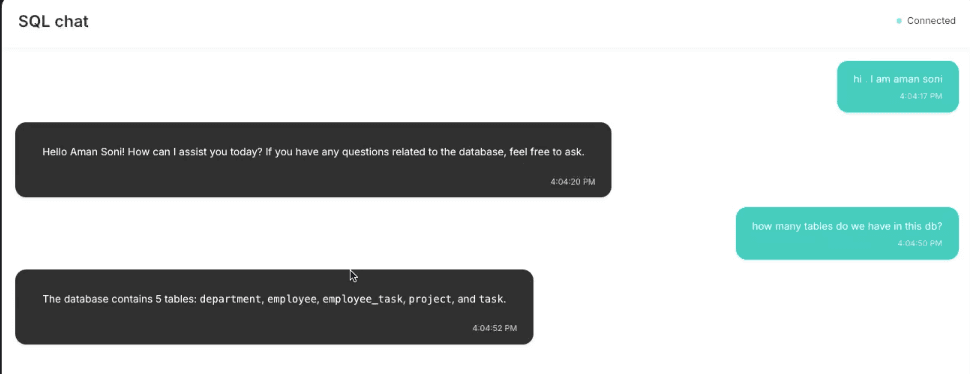
easySQL streamlines database interactions by utilizing AI agents that intelligently interpret user inputs, generate optimized SQL queries and execute them with precision. The process follows a structured workflow to ensure accuracy and efficiency.
When a user inputs a query in natural language—such as "Show me the highest-paid employees in the engineering department"—AI agents analyze the intent, interpret database schema, and generate a structured SQL query. The system then validates and optimizes the query for accuracy and performance before executing it. Finally, easySQL retrieves the results and presents them in a structured, human-readable format.
This agent-driven approach eliminates errors, accelerates query execution, and enables seamless interactions with relational databases, making complex SQL operations accessible to both technical and non-technical users.
Database Customization: Bring Your Data
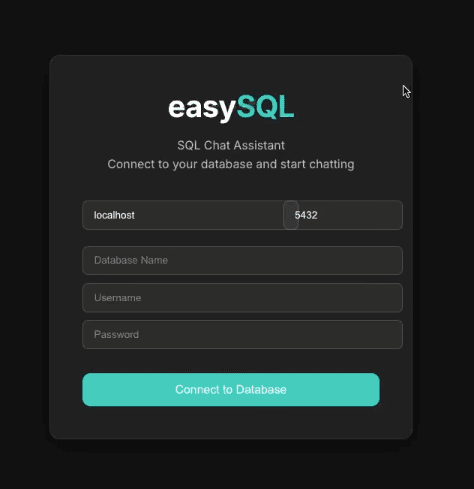
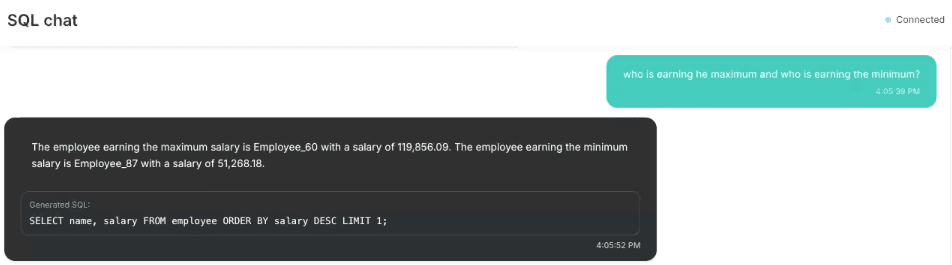
easySQL offers seamless database connectivity, enabling users to integrate their own SQL databases with minimal effort. By simply entering the database address, username, and password, users can establish a connection without any additional configuration. Once connected, easySQL automatically detects table schemas, identifying relationships and structures within the database. From there, users can immediately begin querying in natural language, eliminating the need for manual schema exploration.
This plug-and-play approach ensures that teams can quickly leverage their datasets, making data retrieval intuitive and accessible without writing complex SQL queries.
easySQL vs. Traditional SQL Querying: A Comparative Look
Feature | Traditional SQL Querying | easySQL |
Skill Requirement | Requires SQL expertise | Works with plain English |
Query Complexity | Manually written queries | AI auto-generates SQL |
Schema Awareness | Requires manual lookup | AI detects table schema |
Multi-Agent Execution | Not available | AI agents collaborate for results |
Ease of Use | Steep learning curve | Intuitive, conversational UI |
The Future of AI-Powered SQL Assistants
easySQL is just the beginning of a broader shift towards AI-driven database accessibility. Future iterations will expand support beyond PostgreSQL to include MySQL, MongoDB, and cloud-based databases, making it even more versatile for enterprises. AI-driven query optimization will enhance performance, ensuring faster and more efficient data retrieval. Additionally, enterprise-grade security features such as role-based access control, encryption, and compliance with industry standards like GDPR and HIPAA will further strengthen data protection. As AI-powered SQL assistants continue to evolve, they will bridge the gap between technical and non-technical users, making database interactions more seamless and intelligent.
Conclusion
SQL databases are indispensable for modern applications, yet their complexity often creates a barrier for non-technical users, slowing down decision-making and increasing reliance on specialized teams. easySQL transforms this process, enabling seamless, AI-driven database interactions where users can query data in plain English—without writing a single line of SQL.
By integrating natural language processing, real-time SQL execution, and multi-agent collaboration, easySQL eliminates the technical friction in database querying, making data instantly accessible. As AI-powered database assistants continue to evolve, solutions like easySQL will bridge the gap between data accessibility and technical expertise, empowering businesses with faster insights and more efficient workflows.
Interested in exploring how this AI solution can augment your engineering and business processes? Talk to our experts today.
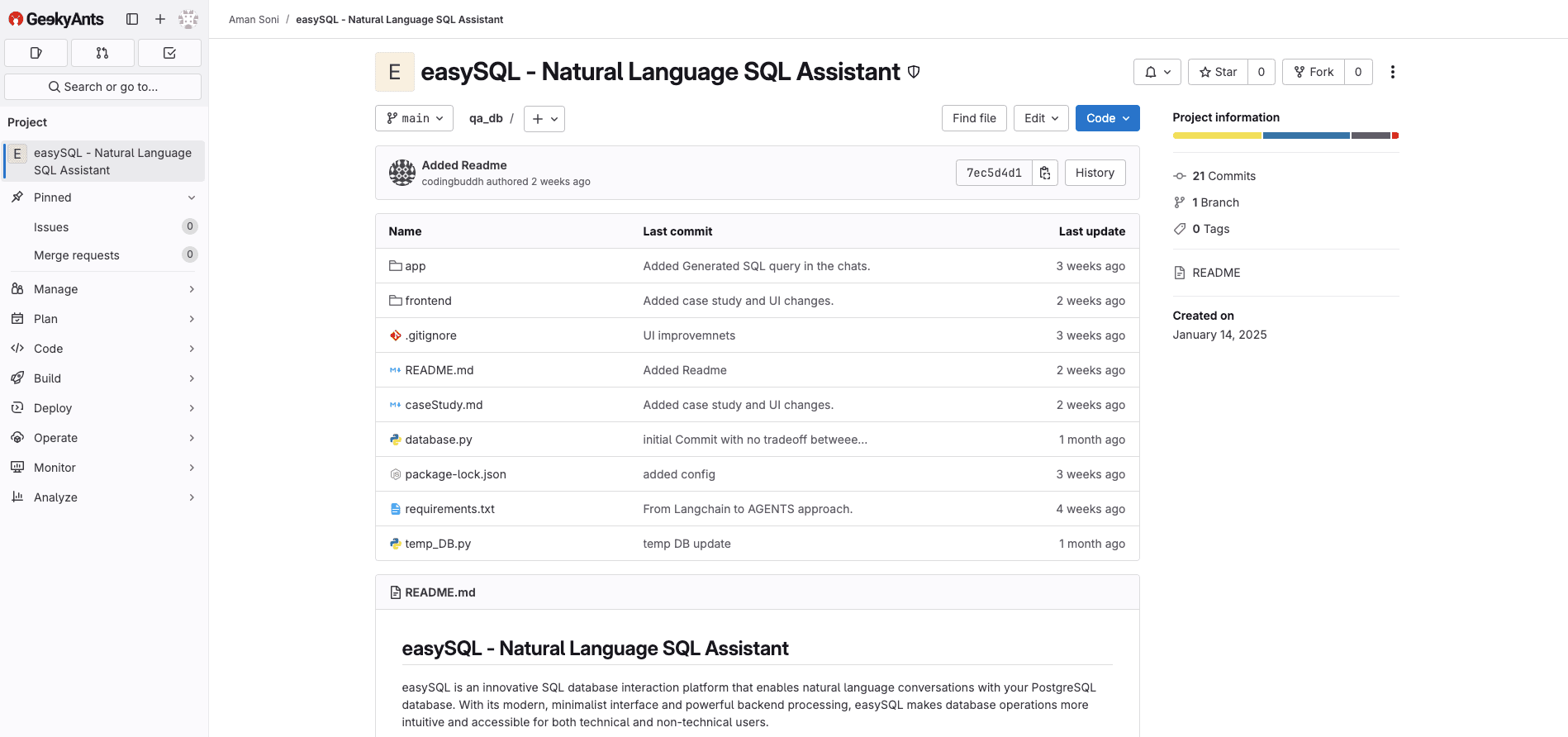
Project GitHub link: https://git.geekyants.com/aman.soni/qa_db