

Most providers will show you a working demo even after the first call. Fewer can take that demo to production and keep it running as the business grows. Enterprise buyers know the difference, and it decides who they trust with real product work.
This article explains why companies prefer to work with GeekyAnts for AI-powered product engineering. It covers what production ownership means, where engineering depth shows up, how AI fits into delivery without removing human judgment, and why clients stay after the first release.
Why Companies Prefer to Work with GeekyAnts
Teams prefer GeekyAnts when they need business goals turned into a system that runs at scale once real users and real load arrive. The engineering starts from how the product has to behave in production, so the build holds up when it matters.
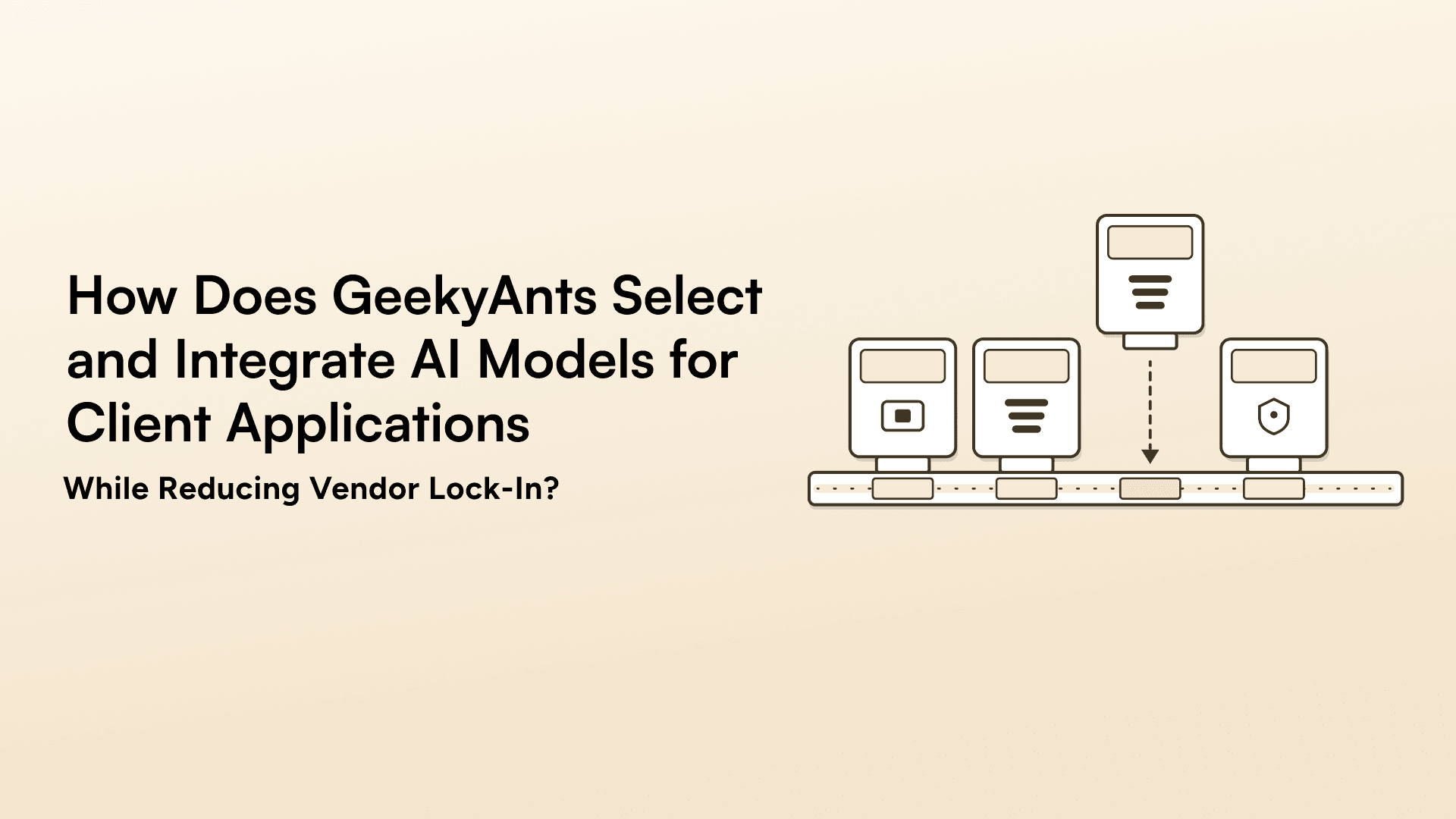
Architecture is planned the same way, with the next few years in mind. GeekyAnts designs AI systems so the model provider can be swapped without rewriting the product around it, a deliberate choice the team calls design for portability. It protects clients from sudden price rises, API changes, or a provider being deprecated, and it keeps control with the client rather than the vendor behind the model. Designing for that at the start is the kind of strategic foresight enterprise teams look for in a provider.
That engineering depth is also reflected in independent client feedback and industry recognition. GeekyAnts holds a 4.9/5 rating across 120 client reviews on Clutch, with recognition spanning multiple areas of product engineering. Clutch has named GeekyAnts among its top providers for React Native development, financial and health and wellness app development, manufacturing software development, and user research. This breadth of recognition gives enterprise buyers further confidence in the team's ability to deliver across technologies, industries, and complex product requirements.
What Production Ownership Looks Like
Production ownership means the team stays responsible for decisions across the whole product, from the first technical discovery through to scaling the system after launch. Nobody hands off a release and walks away. The same people who design the architecture are accountable for how it performs months later.
Ownership also shapes what gets built. GeekyAnts prioritizes the features that move business outcomes and keeps delivery lean, so effort lands where it returns the most value. Clients echo this in their reviews, describing the team as working like an extension of their own company. That shared stake is what ownership looks like in practice.
Where Engineering Depth Shows Up
Engineering depth is what separates a provider once the work starts. It shows up in three places: how systems are structured, how quality is held, and how older systems are brought forward.
Architecture is modular, so parts of a system can change without the rest breaking. GeekyAnts works across the layers most prototypes skip, including testing, observability, retrieval, performance, security, and the deployment workflows that keep a release stable. On quality, testing moves early in the build and runs through continuous integration, and code review sits inside the normal delivery cadence, so problems surface while the work is still open.
Modernization follows a practical rule. Legacy systems get AI placed inside the core business logic, where it changes how the system works day to day. One document-intelligence project cut manual effort by 99% and reached over 85% accuracy, which shows what that depth produces once it ships.
How AI fits without Removing Human Accountability
AI speeds up parts of the work. It handles scaffolding, early prototypes, and a share of code generation, which shortens the time to a first working version. The decisions that carry risk still sit with the engineers.
Architectural decisions, the code that ships, and deployment steps all pass through human validation and sign-off. Automated guardrails catch the obvious failures, and manual code audits check that AI-written output meets the security, compliance, and performance standards a client expects. GeekyAnts runs this through AntFlow AI, its own spec-driven platform where agents build against an agreed specification, a separate step verifies the result, and people hold the approval gates before anything is delivered. The aim is to move at AI speed while keeping engineers accountable for what goes out.
Why Clients Keep Working with GeekyAnts
Clients stay with GeekyAnts because the partnership extends beyond the first release. As products grow, the team continues to identify performance bottlenecks, optimize running costs, manage technical debt, and adapt engineering priorities to changing business needs.
That commitment starts with the first conversation. Companies exploring a partnership can expect more than a standard capabilities presentation. A discovery call with GeekyAnts is an opportunity to discuss business goals, assess technical challenges, explore architectural options, and understand the expertise needed to move forward. The focus is on practical recommendations, realistic expectations, and a clear path toward building a reliable product.
Whether you're developing a new AI-powered application or modernizing an existing platform, work with us to explore how GeekyAnts can support your product from early decisions through production and long-term growth.