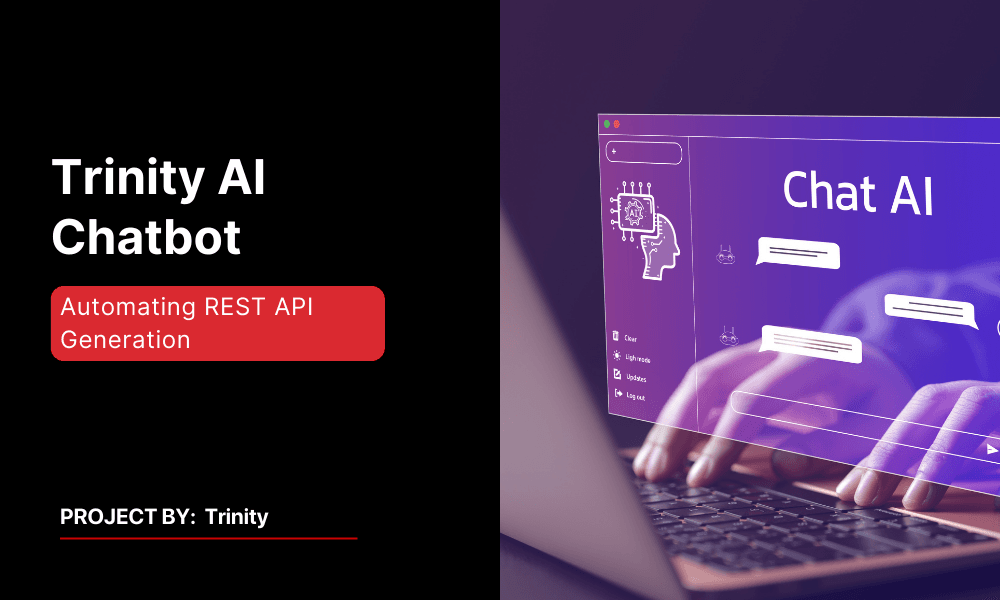

Editor’s Note: This blog introduces Trinity, an AI-powered chatbot developed by Yuvraj Kumar, Dheeraj, and Surjeet Kumar during Hackathon 2024 by Geekians. It streamlines REST API generation, supports GraphQL, and utilizes OpenAI APIs for real-time query processing and chatbot interactions.
During the Hackathon 2024, our team built Trinity, an AI chatbot designed to simplify REST API generation while offering a seamless user experience. Identifying the challenges developers face when creating APIs, we developed a smart, AI-powered tool that eliminates redundant tasks and enhances workflow efficiency.
How It Works
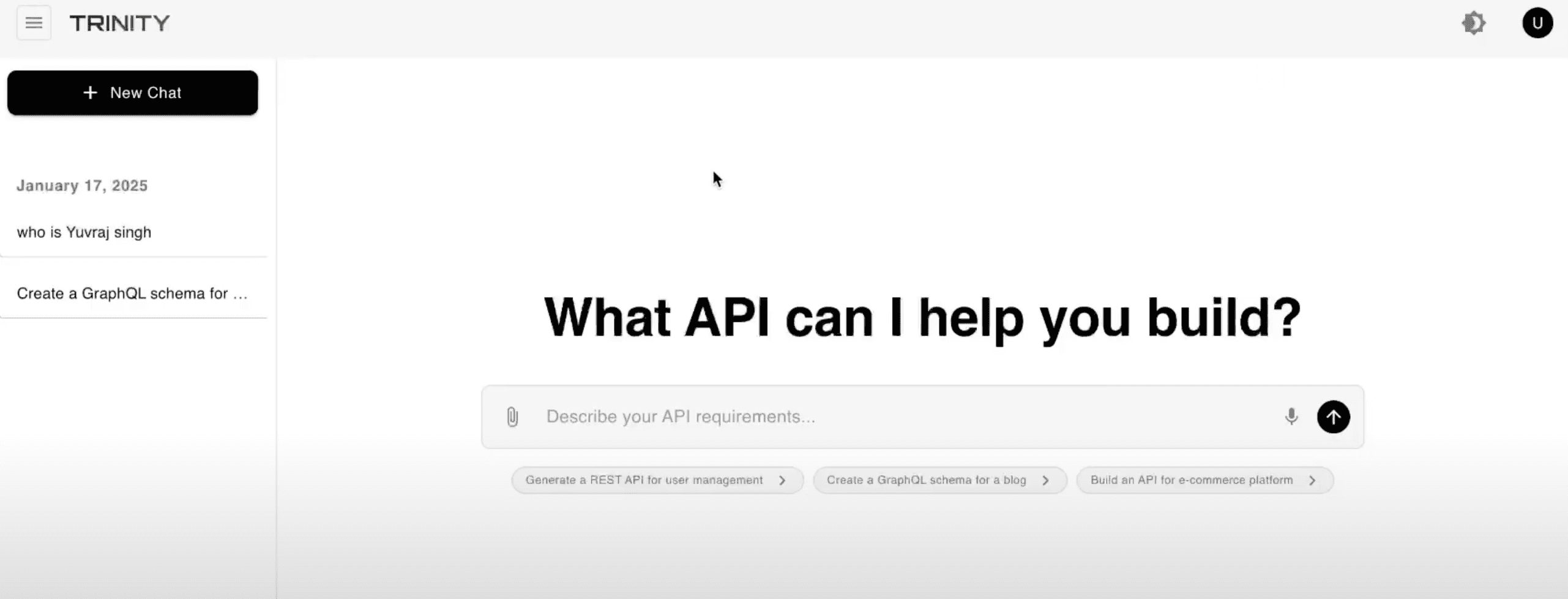
Trinity is built to assist users in efficiently generating REST APIs and GraphQL queries. Users can enter their queries manually or through voice commands, and the chatbot provides structured, actionable responses. The application supports file uploads, allowing users to integrate company-specific documents, which the AI can analyze and use to enhance query responses.
Trinity is powered by OpenAI APIs, which dynamically generate and optimize responses in real-time. The chatbot offers a history panel where users can view past queries, track responses, and revisit previous interactions. Users can also attach media files for enhanced interactivity, making it a multi-functional tool for API development and chatbot-driven engagement.
Key Features
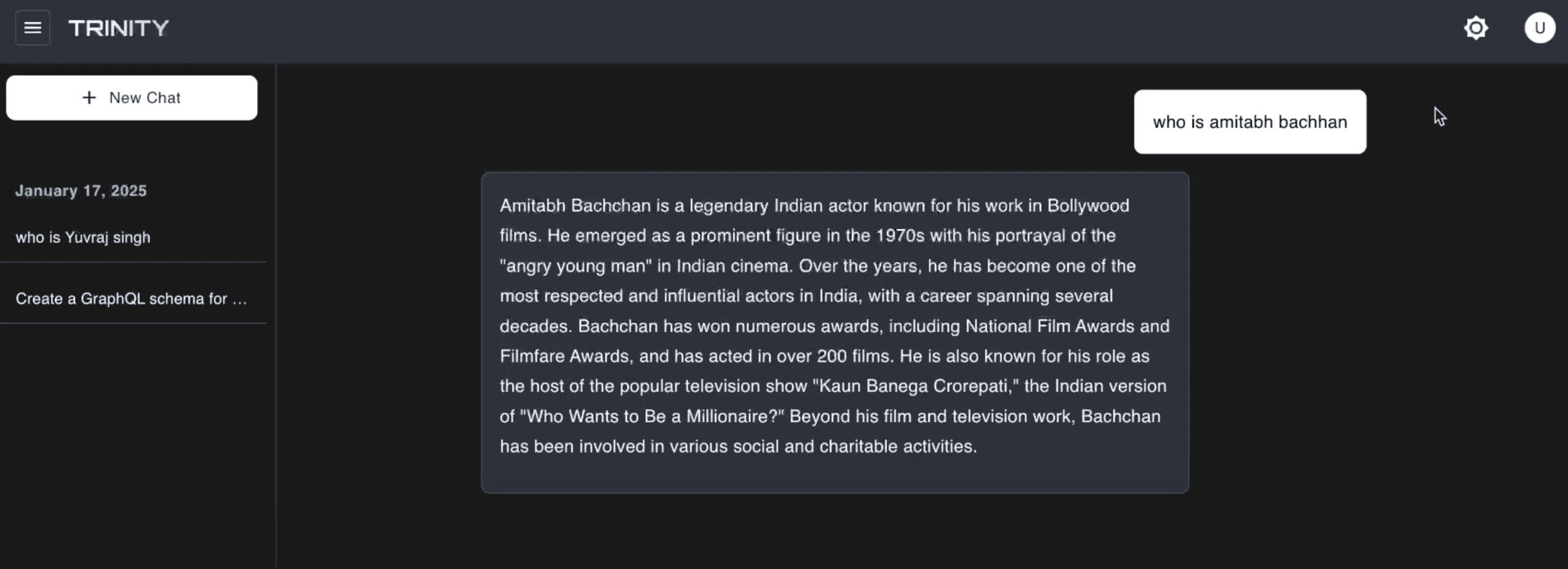
Trinity integrates multiple functionalities to improve the developer experience. It offers real-time API generation supporting both GraphQL and REST APIs with structured responses. Users can engage with the chatbot through text or voice input, making interactions seamless and efficient. The tool allows for media file uploads, enabling document parsing to enhance API recommendations. Query history management helps users keep track of their past interactions for easy reference. The UI is customizable with dark and light themes to provide an optimal user experience. The authentication system is secured using JWT with PostgreSQL for safe access. A drag-and-drop feature allows users to upload images and documents conveniently. Additionally, live response streaming ensures that interactions remain fluid without UI disruptions.
Live Demonstration
Users begin by logging into the application using secure JWT authentication. Once inside, the homepage displays a quick overview of previous chats, along with options to switch themes and manage user profiles. The chatbot interface supports typed queries, voice commands, and file uploads for API generation and query resolution.
For instance, if a developer wants to generate a Neo C program for prime numbers under 50, Trinity provides a structured response, complete with code snippets formatted in blocks for better readability. The system also supports stream-based responses, ensuring real-time data retrieval instead of waiting for the entire response to load.
For API developers, Trinity offers Swagger API testing, where users can test GET, POST, PATCH, and DELETE requests directly within the application. The chatbot assists by providing relevant suggestions based on the request type and user intent, ensuring an efficient workflow.
Why Trinity Matters
API development can be time-consuming, requiring multiple iterations and debugging. Trinity automates this process, allowing developers to focus on logic rather than setup. By integrating AI-driven automation, file parsing, and structured API generation, Trinity saves time and enhances productivity. Whether for developers, tech teams, or businesses, the chatbot delivers an intuitive, AI-powered API development experience.
Final Thoughts
Building Trinity during the Hackathon 2024 was an incredible journey. Our goal was to create a developer-friendly AI chatbot that enhances productivity, simplifies API generation, and supports seamless chatbot interactions. We are excited to refine and expand its capabilities in the future.
GitHub link for the project: https://github.com/yuvraj1905/trinity