

Building a digital product can feel like choosing which road to drive through to reach your preferred destination.
And you may not be sure about where the journey will take you.
Knowing the right development approach, however, helps you navigate the product building process and enables you to understand what you are building, your requirements, and the stage of development.
Today, businesses have to build an app that goes on to reach expenses that are more than tens, hundreds, or even thousands of dollars. There is no universal cost in software development. Every project starts from a different point and depends on factors like engagement model, team composition, scope of the product, complexity, and stage of the product that affect cost estimates.
McKinsey found that only 30% of more than 1,100 software projects met their original delivery deadline, with an average schedule overrun of about 25%. This is why it is crucial to have clarity around the scope, cost, timelines, and team structure before taking your product for development.
This blog explains the factors in detail and other essential information you need to consider before discussing your project.
Which Engagement Model Fits Your Digital Product?
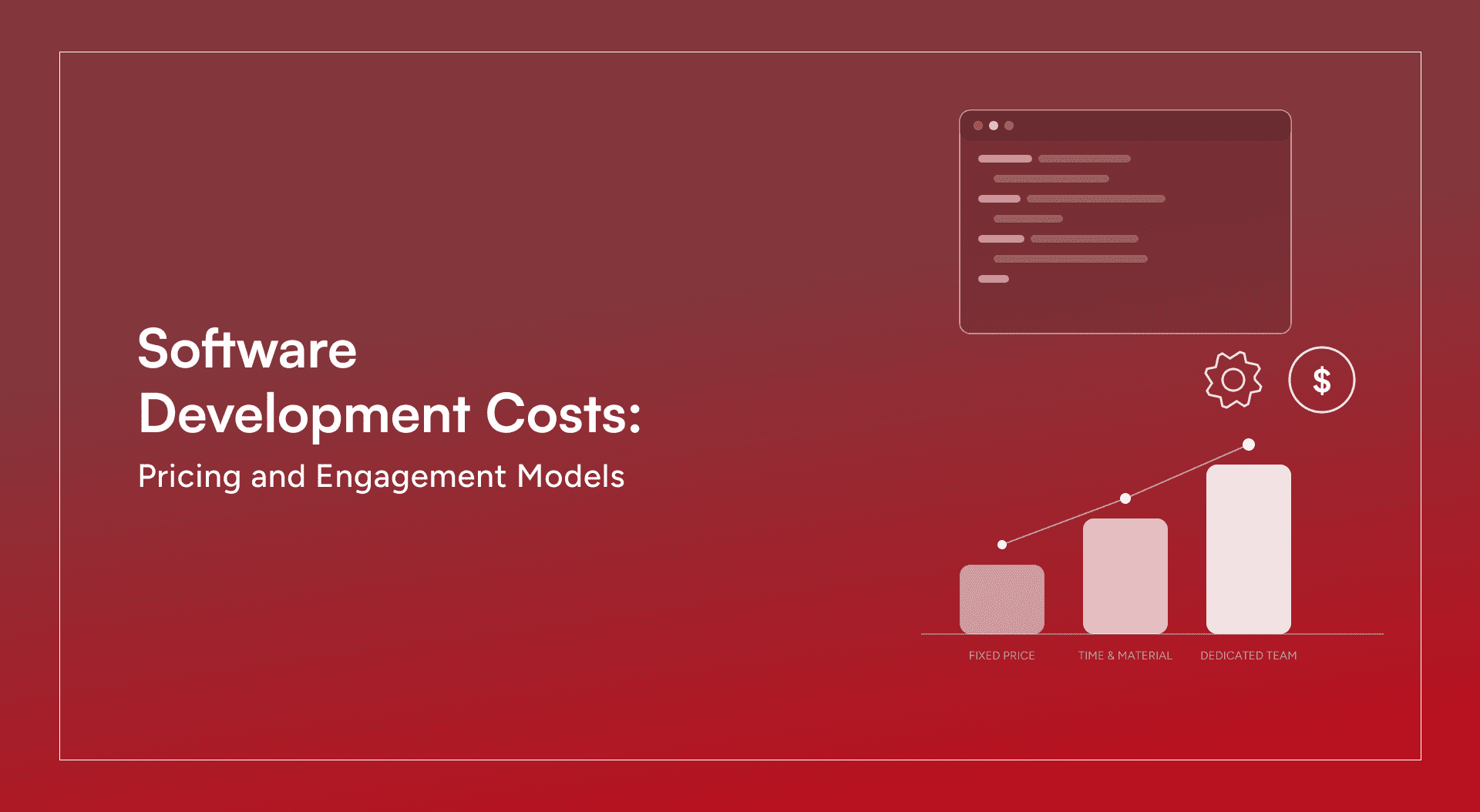
The right engagement model can be chosen depending on what product your business is building, what resources you already have, and how much responsibility you want your business partner to take. GeekyAnts works through three models, namely fixed scope, dedicated team, and time and materials.
1. Fixed Scope for End-to-End Product Development
Fixed-scope engagements are suitable for new digital product projects, including MVPs, where the client has an idea; however, they do not have the product, designs, or technical team put in place.
GeekyAnts takes ownership of end-to-end execution, right from UI/UX requirements and throughout the development process. The team plans around the project requirements, and the work is carried out in phases and sprints. Before beginning the development process, the scope, deliverables, acceptance criteria, timeline, responsibilities, and investment are agreed upon, while the client remains involved throughout the process through regular communication, reviews, and feedback.
2. Dedicated Pods for Working Alongside Your Team
The Dedicated Team engagement model has a strong suitability when you already have a product or technical team and want GeekyAnts to take responsibility for a defined part of the work. For example, your team may handle backend modules while we can work on the frontend.
Our team works alongside your existing team and can fit into your roadmap, processes, and technical environment. The engagement follows a recurring team-based arrangement, with the tech lead coordinating the work and communicating with the client.
Dedicated team engagements can operate from around three months to more than 14 months, depending on the product and scope.
3. Time and Materials Model for Flexible Resource Requirements
The Time and Materials (T&M) model is suitable for clients who need specific resources and are billed based on the time spent on the project. GeekyAnts sources the required profiles, agrees on rates based on the role and experience, and bills against the hours recorded through timesheets.
The model is suitable when the client needs to assign tasks directly or expects priorities to change as the project progresses forward.
How is the Cost Estimated for Each Engagement?
The way GeekyAnts estimates a project depends on the engagement model and the amount of work involved. Each model uses a different approach to arrive at the cost.
1. Fixed Scope
Fixed-scope pricing is based on the features, platforms, design and technical requirements, team effort, and timeline. As an example, a simple web application MVP may start around $15K, while a hybrid mobile MVP may start around $20K. Larger applications may require a higher budget based on their scope.
These are indicative examples. The actual estimate is prepared after reviewing the product scope. An initial proposal may cover design and development as a ballpark, followed by a development estimate once the designs are finalized and reviewed by the technical team.
2. Dedicated Team
The cost of a dedicated team depends on the team structure, roles, experience, engagement duration, and whether specialists such as a tech lead are involved full-time or part-time. The team is priced as a monthly retainer based on the agreed structure.
3. Time and Materials
With T&M, the client agrees on an hourly rate for the required resources, and billing is based on the hours they actually work. Timesheets are used to record the time spent on the project. For T&M engagements, GeekyAnts typically starts with a full month of work per resource to support a smoother onboarding and delivery process.
What Affects the Cost and Timeline of a Project?
Costs and timelines are influenced by the project scope, available designs, supporting documentation, and the amount of information available from the very start. Having clearer requirements and project details gives the team a better basis for estimating the effort and timeline.
- Product Scope: A product with more features, integrations, and user workflows needs more design and development effort than a smaller MVP.
- Product Stage: An MVP product may need design, architecture, and development from the ground up. An existing product may already have designs, documentation, and a codebase, which changes the work involved in the development process.
- Team Requirement: The team may include engineers, designers, a tech lead, or other specialists, depending on the project.
- Design Maturity: Changes made during the design phase can affect the development estimate. Once the designs are finalized, the technical team reviews them to confirm the development effort.
- Client Dependencies: Reviews, feedback, approvals, and milestone acceptance are some of the dependencies considered for the delivery process.
What About Business Validation, Scope Changes, AI, Infrastructure, and Other Costs?
Projects are initiated easily once there is a product direction and a clear understanding of business goals. If you have an idea but need to define the target audience, markets, product direction, launch priorities, or user journeys, GeekyAnts can start with a business scope validation phase.
How Does Business Validation Affect the Project Estimate?
This process begins with one week, or about 40 hours, and may involve a business analyst, part-time tech lead, and part-time design lead. The process includes market research, prototyping, user-flow planning, and feature prioritization to determine what should be built first and what can move to a later phase.
If your business already has an MVP, GeekyAnts can review your existing product, codebase, or designs before starting the development process. Once the reviews are complete, the findings can be used to confirm cost estimates for the next phase.
Scope can also affect the final cost. Requirements that were not part of the agreed scope may be treated as change requests and estimated as new work.
How Are AI Tools and Third-Party Costs Handled?
AI-related tools can be priced separately from the core development estimate. For example, if three engineers need access to Claude for three months, it would cost around $100 per developer per month, which would be about $300 per month for the team. The final AI enablement cost depends on the team structure and how long the tools are needed. Other third-party services, such as AWS infrastructure, are estimated based on the services, region, traffic, and other project requirements, with costs based on the actual services selected.
What Do You Need Before Asking GeekyAnts for an Estimate?
Once there is better context about the digital product that you wish to build, the more resourceful the cost estimates will be. In addition to providing specifications, a few more ideal details make a big difference. You can get the estimates based on the stage of product development as follows:
- A New Product: A high-level Business Requirements Document (BRD) is required to start the estimation process. It should explain what the product does, its key features, target users, platforms, and the outcome you want to achieve. It does not need to cover every user flow. If you have a more detailed brief, our technical and design teams can assess the scope, required team structure, effort, and timeline in more detail.
- Existing Product: GeekyAnts may need access to the codebase, technical documentation, wireframes or designs, and existing product requirements. This allows the team to assess what is already there before estimating the work ahead. If all you have is an idea such as, “I want to develop a food delivery app like DoorDash,” the response can only be a high-level ballpark. Once the requirements become more clear, the estimate can be based on the actual scope rather than an assumption.
Get a Cost Estimate Based on the Scope of Your Digital Product
Software development costs become easier to estimate once you know your product, its requirements, and the scope. If you are validating an idea, extending an existing product, or starting from scratch, our team can review your requirements, assess the scope, and recommend an engagement model that fits your business requirement in the best way possible.
Talk to GeekyAnts about your project requirements and get started with the right engagement approach.