
The digital boom has seen a significant rise in cloud computing which has allowed for cloud-based app development making the process efficient and far more reliable while resulting in robust applications. Not only does the cloud offer computing services that are truly groundbreaking but it is also a secure way to store information as everything is cached on the internet for the user to access at any point of time.
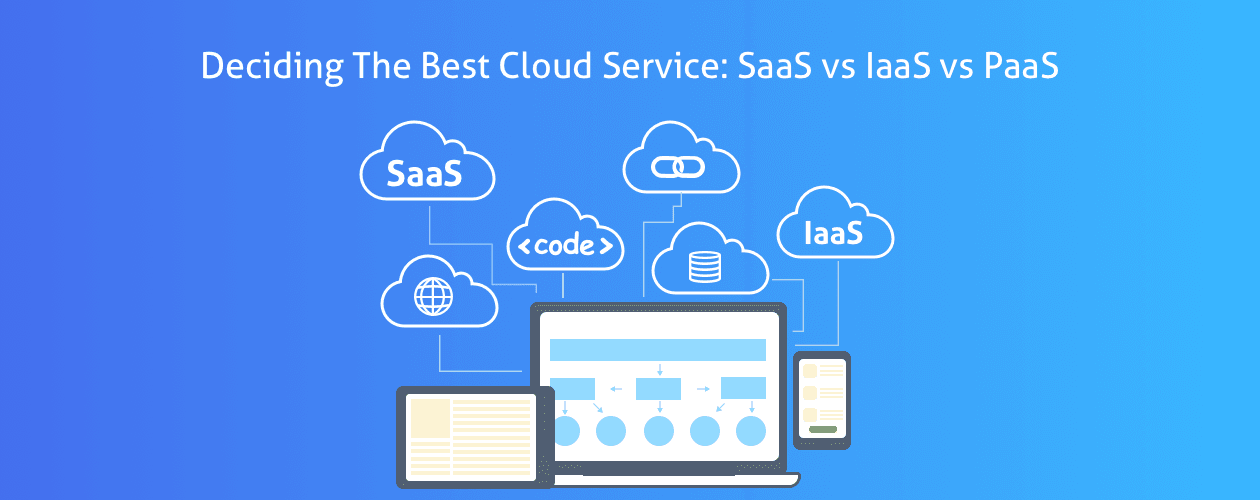
With the rising popularity of the cloud, there are many different kinds of cloud computing services available on the internet which a company can utilise for a pre-decided fee to advance their businesses in the digital era. While these cloud services may have a few functionalities in common, it is critical that organisations analyse their requirements before singling out on the optimum IT infrastructure solution for their businesses. Here are three of the most popular cloud computing services that are widely used in the industry:
What is Software-as-a-Service (SaaS)?
Software-as-a-Service is a type of on-demand software which acts as a distribution channel of delivering applications across the internet on subscription basis. It is also a great option as it is both time and cost effective as SaaS cloud computing services are created and maintained by its providers who also keep a check on its quality and compliance while also eradicating the hassle of procuring infrastructure for companies. Another advantage of procuring SaaS services for your business is that upgrades on the platform and any other necessary integrations are handled by the provider who makes the necessary enhancements to the platform.
What is Infrastructure-as-a-Service (IaaS)?
Infrastructure-as-a-Service is the most commonly used cloud computing service which provides virtual computing infrastructure and other services via the internet. Another advantage that comes with using IaaS solutions is that it also helps developers to develop and deliver innovative applications faster and more efficiently using the underlying infrastructure that is provided by this service. The provider also offers regular updates and other bug fixes on the service because of which disaster recovery and accessing data during outages are made simpler providing an enhanced experience for users.
What is Platform-as-a-Service (PaaS)?
Platform-as-a-Service is an amalgamation of the aforementioned cloud services which aims to improve a developers productivity through the provision of a cloud environment which can be used to develop customized applications. Not only do these kinds of cloud computing services offer digital solutions which can be easily integrated into the existing processes and tech stacks but using IaaS is highly beneficial as it enables developers to rapidly enhance the development phase using customisable cloud infrastructure.
SaaS vs. IaaS vs PaaS
While there are various cloud infrastructures available in the market, there is no perfect fit for all use cases. There are multiple factors that go into deciding which cloud service works best for each organisation and to be able to determine this it is important to understand the goal behind the shift and what exactly you are trying to attain. Similarly, maintenance costs that will be incurred and the resources needed should be taken into consideration before signing a service level agreement with the cloud service provider.
While SaaS solutions are the most commonly used cloud services, their versatility and easily accessible services which can easily be set up and launched make them perfect for small projects which require flexibility wherein businesses can upgrade their package at any given time depending on their business requirements. It is also a great option for startups and organisations which are looking for a cost effective option as SaaS services are affordable and easy to maintain. Considering its instantaneous nature and easy availability, it is a popular choice for small corporations which need to collaborate in order to launch a project quickly.
IaaS provides for computing, storage and networking IT solutions are extremely high-end and offer flexibility to alter your IT infrastructure on demand making it a viable option for small and mid-sized firms to scale down capital expenditure which would otherwise be spent on physical infrastructure.Similarly, IaaS is also a highly desirable choice in the development community as it is highly customisable making it possible to design adaptable digital solutions which can be tailored according to user’s needs and requirements. The ongoing pandemic has further stirred a digital transformation with heavy dependencies on IT infrastructure; the digital nature of IaaS services has helped organisations to build digital solutions which are highly resilient and can propagate business continuity.
Meanwhile, PaaS is a scalable cloud technology that is more aptly suited for companies that predict changes in their process for the flexibility it offers. PaaS also offers increased collaboration especially in scenarios where multiple developers are working on the same project which helps in the faster deployment of the end-product, making it an ideal fit for projects following the agile methodology. PaaS solutions are also a desired choice amongst companies that are looking to cut down their operational costs as they provide companies an edge with automated development capabilities and hence reducing the pressure to hire extra talent.
Conclusion
Albeit the many differences between these three most commonly used cloud services, they are similar in the regard that they remove a lot of work from the user by automating the process. While there is no common metric that exists to decide the best cloud service, you can pick the right one by understanding all aspects of your business needs, whether it is operational or technical.
I hope that, with this article, you have a better understanding of cloud computing infrastructures and can pick the one that fulfils your need!