
Avilo | Engineering Real-Time AI Voice Experiences for Mobile
How GeekyAnts built a real-time AI voice app experience for Avilo, MA&S Group’s multilingual AI companion, with flexible interaction modes and resilient session handling.












About the Client
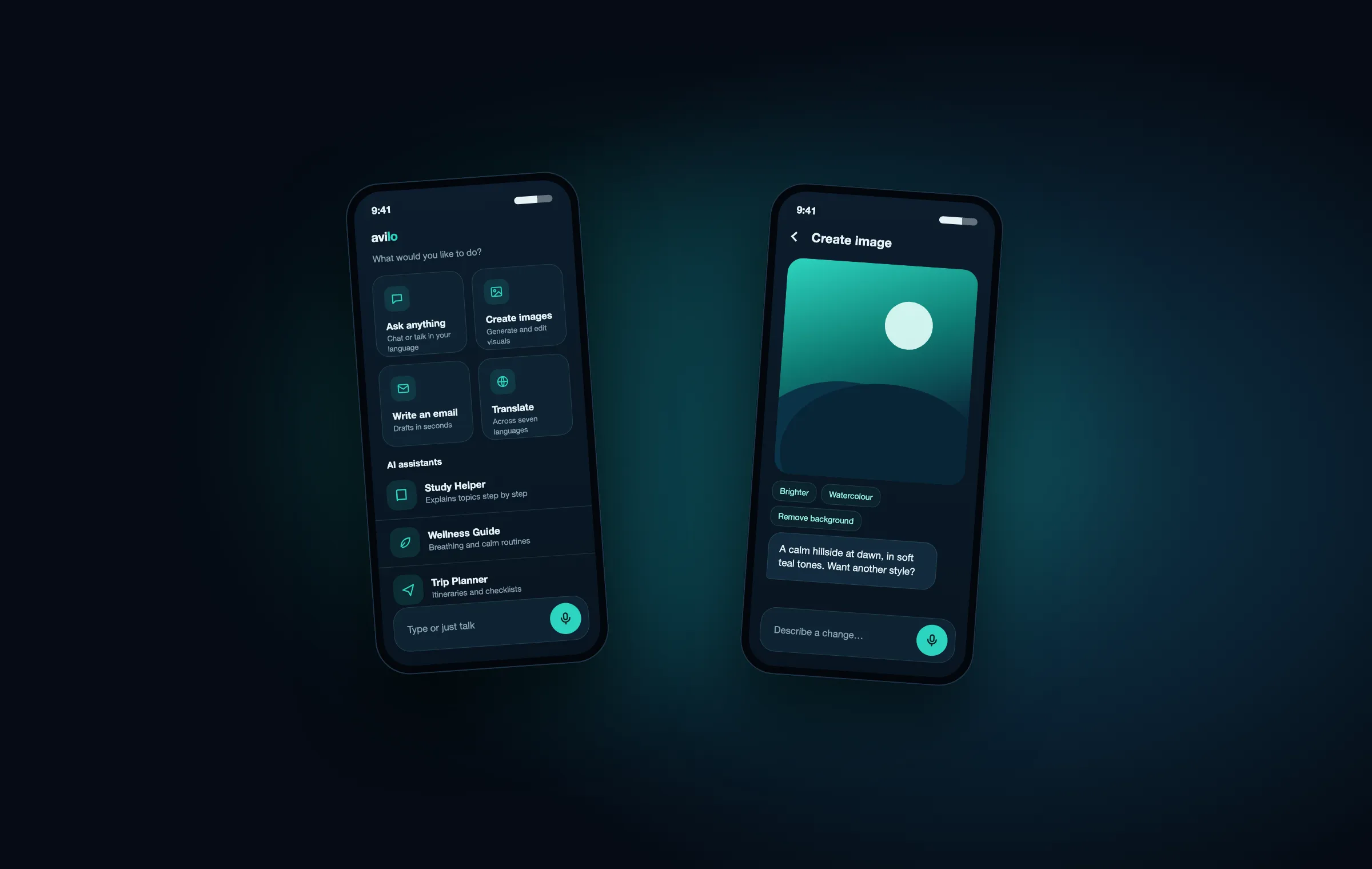
Avilo is a multilingual AI companion developed for a multinational conglomerate MA&S Group. It combines AI conversations, specialized assistants, image generation and editing, email writing, translation, and personalized interactions within one mobile application.
About the project
Overview
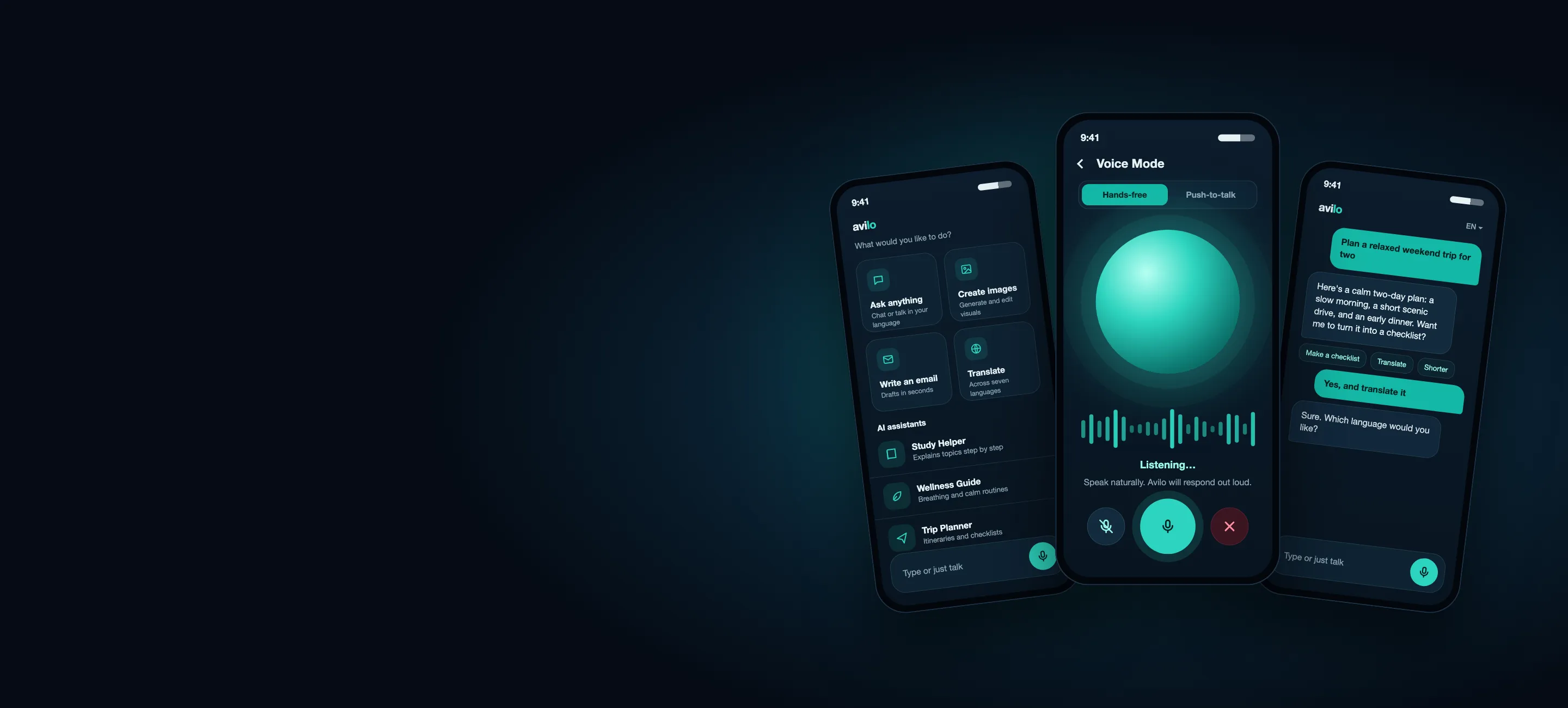
GeekyAnts partnered with MA&S Group to develop real-time AI voice interactions for a multilingual AI companion app called Avilo across iOS and Android. The application brings together AI conversations, specialized assistants, image generation and editing, email writing, translation, and personalized experiences across seven languages. We engineered hands-free and push-to-talk voice modes, integrated real-time communication with AI agents, and optimized session reliability and responsiveness.
7
Supported Languages4
Featured AI Personas10
Voice interruption and session scenarios handled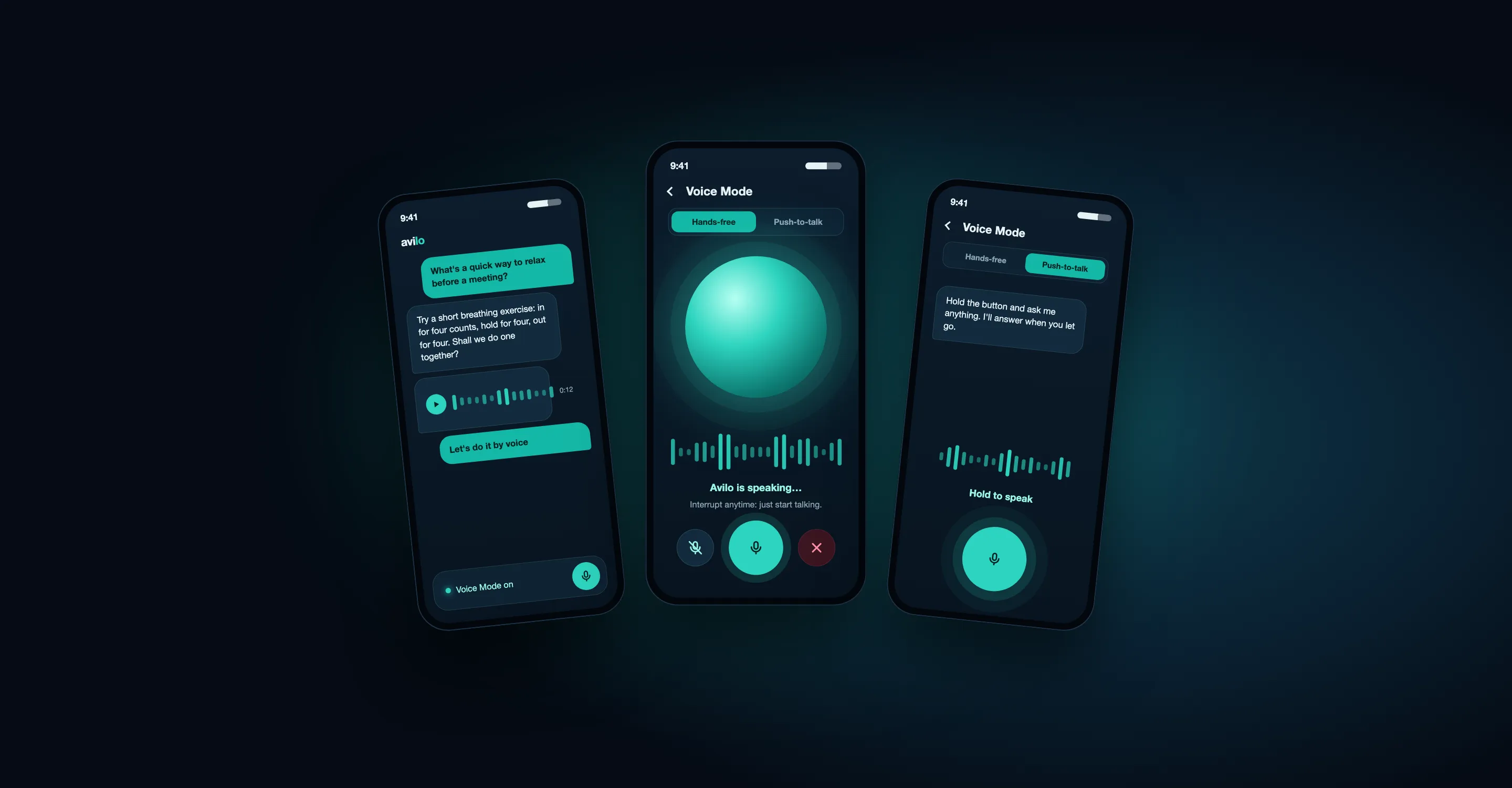
Business Requirement
MA&S Group's conversational AI application needed GeekyAnts to engineer real-time voice interactions for a multilingual AI companion Avilo across iOS and Android. The application combines AI chat, specialized assistants, content generation, and productivity tools. Our focus was building a responsive voice experience with low-latency communication, flexible interaction modes, and reliable session handling across devices and network conditions.
Key Requirements
- Implement real-time voice communication between the mobile application and the AI voice agent
- Support hands-free and push-to-talk interactions through a consistent mobile interface
- Coordinate voice-session events across frontend components, backend APIs, and LiveKit
- Maintain synchronized voice states for connection status, microphone activity, and session changes
- Handle interruptions involving device permissions, phone calls, network connectivity, and application lifecycle changes
- Reduce connection delays when users initiate voice sessions
Challenges We Solved
Building Voice Mode required coordinating real-time audio, application state, and backend communication while accounting for the unpredictable conditions of mobile usage.
GeekyAnts addressed these challenges through a centralized voice architecture, LiveKit event integration, shared interaction controls, and session-level fallback handling. We also optimized connection initialization to improve the responsiveness of voice interactions.
- 1. Real-Time Audio Coordination: Integrated LiveKit room connections, tokens, audio streams, participant events, and data-channel messaging to support communication with the AI voice agent
- 2. Consistent Voice Interaction States: Used Zustand and Context API to centralize session state and synchronize interface components with voice events
- 3. Multiple Voice Interaction Modes: Implemented hands-free and push-to-talk functionality within a shared interface, with mode changes communicated through LiveKit
- 4. Device and Network Interruptions: Introduced handling for permissions, calls, audio conflicts, connection failures, and application state transitions
- 5. Voice Connection Latency: Optimized session initialization to reduce the time required to establish voice communication
Real-Time Audio Coordination
Consistent Voice Interaction States
Multiple Voice Interaction Modes
Device and Network Interruptions
Voice Connection Latency
Solution
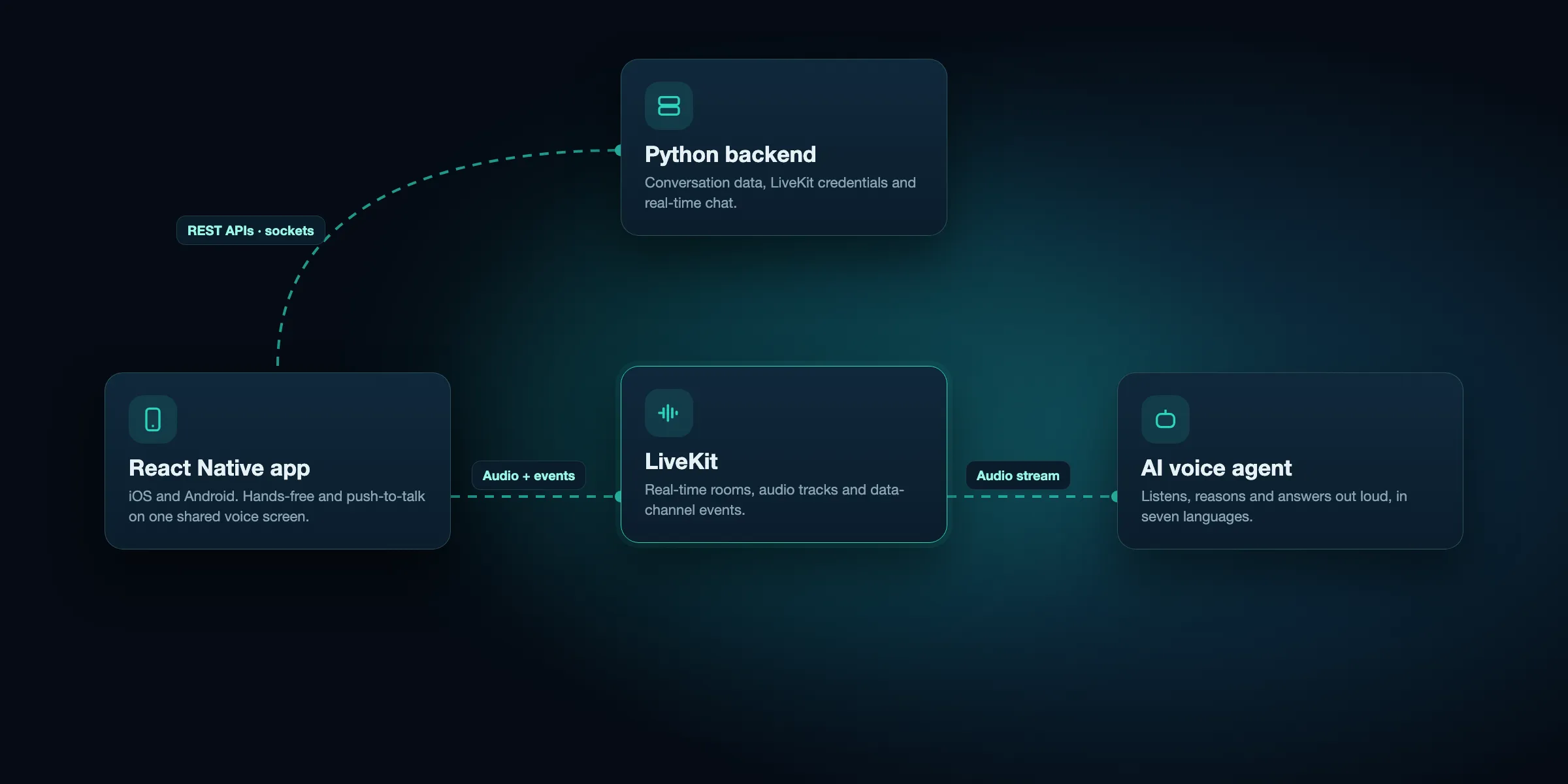
GeekyAnts developed Voice Mode using React Native and LiveKit, connecting the mobile application, Python backend, and AI voice agent for real-time communication. We implemented end-to-end session management, centralized state synchronization, and hands-free and push-to-talk modes. The solution also handles device and network interruptions, optimizes connection latency, and supports real-time messaging.
Highlights
Real-Time AI Voice Communication
GeekyAnts integrated LiveKit to establish and manage real-time audio communication between the mobile application and an AI voice agent.
The implementation coordinated several components of the voice experience:
Real-Time Connectivity
- LiveKit room creation and connection lifecycle
- Token-based connection setup
- Audio publishing and subscription
- Data-channel message events
Voice Interaction
- Hands-free and push-to-talk modes
- Microphone audio publishing
- Incoming text and audio responses
- Shared voice interaction interface
Session Management
- Connection and disconnection handling
- Centralized voice-state updates
- Error handling and recovery
- Resource cleanup and session closure
Our Approach
GeekyAnts owned the Voice Mode feature from initial planning and architecture through implementation, testing, and debugging.
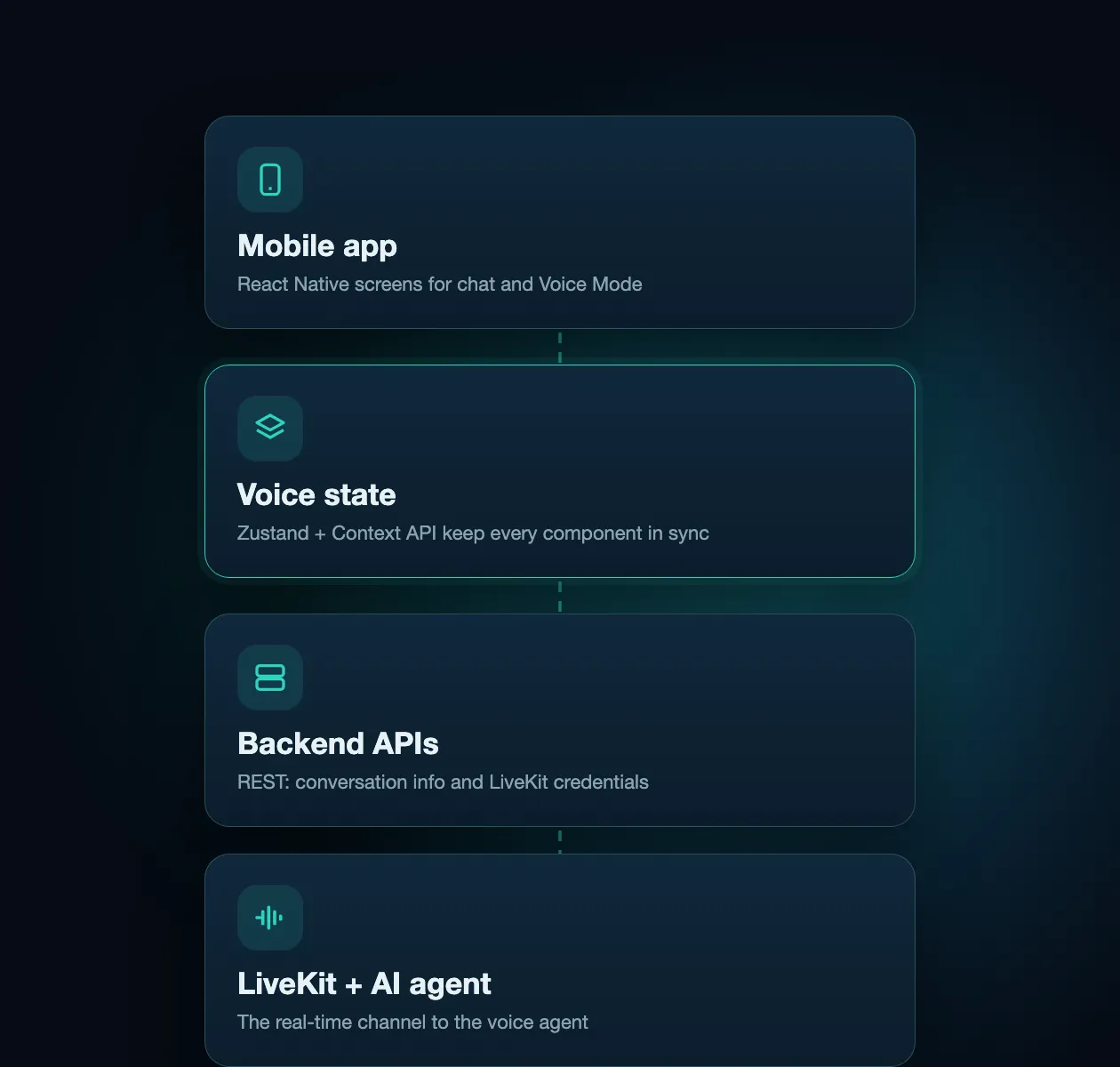
The engineering work involved coordinating frontend components, Python backend APIs, and LiveKit communication services. Our team established the session architecture, implemented real-time audio interactions, introduced centralized state management, and strengthened recovery handling for common mobile interruptions.
The work can be organized into five engineering stages.
- We designed the Voice Mode architecture around the complete session lifecycle, from initialization through termination.The React Native application communicates with the Python backend using REST APIs to obtain conversation information and LiveKit connection credentials. LiveKit then manages the real-time communication channel with the AI voice agent.We also established centralized voice-state management using Zustand and Context API, allowing different frontend components to respond consistently to connection events and session changes.
- We implemented LiveKit integration to manage audio communication and session events between the mobile application and the AI voice agent.The implementation covered room creation, token management, connection establishment, microphone audio publishing, incoming audio subscriptions, and event handling.We also integrated participant events and data-channel communication to support voice-session updates and message exchange.
- We developed two voice interaction modes using a shared frontend screen.Hands-free mode supports continuous interaction, while push-to-talk mode allows users to control voice input by pressing and holding the microphone button.Both modes communicate interaction changes through LiveKit events, allowing the backend and frontend to remain synchronized without requiring separate voice interfaces.
- We implemented handling for critical session and device scenarios that could interrupt live voice communication.These included microphone permission denial, active phone calls, external audio playback, internet disconnections, LiveKit connection failures, unexpected disconnections, AI agent non-responsiveness, audio publishing or playback failures, manual session closure, and application background or foreground transitions.The implementation also included connection cleanup and reconnection handling to manage session resources and recovery when communication was disrupted.
- We tested and debugged the voice feature across its interaction flows, session states, and interruption scenarios.A key optimization focused on reducing connection time when starting Voice Mode, improving the responsiveness of the initial voice interaction.We also coordinated frontend-backend communication and LiveKit events to support consistent session behavior across the mobile application.Alongside this work, GeekyAnts contributed to the Chat module through REST API integration for data retrieval and Socket-based communication for real-time messaging.
Result
GeekyAnts delivered Voice Mode for Avilo, expanding its capabilities across Android and iOS.
- Real-Time AI Conversations: Enabled live voice interactions with AI agents through LiveKit audio streaming
- Flexible Voice Controls: Supported hands-free and push-to-talk conversations within a unified interface
- Reliable Session Recovery: Implemented handling for 10 device, network, audio, and connection interruption scenarios
- Faster Voice Initialization: Reduced connection latency for more responsive voice-session startup
- Integrated Chat Functionality: Supported real-time messaging through REST APIs and Socket-based communication
8
AI integrations handled2
Voice Interaction Modes - Push-to-Talk and Hands-Free6
AI-Powered CapabilitiesContact
The Right Conversation Can Save You Six Months
Contact us
Work
More from our engineering work
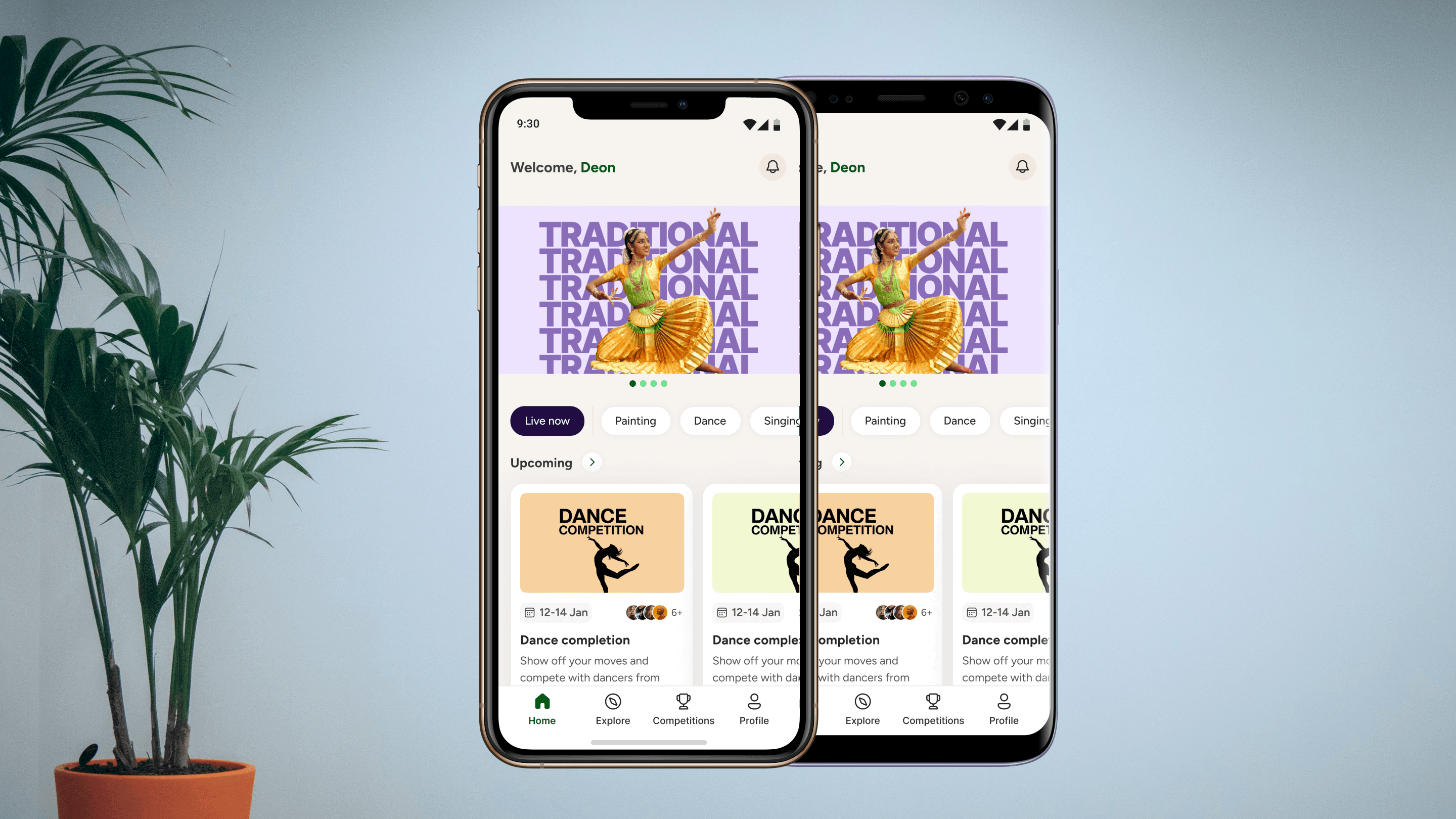
DIGITAL ENTERTAINMENT COMPETITION PLATFORM
GeekyAnts built a video-based talent competition platform for a media and entertainment company and took it live on iOS and Android with 100% automated content moderation.
Read case study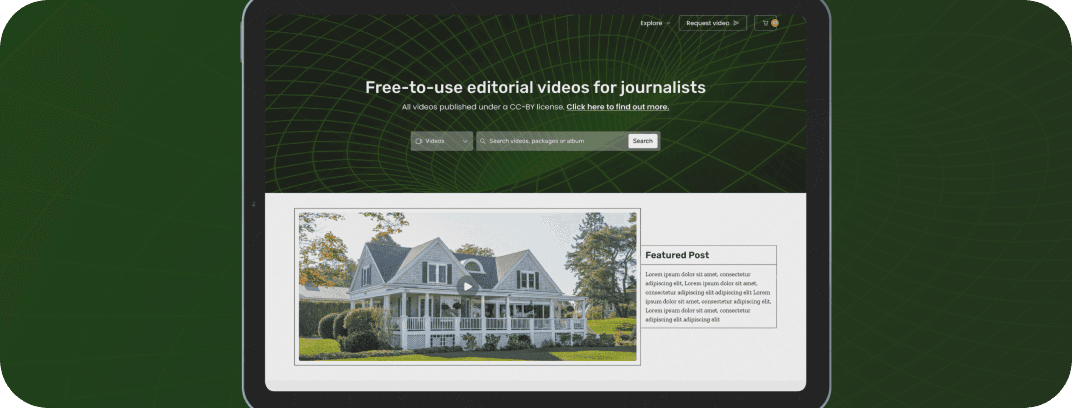
LEGACY PLATFORM MODERNIZATION
We built a production-grade offline HLS video We built a production-grade offline HLS video streaming solution for React Native on iOS. This in-house solution overcomes strict iOS media and storage constraints to provide true cross-platform parity for secure, network-independent video playback.
Read case studyNext-Gen Dating and Social App
We developed a scalable cross-platform social and dating app using Flutter, GraphQL, and Firebase, enabling real-time interactions and seamless user experiences.
Read case studySocial Media App For Liviit
The Man behind Liviit employed GeekyAnts to shift a social media web-app to a mobile app in React Native.
Read case studyBlending Technology, UX, and Accountability in Real-Time Music Practice
We built an iOS and web music learning app that lets students record, track goals, and stay accountable, while teachers and parents monitor progress through smart dashboards.
Read case studyAudio Editing App For Nimikry
Providing upkeep to enhance the music experience for Nimikry, an experimental music organisation
Read case study