
We, at GeekyAnts, have held the first ever event for design organised by our company. This event is aimed to bring the entire design community to one centralized platform. The first design meetup was an opportunity to create an interactive setting for discussion and debate about all things design and technology, plus an open forum for sharing ideas.
The designers at GeekyAnts have one goal in mind: to improve the quality of tech we produce by developing new ways to improve the experience for users, allowing them to focus on the most important features of the app. This first session of the design meetup series was organised virtually where we brought together some of our in-house designers to share some real-world experiences and thoughts on upcoming design trends.
Our aim is to host a design meetup where developers, designers, UX geeks and the like can meet up, talk valuable shop banter and above all create awesome stuff together. While this first event consists of in-house artists from GeekyAnts, we hope that it sets the stage for more designers to come forth and talk about what they are truly passionate about.
The following is an account of the discussions that took place at the event:
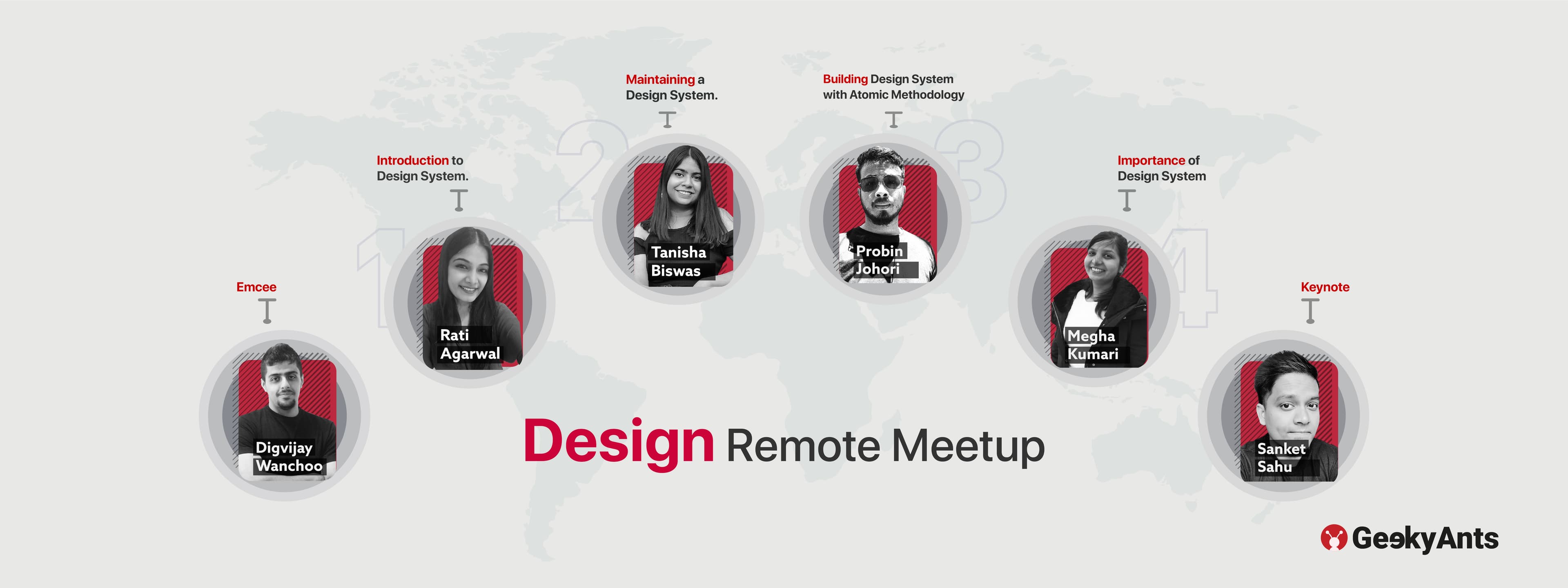
Introduction to Design Systems : Rati Agarwal
The event was kick started by Rati Agarwal, a self-taught UX/UX designer who is passionate about the subject and wants to instill the same in others who are passionate about the subject. She spoke about design systems and what it comprises and how it is basically the ultimate groove and jam session of what constitutes the characters that make up the individuality and are the basis of any app. A design system consists of several files and they all work together to ensure consistency in the products. She also spoke about how a design system is more than a style guide; it's the enforced, common visual language that unifies the branding, visuals and interaction of an entire product and while it may be the highest abstraction of design, the session was an insight into the various nuances of design systems.
Importance of Design Systems : Megha Kumari
The next talk in line was delivered by Megha Kumari, who started with the concept of design at GeekyAnts, and she has been a huge part of the fantastic designs and UX we have delivered over the years. She spoke about the importance of design systems and how they are a set of common design patterns, guidelines and resources that help us make smart decisions and avoid reinventing the wheel. She elaborated on this by speaking about why design systems are so important in an enterprise context, and what we can do to implement them successfully to ideate along with the best practices, principles, components and documentation. Product design is based on principles and this talk covered why principles can't help anyone if they are not understandable, visible and accessible and how design systems help with streamlining this.
Building Design Systems with Atomic Methodology : Probin Johori
The following session was delivered by Probin Johori, a designer whose architectural background has given him the knowledge about the topic of implementing various different methodologies when designing a product. His topic revolved around the topic of atomic design and how you can harness certain elements to create a reusable pattern. He spoke about how he took inspiration from the form follow function which states how a product should relate to its function of purpose and related it to the atomic methodology by reiterating how it is a great way to reduce rework, manage files and improve the documentation process. Patterning is the bane of any developer's life and often they’ll find themselves copying and pasting blocks of code, just to change one property. Probin elaborated on how the atomic methodology breaks down the entire process and makes it much more scalable and easier for developers by walking the audience through the NativeBase project’s Figma design project which uses this method.
Maintaining a Design System : Tanisha Biswas
The final discussion which marked the end of the event was given by Tanisha Biswas, an in-house designer from GeekyAnts, who took forward the topic of design systems while stressing on how to maintain it. She spoke about how design systems introduce consistency to design and production of a particular product so that there is no misunderstanding or misinterpretation and how establishing a foundation for the design system makes it easier for that particular product to be produced and marketed. With this talk, Tanisha covered strategies of approaching a design system and attributes of a functional design system which can help with promoting and encouraging app usage and communicating about updates. She also talked about how design systems are not just a guide to product systems but how they can play a huge role in the maintenance of the product which is essential for boosting the experience users have.
The first design meetup organised by GeekyAnts was our opportunity to create a more interactive setting for discussion, debate and sharing ideas about design and we hope to encourage more designers to come forward and share their thoughts about creating beautiful designs in the upcoming conferences that we are looking forward to hosting. The end of the session was marked by a FAQ session with the panelists addressing the audience’s questions.
You can watch the entire event below: