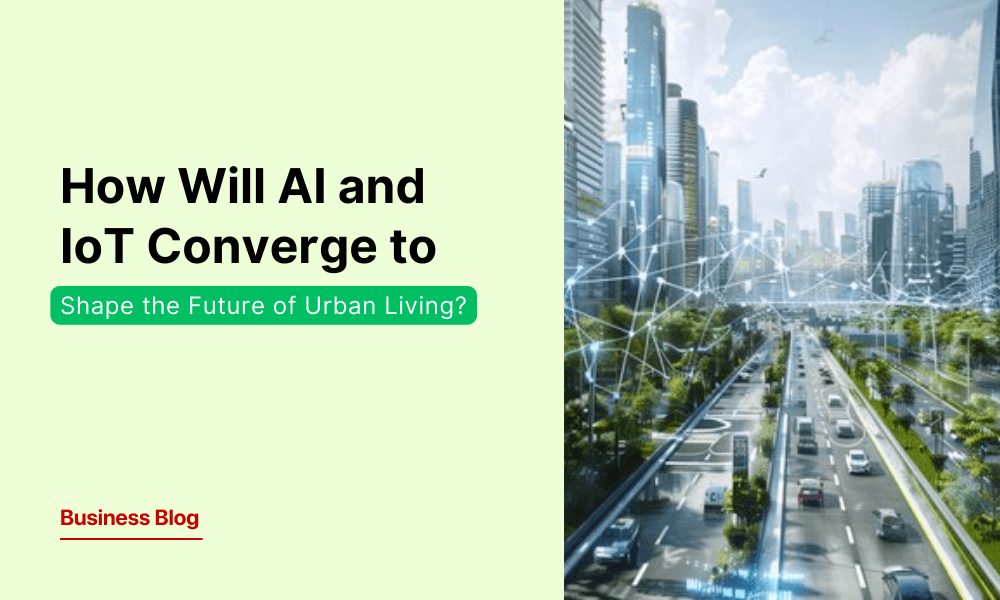

In 2024, as over 4.4 billion people—more than half the world’s population—reside in cities, the pressure on urban systems is becoming unrelenting. Challenges like traffic congestion, resource mismanagement, and sustainability require innovative and adaptive solutions. At the core of these solutions is the Internet of Things (IoT), a network of interconnected devices that serve as the "eyes and ears" of modern cities, collecting real-time data to inform smarter decisions. From monitoring air quality to managing traffic flow, IoT lays the foundation for creating intelligent urban ecosystems.
However, data alone cannot solve these challenges. Enter Artificial Intelligence (AI), the "brain" that processes this information, uncovers patterns, and generates actionable insights. Together, IoT and AI form a transformative partnership—one that is reshaping how cities operate, making them more efficient, sustainable, and responsive to the needs of their residents.
Consider Singapore’s advanced traffic management system, which seamlessly integrates IoT sensors with AI-driven analytics. By optimizing traffic signals based on real-time data, the system has reduced traffic delays by 30% and significantly improved air quality, as detailed in the Smart Nation Initiative. This synergy of IoT and AI, where one senses and the other thinks, exemplifies the power of these technologies to address complex urban challenges effectively.
This blog delves into how the convergence of IoT and AI is enabling cities around the globe to become smarter, more sustainable, and prepared for the future.
What Is IoT?
The Internet of Things (IoT) refers to a network of interconnected physical devices—sensors, appliances, vehicles, and infrastructure—that communicate with each other via the Internet. This real-time data exchange enables smarter, more efficient, and safer systems, fundamentally transforming how we manage and interact with our surroundings.
At Heathrow Airport in London, sensors track luggage movement, while smart cameras monitor security lines. As real-time data flows through an interconnected network, passenger movement is optimized by dynamically adjusting staff deployment and operations. This system, powered by IoT, has significantly reduced wait times and enhanced the overall travel experience, demonstrating the transformative potential of IoT in modern infrastructure.
IoT is equally impactful in urban settings. Advanced water management systems use sensors to monitor pipe conditions, detect leaks, and alert maintenance teams in real-time. This proactive approach prevents water wastage, minimizes repair costs, and ensures sustainable resource utilization. Similarly, IoT-enabled smart grids optimize energy distribution by analyzing usage patterns and predicting demand, reducing waste while enhancing reliability.
IoT’s capabilities extend far beyond connecting devices—it creates intelligent ecosystems that redefine efficiency, sustainability, and convenience across industries and public infrastructure.
What Is AI?
Artificial Intelligence refers to systems capable of mimicking human intelligence to perform tasks such as decision-making, learning, and pattern recognition. AI relies on advanced algorithms and machine learning models to analyze large datasets, identify trends, and provide actionable insights that humans might otherwise overlook.
In a hospital, doctors can use systems powered by Artificial Intelligence (AI) to predict potential health issues before symptoms appear. By analyzing thousands of patient records, lifestyle data, and genetic markers, these AI systems suggest personalized treatments and preventive measures. This is not a distant possibility; it's happening today in healthcare systems around the world.
AI is making an impact in a variety of industries beyond healthcare. For example, in logistics, AI-driven systems optimize delivery routes by analyzing traffic patterns, weather conditions, and package volumes. These insights help businesses save fuel, reduce delivery times, and improve customer satisfaction. With its ability to process complex data quickly and accurately, AI is becoming a powerful tool for solving many of today’s challenges.
The Synergy of IoT and AI: What Happens When They Combine?
The convergence of Artificial Intelligence (AI) and the Internet of Things (IoT) is reshaping urban ecosystems through AIoT—the Artificial Intelligence of Things. By merging the analytical power of AI with the sensory capabilities of IoT, passive devices transform into intelligent systems capable of real-time sensing, learning, and acting.
Take Barcelona as an example, where IoT-enabled waste bins monitor fill levels and transmit this data to AI systems. These systems optimize garbage collection routes dynamically, reducing fuel consumption by 25% and cutting operational costs significantly. By working as the "eyes and ears" (IoT) and the "brain" (AI), Barcelona has redefined waste management efficiency, illustrating the tangible benefits of AIoT.
But AIoT’s scope extends far beyond waste management. In healthcare, IoT devices monitor patients’ vital signs in real time. AI processes this data to predict health risks, detect anomalies, and suggest preventive interventions, enabling medical professionals to act before conditions escalate. This integration is revolutionizing patient care by prioritizing proactive measures over reactive ones.
Moreover, industries such as transportation, energy, and urban planning are adopting AIoT to address their unique challenges. Whether it’s optimizing traffic flows in congested cities or enhancing energy efficiency with predictive analytics, AIoT is creating smarter, more sustainable solutions. This synergy represents a paradigm shift in how cities function—fostering interconnected systems that are efficient, resilient, and forward-looking.
Challenges to AIoT Implementation
While AIoT holds immense promise to revolutionize urban living, its implementation comes with significant hurdles. From safeguarding sensitive data to managing costs, these challenges must be addressed to unlock its full potential. Below are the key barriers hindering AIoT adoption and strategies to overcome them:
- Data Privacy Concerns
IoT devices gather vast amounts of sensitive information, ranging from vehicle locations in traffic systems to behavioural patterns in smart homes. Without stringent data protection policies, the potential for misuse or breaches can erode public trust, making privacy a significant barrier to adoption. - Cybersecurity Risks
The interconnected nature of AIoT systems introduces vulnerabilities to cyberattacks. A single breach could compromise essential services, such as energy grids or surveillance networks, disrupting city operations. To mitigate these risks, robust encryption, proactive threat monitoring, and regular security audits are essential. - High Implementation Costs
Smaller cities and organizations often struggle with the financial burden of implementing advanced AIoT solutions. These systems require substantial investment in infrastructure, software, and skilled personnel, making affordability a key obstacle to progress. - Collaboration and Policy Frameworks
Realizing the full potential of AIoT requires cooperation between the public and private sectors. Governments must establish clear regulations and invest in scalable solutions, while businesses contribute innovation and expertise. This collaboration is critical to ensuring inclusive and secure adoption that benefits all urban stakeholders.
By addressing these challenges, cities can unlock the transformative potential of AIoT, paving the way for more efficient, sustainable, and resilient urban environments.
How GeekyAnts Can Accelerate Your AIoT Journey
At GeekyAnts, we design tailored AIoT solutions to address complex urban challenges. Our expertise helps cities. We optimize infrastructure, boost efficiency, and enable sustainable growth. This ranges from AI-driven traffic systems to smart energy grids.
We ensure IoT ecosystems connect with AI platforms for real-time insights. We provide end-to-end development and seamless integration. Our solutions can scale with your city's changing needs. They also have strong security and data protection.
Transform your vision into reality with GeekyAnts. Let us help you shape smarter, more efficient, and future-ready urban environments. Get in touch today to start your AIoT journey.
Conclusion
AI and IoT are reshaping the future of urban living. From optimizing traffic flow to creating energy-efficient buildings and enhancing public safety, these technologies are revolutionizing how cities operate. The ability to connect devices, analyze real-time data, and make informed decisions is laying the foundation for more intelligent, sustainable, and resilient urban environments.
As cities and businesses embrace AI and IoT, they are not only addressing today's challenges but also setting the stage for a smarter, more sustainable future. The potential for creating connected, efficient systems is limitless, with transformative impacts on everything from transportation to healthcare, energy, and beyond.
At GeekyAnts, we are committed to helping organizations harness the power of AI and IoT to build more efficient and future-ready solutions. If you are ready to be part of this transformative journey, we are here to help bring your vision to life.