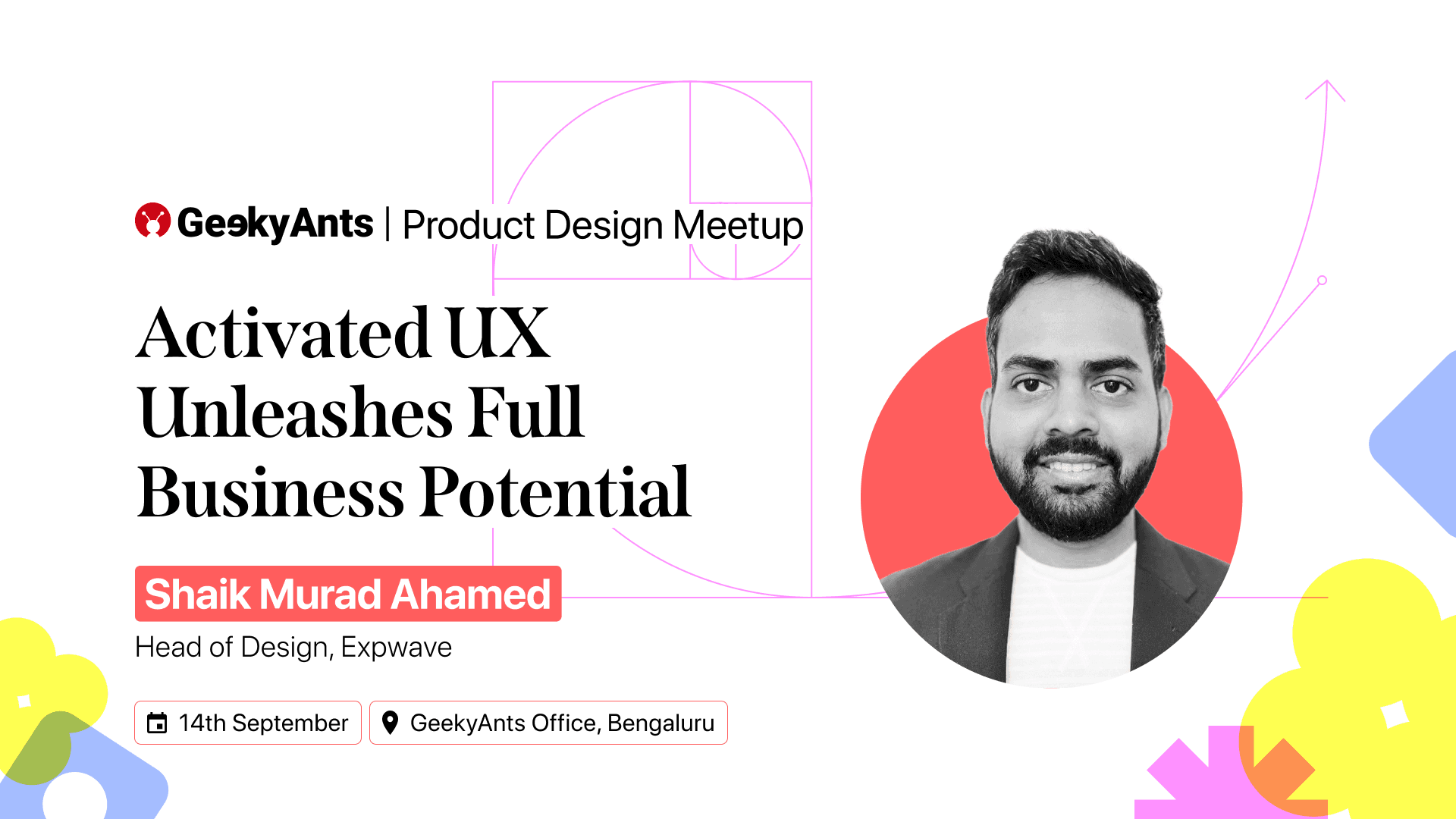

Editor’s Note: This speech challenges UX designers to step beyond aesthetics and take ownership of their role in driving business outcomes. It emphasizes the importance of collaboration, measurement, and accountability in transforming UX from a design discipline into a business driver.
For those new to UX design, or perhaps even new to design as a career, it can feel overwhelming. That’s the reality of it. But today, I want to discuss something bigger: why we, as UX designers, have not fully elevated ourselves. Why have we not unlocked the business potential we hold?
Today, we’re talking about activated user experience. But before we get into that, I want to hear from you. What’s one myth you’ve heard about UX design? Who’s going to be the brave one to start? Anyone?
“Is UI equal to UX?” That’s a good one, but it’s a myth. Anyone else? Yes, UX is not just about making things pretty. Perfect! That’s exactly the myth I’m talking about. We hear it all the time, don’t we? People think our job is to beautify things, to make interfaces look aesthetically pleasing, but it’s so much more than that.
Breaking the Photoshop Mentality
As Praveen once said, we’re becoming Photoshop experts. People expect us to slap some blue on a chart and call it a day. Was that necessary? No. But we’re forced into it because we’re designers, right? We’re expected to make things look good. That’s the first trap of this profession — the Photoshop mentality. It’s time we break free from that and elevate ourselves to something much greater.
Let’s talk about the activated user experience. What does that mean? It’s not just a buzzword. It’s about unlocking the full potential of UX to drive business outcomes. But before we get there, let’s debunk another myth: UX is just about making things look pretty. How many times have we heard that? Too many to count. But that’s not who we are.
Unlocking the Full Business Potential of UX
Now, let’s shift gears a bit. We all know data drives decisions, but have you ever been asked to translate a UX investment directly into revenue? Have you ever said, "Give me one dollar, and I’ll turn it into a hundred"? No, because we’re not there yet. But imagine if we had that power. Imagine if every user-centered design we conducted could translate into tangible business results. That’s the potential of activated UX.
Right now, we’re moving away from being business-driven designers. We’ve stopped selling business value and instead, we’re just doing the work. This needs to change. We need to elevate our roles from being the ones who make things look nice to the ones who drive business growth.
I’ve worked in this field for over 12 years, heading design at Experience Wave. I’ve seen the potential of UX firsthand, and I can tell you that activated UX is the key to unlocking that potential. I’ve also co-authored the book "Business Driven UX Design," and I’m certified at the highest level by Experience Wave and HFI.
From Photoshop to Business Value
Let me ask you: Have you ever heard someone say, "UX drives business"? Of course, you have. But how often do we connect the dots and actually show how UX impacts the bottom line? Very few of us do. Why? Because there’s a gap between what we know UX can do and how we execute it.
A Forrester study showed that for every dollar invested in UX, you can return nine hundred. Think about that. Nine hundred dollars. That’s the potential we’re talking about. But to get there, we need to stop thinking of UX as just a way to make things look good. We need to see it as a business tool, one that can drive real results.
The Evolving Role of the UX Designer
The days of the hero designer are over. We can’t sit in our corners, isolated from the business, and expect to deliver results. Today’s UX landscape is all about collaboration. We need to work with cross-functional teams, combining our expertise with theirs to create solutions that truly resonate with users.
But here’s the challenge: while collaboration is key, it doesn’t mean we should dilute our role. Participatory design, where users help shape the experience, is becoming more common. And while that’s great, we need to remember that as UX designers, it’s our job to guide the process. We are the ones who know how to craft experiences that not only meet user needs but also drive business outcomes.
Taking Ownership of the User Experience
Let’s talk about ownership. Who owns the user experience in your organization? If you’re not raising your hand, then something is wrong. As UX designers, we should own the user experience, from start to finish. When things go right, it’s easy for everyone to claim credit. But when things go wrong, someone needs to take the blame, and that someone is us.
Stop blaming others for the gaps in user experience. Whether it’s the culture, the bosses, or the constraints of the organization, we need to stop pointing fingers. If we want to elevate ourselves and our profession, we need to take ownership. It’s on us to deliver, no matter the challenges we face.
The Culture Shift
There’s been a cultural shift in the design world. The individual contributor is no longer the hero. It’s about collective problem-solving now. We need to embrace this change and start thinking of ourselves as part of a larger ecosystem. We are not just designers — we are business contributors.
It’s time to measure our success. If we’re not measuring our impact, we’re not succeeding. Conversion rates, churn rates, customer satisfaction scores — these are the metrics that matter. It’s not enough to create beautiful interfaces. We need to show how our work is impacting the bottom line.
And if we don’t? Well, then we risk becoming irrelevant. As UX designers, our value lies in our ability to connect design with business outcomes. If we’re not doing that, we’re just making things pretty.
Conclusion: Activate Your UX
In conclusion, activated UX is the future of our profession. It’s not enough to be good at design; we need to be great at driving business results. We have the power to turn one dollar into nine hundred, but only if we start measuring our success and taking ownership of the entire user experience.
So, let’s get serious about UX. No more blaming, no more excuses. It’s time to activate your UX and unlock the full potential of your designs.