

You may already have a product, a roadmap, and an internal engineering team.
What you may be missing is the capacity to take a complex initiative from a business requirement to a production-ready product without adding more coordination to your team’s workload.
This is where the choice of delivery partner becomes important. You could add engineers through staff augmentation, bring in a global systems integrator for a large transformation, engage an AI specialist for a specific use case, or work with a product-engineering partner that can take broader responsibility for delivery.
The question, then, is who can take responsibility for what happens around the entire build from discovery and product definition to architecture, design, engineering, quality, security, deployment, and post-launch work.
From Engineering Capacity to Product Ownership
The distinction is not simply between adding engineers and hiring a larger team. It is between adding capacity and having a partner take responsibility for the decisions that shape the product, from requirements and architecture to delivery, quality, and production readiness. When those responsibilities sit with one cross-functional team, there is less fragmentation between product decisions and engineering execution and clearer accountability for the outcome.
In this blog, we compare different delivery models based on the kind of responsibility they can take on, where each model fits best, and how the product-engineering ownership changes the delivery equation.
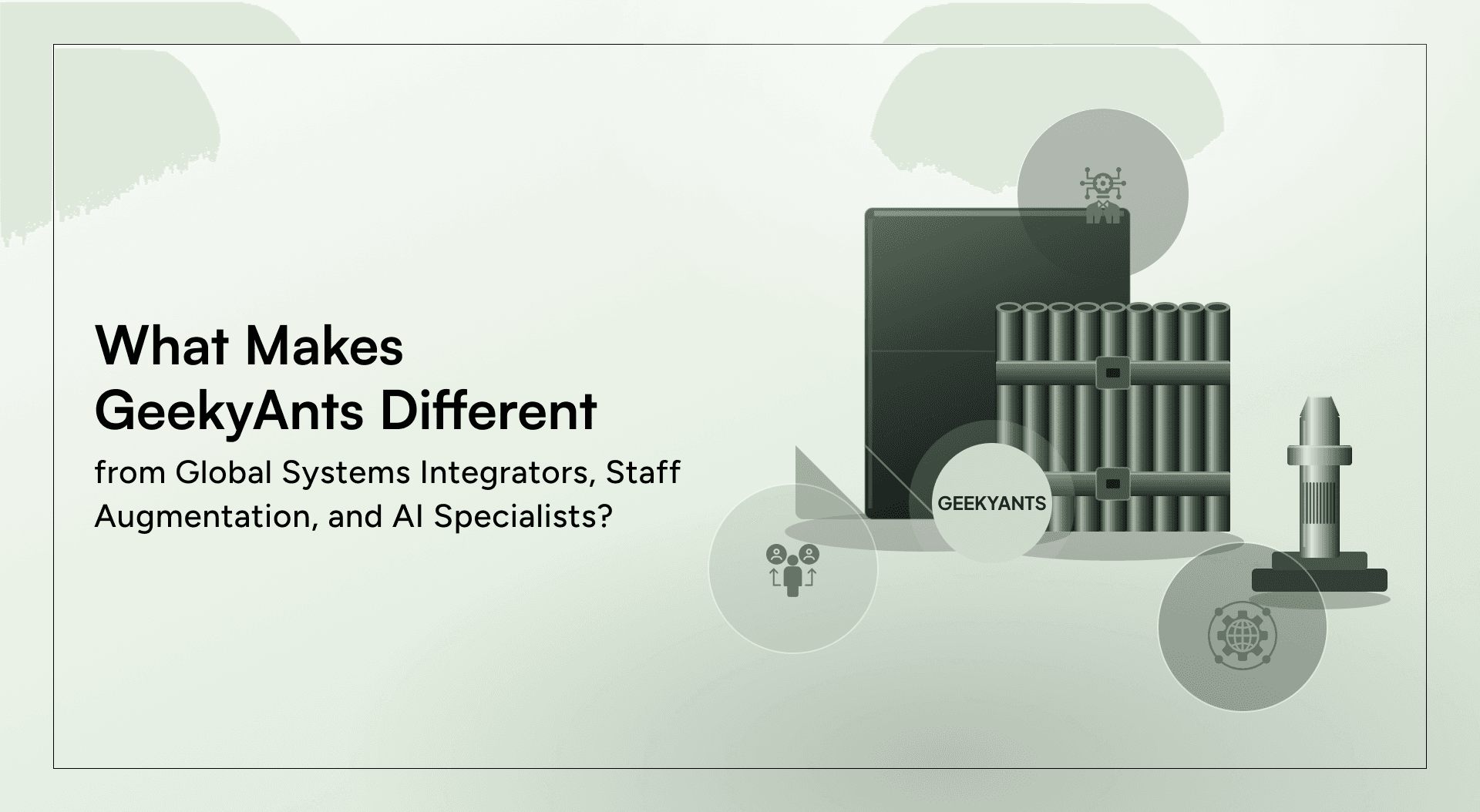
How Does Staff Augmentation, Global Systems Integrators, and AI Specialists Differ From One Another?
Staff augmentation is useful when you already have product, architecture, and delivery leadership in place and need more engineering capacity. The added engineers work within your existing roadmap, architecture, processes, and technical direction. That can be the right choice when the problem is capacity. In a traditional staff augmentation model, the client typically retains responsibility for product decisions, technical direction, coordination, and delivery.
A global systems integrator serves a different need, as they are generally better suited for very large, multi-country transformation programs requiring extensive onsite presence, enterprise software implementation, procurement management, and coordination across multiple vendors. But an enterprise product initiative does not always require that organizational structure. GeekyAnts takes a more focused approach, with cross-functional teams and direct access to the architects and engineers involved in technical decisions.
AI specialists deal with model experimentation, prototypes, or focused AI use cases. The challenge comes when that AI capability needs to become part of a working product. An AI feature still has to connect with product workflows, user experiences, APIs, data systems, cloud infrastructure, security controls, testing, deployment, and monitoring.
To understand simply:
In Staff Augmentation, you are primarily adding people for support or meeting timelines, not transferring responsibility for the product outcome.
With a Global Systems Integrator, you are bringing in a large-scale transformation partner to manage complex enterprise programs, often across multiple systems, vendors, and geographies.
With an AI Specialist, you are bringing in focused expertise for AI models, prototypes, or specific use cases, but may still need broader product engineering support to take that capability into production.
That is where GeekyAnts brings a broader product-engineering model by connecting AI capability with product architecture, validation, security, and production readiness.
How Can GeekyAnts Take Responsibility Across the Product Lifecycle?
GeekyAnts can take responsibility across the product journey, starting with product requirements and user journeys and continuing through solution architecture, design, engineering, testing, deployment, and post-launch work, depending on the engagement.
Depending on the engagement, the team can bring together product or business analysis, architecture, design, web and mobile engineering, backend engineering, QA, DevOps, and AI expertise under one delivery model.
This can include decisions around APIs, integrations, and data architecture, along with security, scalability, CI/CD, deployment, monitoring, documentation, knowledge transfer, and rollback readiness. These areas determine whether a feature or release has the testing, security, documentation, deployment, and operational checks needed for production.
A feature is not complete simply because the code has been written. The team also needs to address its acceptance criteria, testing, security, documentation, and operational readiness based on what the feature requires.
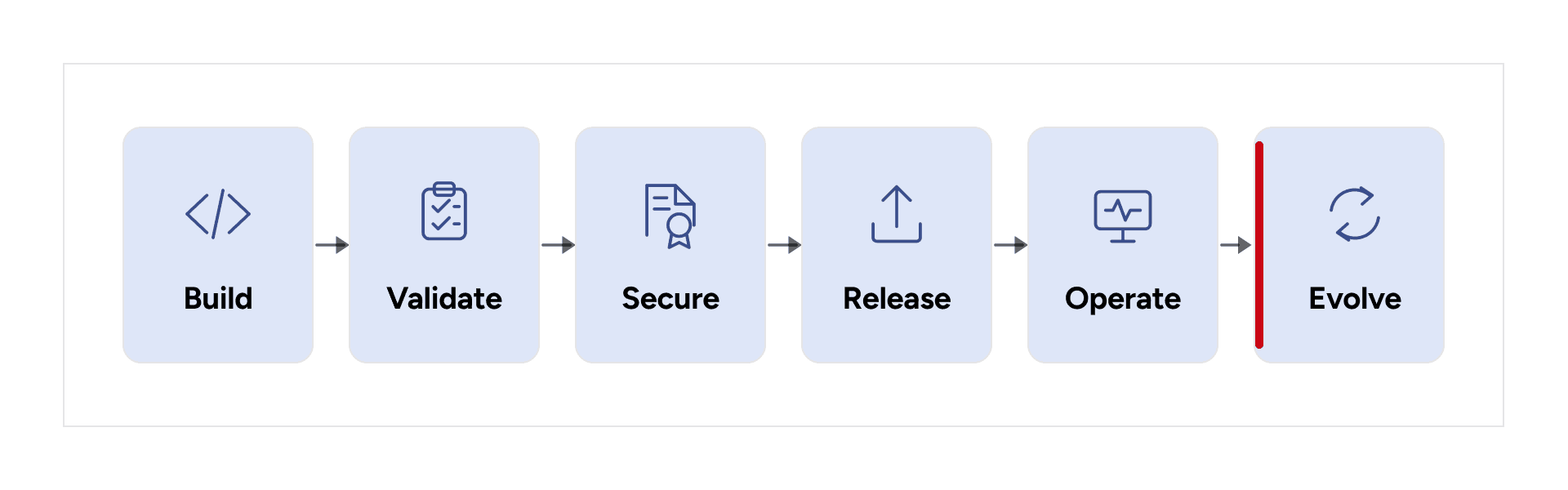
The exact responsibilities depend on the engagement, but the principle stays the same: delivery is more than writing and handing over code. It means working through the decisions and checks that make the product ready to use, support, and change after launch. That gives the client a clearer line of responsibility. Instead of coordinating separate teams across each stage, the client can work with a cross-functional product-engineering team that can carry responsibility across those stages when the engagement calls for it.
Five Situations Where Engineering Capacity Demands Product Engineering Ownership
This model is more suitable when engineering capacity does not solve the underlying delivery challenge.
1. Moving a Prototype into Production
A working demo proves that an idea can work, and moving it into production requires architecture, testing, security, deployment, monitoring, and the decisions needed to support the product after launch.
2. Modernizing a Legacy Platform Without Disrupting the Business
Modernization requires the team to understand the existing architecture, plan the changes, manage dependencies, and keep the product running as the underlying system evolves.
3. Integrating AI into an Existing Workflow
The work does not end when the model or prototype works. An AI capability has to connect with the product, data, APIs, user experience, and business processes around it.
4. Addressing Loss of Momentum in Delivery
When risks remain unresolved, technical assumptions go unchallenged, or architectural decisions create new problems, which adds more people without fixing the underlying issue. Which is why you need a team that examines the product, brings those issues to the surface, and helps move the delivery process forward.
5. Scaling a Product Beyond Simple Coordination
Multi-tenant, multi-role, regulated, or high-scale products create dependencies across product, engineering, quality, security, and operations. These are the situations where coordinated ownership becomes more important.
Product Engineering Across Discovery, Delivery, and Operations
Security, scalability, and other non-functional requirements also need to be considered before the product reaches production.
Ownership can continue through engineering standards, code reviews, and technical quality; automated integration, regression, and performance testing; and CI/CD, deployment, monitoring, and rollback readiness. This also includes architecture decisions, risk registers, dependency tracking, sprint reviews, release gates, executive reporting, documentation, knowledge transfer, and post-launch evolution.
The underlying principle is straightforward - writing the code is only one part of completing a feature. Acceptance criteria, testing, security, documentation, and operational readiness also need to be addressed based on what the feature requires.
Which Delivery Model Fits Your Business Requirement?
The right delivery model depends on what you need the partner to take responsibility for.
Delivery Requirement | Best-fit Engagement Model |
Additional engineering capacity | Staff augmentation |
A large, multi-country transformation | Global systems integrator |
Fundamental AI or model research | Specialist AI research firm |
Product ownership, hands-on engineering, and production accountability | Product engineering partner |
Staff augmentation makes sense when your product and engineering leadership are already in place and the gap is capacity. A global systems integrator can fit a large transformation that spans countries, vendors, and enterprise systems. A specialist AI research firm may be the right choice when the work centers on model research or proprietary algorithms.
GeekyAnts fits when the product needs a team that can connect product decisions with engineering execution, and production readiness. With 20 years of engineering experience since 2006 and 550+ engagements across products and enterprises, GeekyAnts brings AI product engineering capabilities to enterprise delivery.
Talk to GeekyAnts to discuss your requirements and find the right engineering approach.