
When Tesla ramped up Model 3 production, its biggest roadblock was not manufacturing—it was an ERP system that could not keep up. Supply chain fluctuations, shifting demand, and real-time production changes required instant adaptability, not an ERP that took weeks to reconfigure. This challenge is not unique—across industries, rigid ERP systems create inefficiencies, slowing decision-making and stalling business growth.
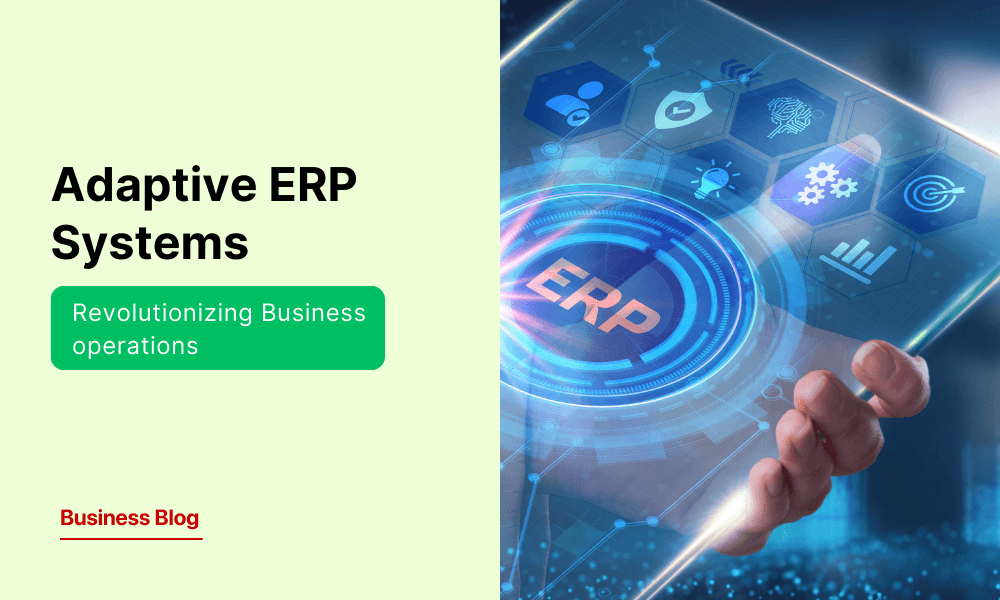
A 2023 Gartner report found that 90% of organizations struggle with ERP inefficiencies, leading to operational delays and missed opportunities. Adaptive ERP systems are changing this landscape. Unlike traditional ERPs, which demand manual updates and costly overhauls, adaptive ERPs leverage AI, machine learning (ML), and real-time analytics to self-optimize, integrate seamlessly, and scale dynamically—ensuring businesses stay agile in an unpredictable market.
But how does adaptive ERP truly differ? What impact does it have on enterprise efficiency, and what challenges must businesses navigate for successful adoption? This blog explores the real-world benefits of adaptive ERPs, their competitive edge over traditional systems, and why they are shaping the future of enterprise operations.
Understanding Adaptive ERP Systems
For decades, ERP systems have been the backbone of enterprise operations, streamlining critical functions like finance, supply chain, HR, and procurement. However, traditional ERPs operate on rigid frameworks, often requiring custom coding, expensive upgrades, and complex workarounds to keep up with business changes. As a result, organizations find themselves locked into inflexible systems that struggle to adapt to market shifts and operational demands.
Adaptive ERP systems are designed to solve this problem. Built for flexibility and real-time responsiveness, they leverage advanced technologies to eliminate inefficiencies and enhance decision-making. Artificial Intelligence (AI) and Machine Learning (ML) automate processes, detect operational bottlenecks, and provide predictive insights. Real-time data analytics ensures businesses can respond proactively to market fluctuations rather than reacting after the fact. Meanwhile, cloud-native architecture offers scalability, remote accessibility, and seamless third-party integrations, ensuring the ERP system evolves alongside business needs.
Unlike static ERP systems that require manual reconfiguration, adaptive ERPs continuously learn and adjust, keeping enterprises agile, data-driven, and future-ready—without disruptive overhauls or excessive downtime.
Business Benefits & Industry Applications
Adaptive ERP systems are eliminating inefficiencies and transforming business operations across industries. Here is how they are making a measurable impact in manufacturing and retail.
1. Manufacturing: Strengthening Supply Chain Resilience
Supply chain disruptions can lead to delays, inventory imbalances, and increased costs—challenges that traditional ERPs struggle to manage in real-time. Adaptive ERPs enhance supply chain efficiency by:
- Predicting demand fluctuations with AI-driven analytics, and optimizing inventory management.
- Adjusting procurement strategies dynamically based on supplier performance and raw material availability.
- Improving production planning through real-time machine performance tracking, reducing downtime and maintenance costs.
2. Retail: Optimizing Customer Experience & Inventory Management
Retailers need real-time agility to balance inventory, optimize sales channels, and personalize customer interactions—areas where traditional ERPs fall short. Adaptive ERP enables:
- AI-driven demand forecasting, ensuring accurate stock levels across locations.
- Personalized promotions based on the customer buying behavior and real-time data insights.
- Omnichannel integration, creating a seamless shopping experience across e-commerce, in-store, and mobile platforms.
By adapting to market shifts in real-time, businesses can improve efficiency, reduce costs, and enhance customer satisfaction—gains that static ERP systems simply cannot deliver.
Implementation Challenges & Practical Solutions
While adaptive ERP systems offer greater flexibility and efficiency, transitioning from legacy ERPs comes with its own set of challenges. Data migration and system integration can be complex, as businesses must ensure seamless compatibility with existing applications. A phased migration approach, supported by API-driven integrations and AI-powered data cleansing, helps minimize disruptions and prevent data inconsistencies.
Another major hurdle is user adoption. Employees accustomed to traditional ERP workflows may resist change, slowing down implementation. Ongoing training programs, combined with intuitive, AI-driven interfaces, can ease this transition by making the system more user-friendly and accessible.
By strategically addressing these challenges, businesses can maximize the ROI on their ERP investments and ensure a smooth, disruption-free transformation.
Comparing Adaptive vs. Traditional ERP Systems
For businesses evaluating an ERP upgrade, recognizing the key differences between traditional and adaptive systems is essential for making an informed, future-ready decision. The table below provides a clear comparison of critical factors.
Factor | Traditional ERP | Adaptive ERP |
Customization | Requires manual coding & system updates | AI-driven auto-adjustments & configuration |
Scalability | Limited; requires expensive add-ons | Cloud-based, scales dynamically |
Real-Time Insights | Batch-processed, often delayed | Instant data-driven decision-making |
Integration | Complex, requiring third-party connectors | Seamless API-driven integration |
Cost Efficiency | High upfront cost, expensive upgrades | Subscription-based, lower maintenance costs |
Adaptive ERPs offer unmatched agility and efficiency, making them a future-proof investment for businesses seeking long-term scalability and operational flexibility.
Future of Adaptive ERP Systems
The evolution of adaptive ERP systems is far from reaching its peak. As businesses demand greater agility and intelligence, emerging technologies are reshaping how ERPs operate. IoT-driven ERP integration is enabling real-time asset tracking and predictive maintenance, allowing businesses to preempt disruptions before they occur. Advanced AI and machine learning algorithms are further refining decision-making and workflow automation, reducing reliance on manual processes. Meanwhile, hyper-personalized ERP interfaces are transforming user experiences, dynamically adapting dashboards based on individual roles and operational priorities. These advancements are not just incremental upgrades—they are fundamentally redefining enterprise management, ensuring that businesses remain resilient, data-driven, and future-ready in an ever-changing landscape.
Conclusion: Why Adaptive ERP is the Future
Business landscapes are no longer static—neither should ERP systems be. Companies operating with rigid, outdated ERP solutions find themselves unable to keep up with rapid market shifts, evolving customer demands, and increasing operational complexities.
Adaptive ERP systems change this reality, offering real-time intelligence, AI-driven automation, and dynamic scalability to help businesses stay ahead. Their ability to self-optimize, integrate seamlessly, and evolve with organizational needs makes them more than just a software upgrade—they are a strategic advantage.
At GeekyAnts, we build scalable, intelligent, and future-ready ERP solutions tailored to evolving business needs. Let’s shape the future of enterprise technology—together.