
In the current gold rush of Generative AI, a stark divide has emerged between companies that experiment with AI and those that scale it. For AI consulting and services firms, a sobering reality has set in: Security is no longer a technical hurdle; it is your most powerful revenue lever.
When a B2B client evaluates an AI product, they aren't just buying features; they are inheriting risk. If your security posture is reactive, your sales cycle will balloon. Companies that lead with a "Security-First" architecture report sales cycles that are 30% to 50% shorter than those scrambling to answer security questionnaires mid-deal.
Security as a Revenue Accelerator
High-authority consulting firms shift the narrative from "preventing disaster" to "enabling speed." Security readiness shortens the distance between a "Yes" and a signed contract in three specific ways:
A. Slashing Sales Cycles by 40%
The traditional InfoSec review for AI products currently averages 6 to 9 months. By adopting a "Ready-to-Audit" posture—complete with pre-mapped documentation for the NIST AI Risk Management Framework and the EU AI Act—consultancies can bypass standard friction points.
- Revenue Impact: Faster closing means higher Net Retention and a more aggressive "Land and Expand" strategy.
B. Eliminating "Shadow AI" Churn
One in five organizations reported a breach due to "Shadow AI" (unsanctioned tools) in the past year. Enterprises are now aggressively purging vendors that don't offer centralized governance.
- The Revenue Advantage: Consulting services that provide Agentic Registry Governance and real-time visibility into model usage become "un-churnable" infrastructure.
C. Capturing the "Trust Premium"
Buyers in 2026 are increasingly moving away from "Black Box" SaaS models toward Sovereign AI solutions.
- The Revenue Advantage: Firms that offer private VPC deployments, PII masking via RAG (Retrieval-Augmented Generation), and Local Data Processing can command a 15–25% price premium over generic competitors.
The 2026 AI Security Framework
To establish authority, your firm must move beyond standard cybersecurity. Deep expertise in 2026 requires mastery of the AI Security Stack:
Pillar | Strategic Revenue Value | The Expert Implementation |
|---|---|---|
Adversarial Defense | Prevents brand-damaging jailbreaks. | Implementing MITRE ATLAS-based red-teaming to stress-test prompt injection. |
Model Explainability | Unlocks high-stakes sectors (Health/Finance). | Using SHAP or LIME models to provide "Reasoning Traces" for AI decisions. |
Agentic Governance | Scales autonomous systems safely. | Enforcing Least Privilege Role-Based Access (RBAC) for autonomous AI agents. |
GeekyAnts Case Study: The "Governance First" Win
The Challenge: A global FinTech leader processing $400M+ in annual payments wanted to integrate an AI-driven "Architecture Review Assistant" to automate technical audits. However, the project stalled. The client’s internal compliance team was paralyzed by "single-vendor dependency" risks and potential IP leakage into public LLMs.
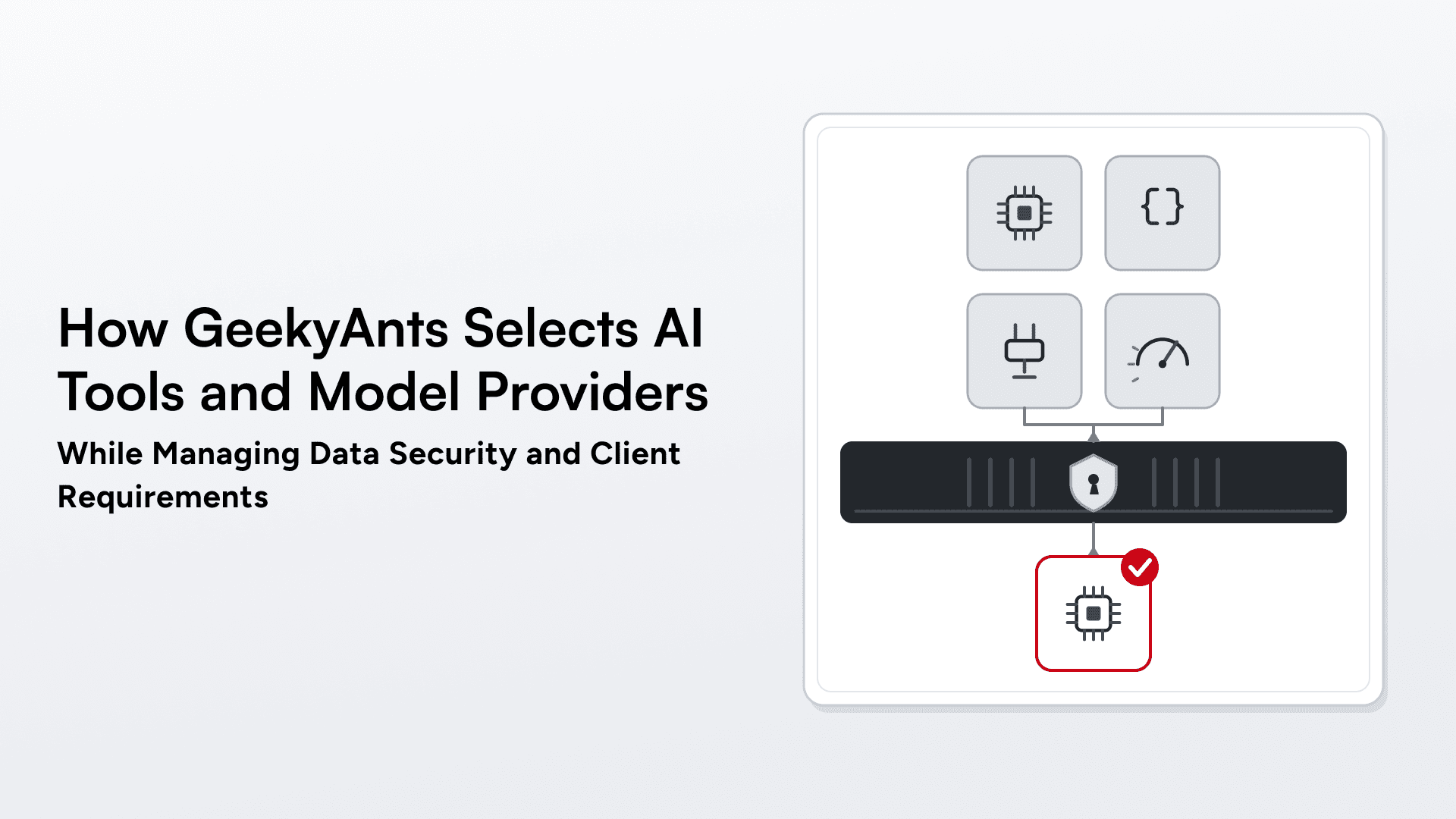
The GeekyAnts Solution: Instead of pushing a generic AI wrapper, the GeekyAnts team deployed a Custom AI Gateway. This layer provided:
- Model Agnostic Governance: The ability to switch between LLMs without re-engineering the security layer.
- Automated Policy Enforcement: Real-time PII filtering and audit logs that satisfied the bank's strict compliance requirements.
The Revenue Impact: By leading with a governance-heavy architecture, the project moved from a stalled POC to a full-scale production rollout in record time.
- 88% Reduction in turnaround time for technical reviews.
- Zero-Blocker Launch: Passed a Tier-1 financial security audit on the first attempt.
- Scale: The system now handles complex architecture diagrams in under an hour, a task that previously took days of manual senior engineering time.
Conclusion
AI products that treat security as an afterthought will find themselves relegated to low-stakes, low-margin tasks. Conversely, firms that integrate security into the very fabric of their AI deployments don't just protect data; they protect their revenue, their reputation, and their future.