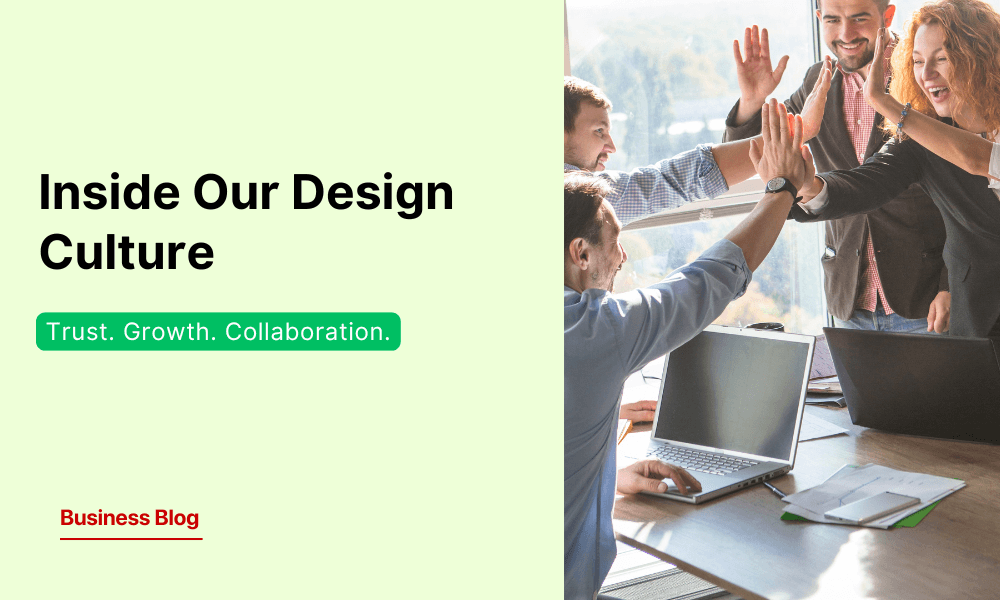

What does it take to build a high-performance design team? I have thought about this often, not only as the Head of Design, but as someone who has grown alongside a team that continually impresses me with its passion, resilience, and creativity.
At GeekyAnts, we do not subscribe to one-size-fits-all solutions. What we’ve built is special, not by replicating best practices, but by co-creating our path. And if there’s a secret sauce to our performance, here’s what’s been simmering beneath the surface.
It Begins with Culture
We don’t lead with rules—we lead with trust.
In our team, every voice matters—whether you are an intern or a senior lead. Ideas, feedback, suggestions, even complete structural overhauls—everything is open for discussion. Some of our most effective frameworks, like our design template structure, didn’t originate from leadership. They emerged through shared conversations and were shaped by what truly worked for us.
It’s never been, “Here’s how we’ll work.” It’s always been: “What do you think works best?”
When the entire team aligns, that consensus becomes more than a rule—it becomes a rhythm we all choose to follow.
We Learn, We Share, We Repeat
Learning is foundational to our ecosystem, but sharing is equally vital.
Every two weeks, our designers host informal presentations to showcase new tools, trends, or techniques. These sessions are not structured like formal meetings—they are open, engaging spaces that empower even the quietest voices to grow into confident storytellers.
But at GeekyAnts, knowledge-sharing goes deeper.
After each project, designers are encouraged to present case studies—not the polished outcomes, but the real journey:
- What went wrong?
- What proved challenging?
- How were those challenges overcome?
These reflections enable the team to learn from real-world scenarios and appreciate the breadth of work happening across the studio. So when someone encounters a similar obstacle down the line, they already know who to reach out to—making our team smarter, faster, and more connected.
Being Together Changes Everything
Design is a collaborative sport, and when you are in the same room, the dynamics shift entirely.
There’s something irreplaceable about co-creating at a whiteboard, catching someone’s expression during a brainstorm, or diving into a spontaneous hallway conversation. Empathy flows more easily. Feedback feels lighter. Energy builds naturally.
That’s why showing up in person isn’t only about work—it’s about building genuine connections.
And we make time for it. From Women’s Day to birthdays, Men’s Day to milestone wins, we embrace every opportunity to celebrate. Whether big or small, we believe in pausing to appreciate—because joy, laughter, and recognition sustain us as much as great design.
Process, Not Pressure
We have built systems, not to restrict creativity but to support it.
From design systems and documentation to checklists and review rituals, we aim for clarity over chaos. But we’re never rigid. If a process doesn’t serve us anymore, we evolve it. The only thing we hold tightly? The value of thoughtful, user-centred design.
We’re not chasing perfection. We’re chasing progress, purpose, and impact.
Different Projects, Different Perspectives
One of our biggest strengths is the diversity of work we take on. Healthcare, fintech, e-commerce, edtech — each domain brings new constraints, new users, and new thinking.
This variety keeps our minds fresh. It challenges assumptions. It makes us better designers, faster thinkers, and sharper problem-solvers.
Soft Skills Make Strong Designers
In our team, design is evaluated not only by its appearance, but by how effectively you can explain it, defend your decisions, and empathize with others.
We focus a lot on:
- Clear client communication
- Effective documentation
- Explaining the why behind our design
Because a great design isn’t enough if you can’t take people along with your thinking.
Celebrating Consistency and Creativity
We don’t wait for big launches to celebrate.
Our GeekWiz Awards shine a light on people who go above and beyond — whether it’s in collaboration, leadership, innovation, or quiet consistency.
We also run Design Challenges to stir up creativity and keep that playful edge alive. These aren’t about competition — they’re about inspiration and expression.
And most importantly, we celebrate learning itself. Whether it’s a smooth sprint or a bumpy ride, we take time to reflect, laugh, share, and grow.
Leadership That Listens
Leadership, for us, is not about giving orders — it’s about asking better questions.
We mentor. We review. We support.
We also say, “I don’t know, let’s figure it out together.”
And that, I believe, is the kind of leadership design teams deserve.
So What’s the Secret Sauce?
It’s not tools. Not templates. Not tight deadlines.
It’s trust.
It’s shared learning.
It’s real conversations, real collaboration, and real care.
We are still learning. Still evolving. But one thing is clear:
When you build a team where people feel safe, seen, and supported, performance is not something you push for. It’s something that naturally flows.
And that’s what makes a design team truly high-performing.