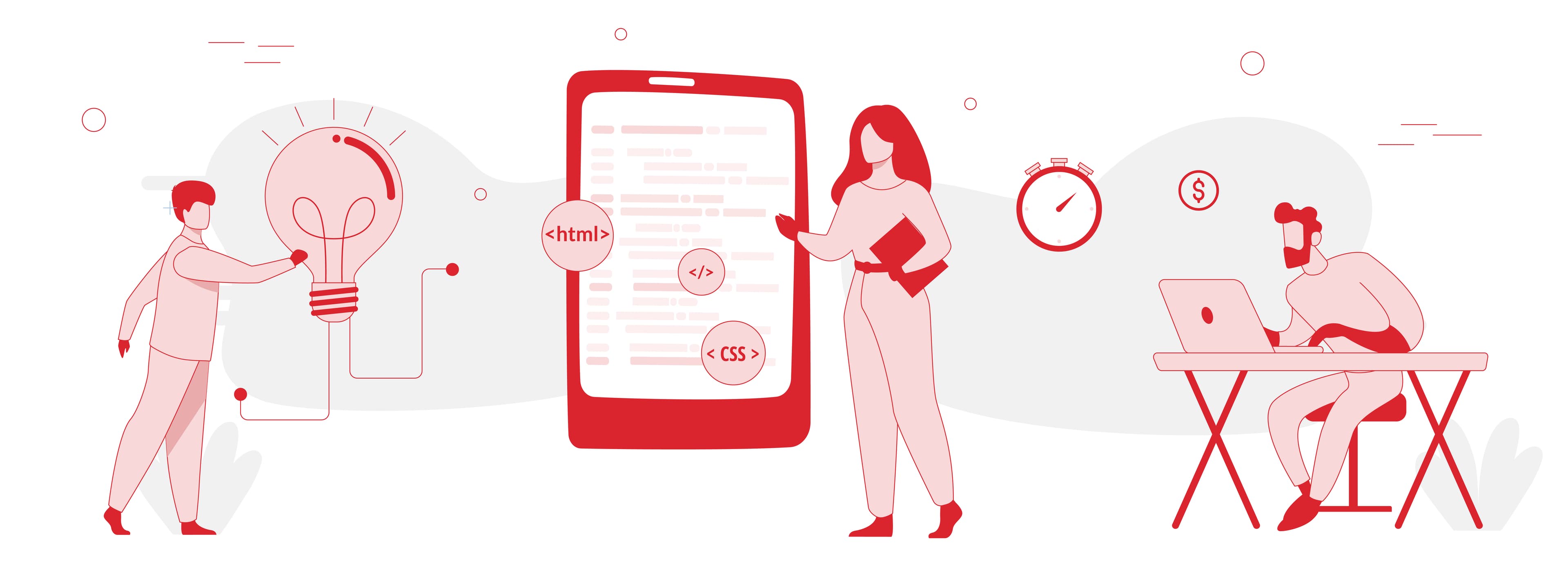

Developing mobile and web apps is expensive work, not just in terms of commercials, but also in terms of time invested and efforts made. We, as service providers, understand the importance of balancing the holy trinity to make sure that costs don’t spiral into a chaotic frenzy, but your client, as a customer, might not. As obvious as the fact that the Earth is not flat, it does fall upon app developers to help clients make their products Time & Cost Effective.
Making the entire app development process as quick and cost-effective as possible might seem like an impossible mountain to climb, but it’s not as difficult as it may seem. A few additions and tweaks and a lot of communication can solve this problem.
Here are a few ways you can make Mobile & Web App development labour-saving and frugal:
Understand the Client.
Even though a lot of clients do come in with specific timelines, fixed budgets and a good understanding of the product they want to build, more often than not, people do walk in with an abstract and nothing else. It is in those moments where it’s important to help them be aware of what they’re trying to build. Given the scenario, we always help the client streamline their thoughts and form a solid foundation through the abstract that they are relying on. Although the approaches to achieve this might be different, the end goal remains the same: to get clarity. Sometimes, clients are aware of their budget constraints, or time constraints. In those scenarios, the questions that would be relevant are different than what you might generally ask to understand the project.
Questions? Questions?
So, how do you understand what the client wants? When in doubt, ask. As a dev company, we tend to ask a lot of questions to our clients to understand their product better. “What exactly are you trying to accomplish?” “What have you envisioned your product as?” “What should the users be able to do with the product?” “Are there any unique features that would help your product stand out from the competition?”...etc. are some of the questions that help the client understand their product better and help us make educated decisions. Questioning the nitty-gritty details of the product should be a common practice and it has no side-effects.
Remember the past.
Relying on your past experiences is the most effective weapon in your arsenal and you shouldn’t be afraid to use it. You might encounter a lot of projects with similar directions, requirements or even constraints. That’ll only make the entire job easier to plan, but remember to learn from the newer experiences that you find yourself soaking in. A lot of scenarios will require you to make a lot of out-of-the-box decisions. Be wary of what works and what doesn’t and build on the successful bits. That way, you can have the dual benefit of effective planning and timely execution.
Customer is King.
Businesses rely on products and services, and these apps are representative of that reliance. Hence, it is crucial to always keep the business in mind when developing plans. Keep the main business idea at the forefront and identify features and functions that are essential to fulfill that idea. Learn to differentiate between must haves and should haves and you will always come up with plans that work. Offer to build a Minimum Viable Product (MVP) first. If time and cost is a concern, an MVP can help save both. A lot of features might look good on paper, but they will definitely add to the costs. In such scenarios, prioritize. Trust that it works. We do it all the time.
Oh, and also… always try to make it profitable for the client. It works wonders.
It doesn’t stop at planning!
Poor execution can ruin perfectly viable plans. Of course, there’s the factor of dynamism and the itch to experiment with new things. Do that, by all means, but remember: if it needs to be quick, go for proven tech. If you have time aplenty, experiment with new tech stacks. Always be aware of what has been committed and monitor the processes closely. Communicate blockers, issues, updates etc. to the client regularly. You can read more about etiquettes that you can follow here. Be ready for damage control and have backups ready, even if you think you don’t need them. Planning is crucial but execution is key.
To Summarise:
- Learn more about your clients and their ideas. Help them understand their ideas better.
- Ask as many questions as you can. Get into the thickest and the thinnest details possible. It’ll help you make educated decisions.
- Rely on your past experiences and learn from them. They are your best friend through this.
- Always keep the business in mind. Make necessary features your priority. Everything else comes later. Try to make the process as profitable for the client as possible. A good reputation never hurt anyone.
- Development processes add to the cost. Offer what is necessary.
- Always aim to venture into the known rather than the unknown. It’s easier to plan things you’re aware of. Plan the budget of the client judiciously.