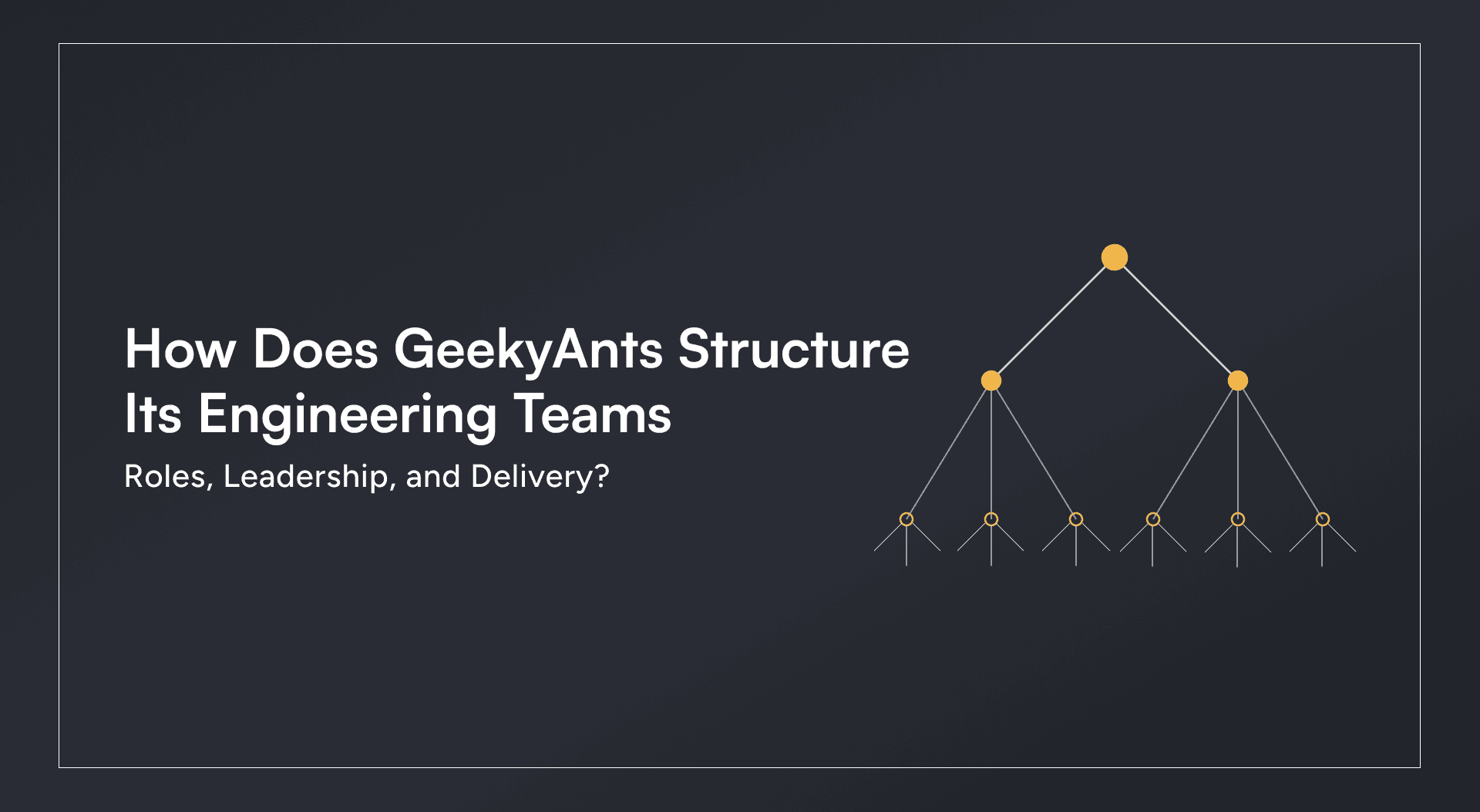


Working with external engineering partners has become a common way for companies to add specialized expertise, expand delivery capacity, or build products without growing every capability internally. But bringing in an external team also creates a very practical concern: who is actually going to work on the product?
A CTO or product leader needs to know who makes technical decisions, who manages delivery, who clarifies requirements, and who handles changes to scope. They also need a clear answer when a release slips, a quality issue appears, or a technical decision needs to be revisited.
At GeekyAnts, we build the team around the product, its stage, technical complexity, and the way the client wants to work. In a managed delivery engagement, GeekyAnts manages the agreed project scope and delivery structure, with technical and delivery leads responsible for their areas of execution. In team augmentation, selected GeekyAnts engineers or specialists work within the client’s existing team, where the client may retain responsibility for planning, task allocation, reviews, and delivery.
The difference is important because the right engagement should give the client both the people needed to build the product and clarity about who owns each part of the process.
How is the Team Structured for Different Project Stages?
Team compositions are based on what the product needs at that point, the technical complexity involved, and the engagement model.
1. Project Clarity
The team can include a Business Analyst, UI/UX designers, design leads, and senior technical contributors. They work on the requirements based on the clarity of the project about user journeys, architecture, and the delivery approach before the engineering process moves forward.
2. Building the Product
A managed engagement can bring together a Technical Lead, engineers, requirements support, and QA. Team allocations can change as the work moves from development to testing and release. A solution architect, DevOps or cloud engineer, or AI/ML engineer can join when the scope calls for that expertise.
3. Working With the Client’s Delivery Structure
Engineers or specialists join the client’s team and work within its existing planning, task allocation, review, and management processes.
Team seniority also depends on the role and complexity of the engagement. Senior technical contributors are involved when the work requires architecture decisions, technical direction, or complex implementation, while other roles are staffed according to the work they are responsible for. Clients can review proposed profiles and discuss the experience assigned to each role before onboarding.
As the scope or complexity of an engagement increases, the team structure can expand accordingly. For support and maintenance, team involvement is based on the application stack, agreed support capacity, ticket priorities, and service window. New features or additional infrastructure support can be scoped separately when required.
Who is Responsible for Architecture, Delivery, Quality, and Security?
A team works better when everyone knows where a decision belongs. In a managed engagement, GeekyAnts assigns responsibility across technical direction, delivery, requirements, quality, account coordination, and escalation rather than leaving the client to work out who handles what.
- The Technical Lead or Solution Architect guides architecture and technical decisions with the client’s technical stakeholders.
- The Project Manager or Delivery Lead oversees delivery, while the Business Analyst supports requirements and acceptance clarity.
- The Account Manager handles account-level and commercial discussions, including formal scope changes.
- Engineers remain responsible for the quality of their implementation, with technical reviews and QA activities carried out according to the agreed testing scope.
- Security responsibilities are defined across the relevant GeekyAnts engineering, infrastructure/security specialists, and client teams, with reviews, testing, and compliance-related deliverables explicitly scoped as part of the engagement.
When an issue needs escalation, the Account Manager brings in the relevant delivery, technical, or senior business leadership. Routine project matters stay with the assigned delivery and technical contacts.
In an augmentation or fractional engineering setup, some of these responsibilities remain with the client’s existing team. This distinction matters because accountability follows the agreed engagement model, so both sides know who owns decisions, execution, and escalation.
How Do Clients Review the Team and Work Across Time Zones?
Clients can stay involved in who joins the engagement. Depending on the arrangement, they can review proposed profiles, discuss team members, and provide input on the Technical Lead before onboarding. If a team member changes, knowledge transfer and shadowing can also be planned to help maintain continuity.
Once the engagement starts, the Account Manager remains the account-level and commercial contact, while the assigned delivery and technical contacts handle project execution. Routine questions stay with those contacts. When an account-level issue needs broader attention, the Account Manager can involve the relevant technical, delivery, or senior business leadership. The exact escalation process follows the applicable agreement.
Progress reviews, risk discussions, and change-control processes provide additional oversight during the engagement, while formal escalation follows the contacts and process defined in the applicable agreement.
For US clients, delivery can be India-based, either from GeekyAnts’ office premises or remotely. Working-hour overlap and meeting windows are agreed upon as part of the engagement, with IST-based or shifted working hours arranged when collaboration requires them. Onsite deployment can also be discussed and agreed upon separately where required.
This should not be confused with support coverage. Development-team working hours, support capacity, and service windows are separate parts of the engagement and are agreed according to the work required. Clients therefore have visibility into the team and its ownership without needing to manage each engineer themselves.
What Roles Can a GeekyAnts Team Include?
For a managed web or mobile product-development engagement, an illustrative structure could include an Account Manager for shared or part-time account coordination and a Technical Lead whose involvement may be part-time or full-time based on the product’s complexity.
There is no standard GeekyAnts team assigned to every product. The following is an illustrative staffing pattern, not a fixed team package or minimum commitment. Actual roles, allocations, and level of involvement are agreed based on the engagement.
The delivery team can include full-time frontend or mobile engineers and backend engineers, with a Business Analyst or project coordination support allocated according to requirements and delivery needs. A QA engineer can be allocated around the testing and release work planned for the engagement.
Other specialists can join when the scope requires them. These may include UI/UX designers, solution architects, DevOps or cloud engineers, and AI/ML engineers. Some roles may be involved only during specific stages rather than throughout the project.
Conclusion
A smaller augmentation engagement may involve only the engineers or specialists the client needs, working within the client’s existing management and technical structure. A managed engagement may require broader delivery and technical ownership.
The team can therefore change as the product moves from discovery to development, testing, release, and ongoing support.
Need to define the right team and delivery model for your product? Talk to GeekyAnts about the engineering roles, technical leadership, and delivery structure your engagement requires.