
Mar 21, 2024

Optimizing React Native — Mastering Component Efficiency

This article breaks down the talk by Anshdeep Kaur, Software Developer at Engati Technologies, at the recent React Native Meetup held at GeekyAnts, Bengaluru.

Author

Ahona Das
Ahona DasSenior Technical Content Writer
Optimizing React Native — Mastering Component Efficiency

Table of Contents

As React Native continues to rise in popularity, ensuring app efficiency and a seamless user experience becomes paramount. In this talk, we delve into why optimization is essential and explore various strategies to achieve it.

Why Optimization Matters
Screenshot 2024-03-21 at 1.36.03 PM.png

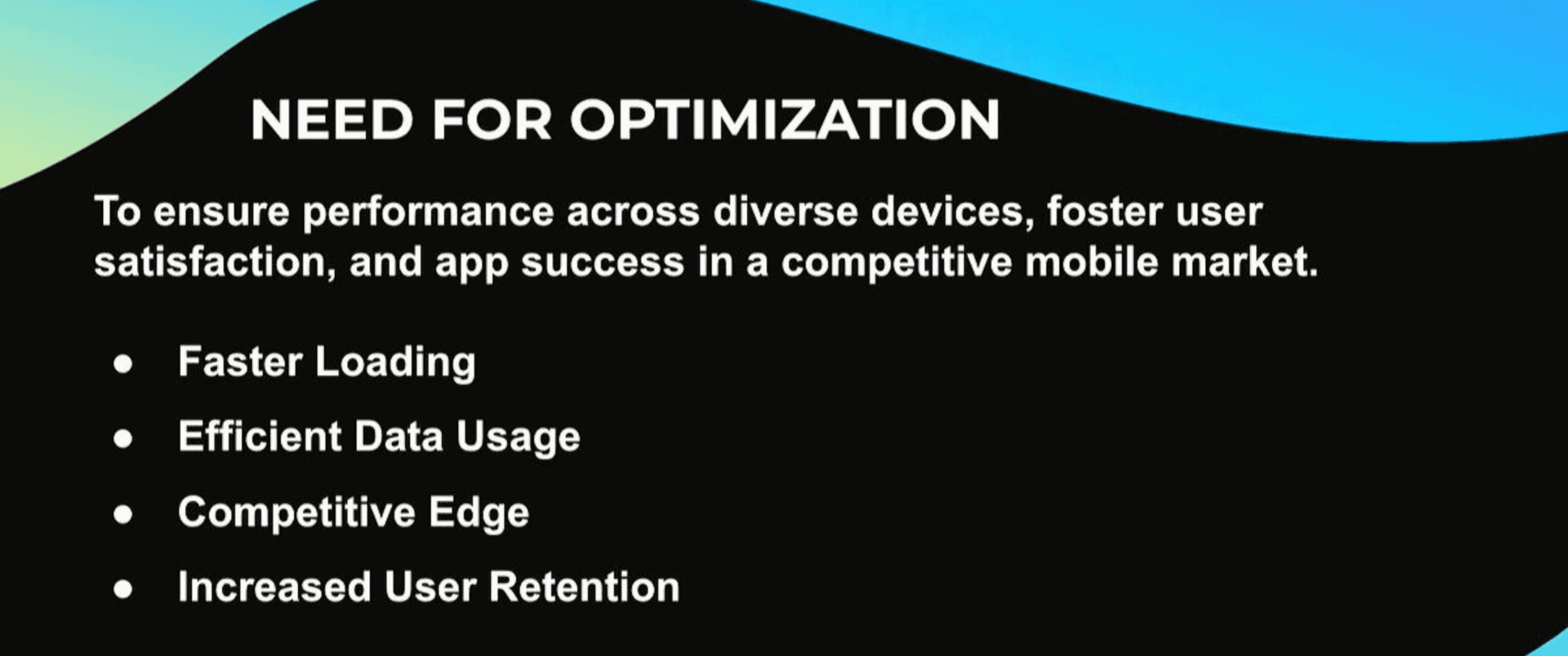
With the increasing complexity of React Native apps, performance issues such as slow navigation, janky animations, excessive render times, and network bottlenecks become prevalent. These bottlenecks hinder user experience and can deter app success in the market. To address these challenges, optimizing performance across diverse devices and network conditions is crucial.

Strategies for Optimization

Let us take a quick look at the strategies discussed by Anshdeep for optimizing React Native.

  • Lazy Loading: Lazy loading enhances performance by deferring the loading of non-essential components until they are needed, thereby speeding up app startup and navigation.
  • Image Optimization: Optimizing images through techniques like lazy loading, compression, and caching reduces load times and data usage, enhancing overall app performance.
  • Code Splitting: Breaking down code into smaller bundles and loading only what is necessary improves app startup time and reduces bundle size, especially beneficial for large or modular applications.
  • Webpack and Repack: Utilizing tools like Webpack and Repack allows for efficient code splitting and chunk management, optimizing app loading and performance.
  • Efficient Virtualized Lists: Leveraging components like FlashList over FlatList optimizes performance, especially in low-end devices, by avoiding unnecessary state resets.
  • Hermes Engine: Utilizing Hermes garbage collection optimizes memory management, reduces runtime memory usage, and improves app responsiveness.
  • Runtime Optimization: Ahead-of-time compilation and bytecode precompilation reduce unwarranted re-renders, enhancing app performance.
  • Additional Strategies: Memoization, component optimization, state optimization, event handler optimization, and selective rendering further improve efficiency by minimizing unnecessary re-renders and optimizing resource usage.

Conclusion

Mastering component efficiency in React Native is essential for delivering high-performing apps with seamless user experiences. By implementing optimization strategies like lazy loading, image optimization, code splitting, and others, developers can ensure their apps remain competitive in the market. Connect with us on LinkedIn to stay updated on the latest optimization techniques. Thank you for joining our discussion on mastering efficiency in React Native.

Don’t forget to check the complete talk and presentation here 🔽
SHARE ON

Related Articles.

More from the engineering frontline.

Dive deep into our research and insights on design, development, and the impact of various trends to businesses.

The AI native Enterprise Evolution | Saurabh Sahu
Article

May 7, 2026

The AI native Enterprise Evolution | Saurabh Sahu

Explore Saurabh Sahu’s insights on AI-native enterprise, AI gateways, model governance, agentic SDLC, and workspace.build for scalable AI adoption from thegeekconf mini 2026.

The Next Era of AI Builders: Building Autonomous Systems for Frontier Firms — Pallavi Lokesh Shetty
Article

May 5, 2026

The Next Era of AI Builders: Building Autonomous Systems for Frontier Firms — Pallavi Lokesh Shetty

Discover Pallavi Shetty’s view on the next era of AI builders, covering autonomous systems, trusted agents, data quality, and frontier firms from thegeekconf mini 2026

The Autonomous Factory: Architecting Agentic Workflows with Clean Code Guards | Akash Kamerkar
Article

May 5, 2026

The Autonomous Factory: Architecting Agentic Workflows with Clean Code Guards | Akash Kamerkar

Akash Kamerkar’s thegeekconf mini 2026 talk explores the ACDC framework for building safer agentic workflows with clean code guards, sandbox testing, and AI-driven software development.

OpenClaw: Build Your Autonomous Assistant | Deepak Chawla
Article

May 4, 2026

OpenClaw: Build Your Autonomous Assistant | Deepak Chawla

Discover how Deepak Chawla explains OpenClaw for building autonomous AI assistants through data preparation, knowledge bases, AI engines, and agent automation.

From Prompt Chaos to Production AI: Spec-driven Development for AI Engineers | Vishal Alhat
Article

May 4, 2026

From Prompt Chaos to Production AI: Spec-driven Development for AI Engineers | Vishal Alhat

Learn how Vishal Alhat’s thegeekconf mini 2026 session explains spec-driven development and how AI engineers can move beyond prompt chaos to build production-ready applications.

The Enterprise AI Reality Check: Notes from the Front Lines
Article

Feb 12, 2026

The Enterprise AI Reality Check: Notes from the Front Lines

Enterprise leaders reveal the real blockers to AI adoption, from skill gaps to legacy systems, and what it takes to move beyond the first 20% of implementation.

Scroll for more
View all articles