
The dynamic world of software and app development is witnessing remarkable growth, but this surge in innovation comes with a vital need for stringent legal and regulatory compliance. Navigating the intricate maze of rules and guidelines can be a formidable challenge, particularly for businesses in the UK, where the tech industry thrives amidst robust regulations.
This comprehensive guide is your compass to understanding the significance of regulatory compliance, deciphering the legal requirements in software and app development, mastering the art of implementing an effective compliance strategy, confronting the hurdles in app development compliance, and embracing the best practices to ensure legal and regulatory compliance.
What is Regulatory Compliance?
In the multifaceted landscape of software and app development, regulatory compliance is an intricate process that demands unwavering attention. It necessitates businesses to remain updated with the latest laws and regulations, invest in the right resources and technologies, and uphold ethical and responsible business practices.
This path not only helps avoid legal ramifications but also nurtures trust with customers and stakeholders, ultimately fostering long-term prosperity in software and app development.
Understanding Legal & Regulatory Requirements in Software and App Development
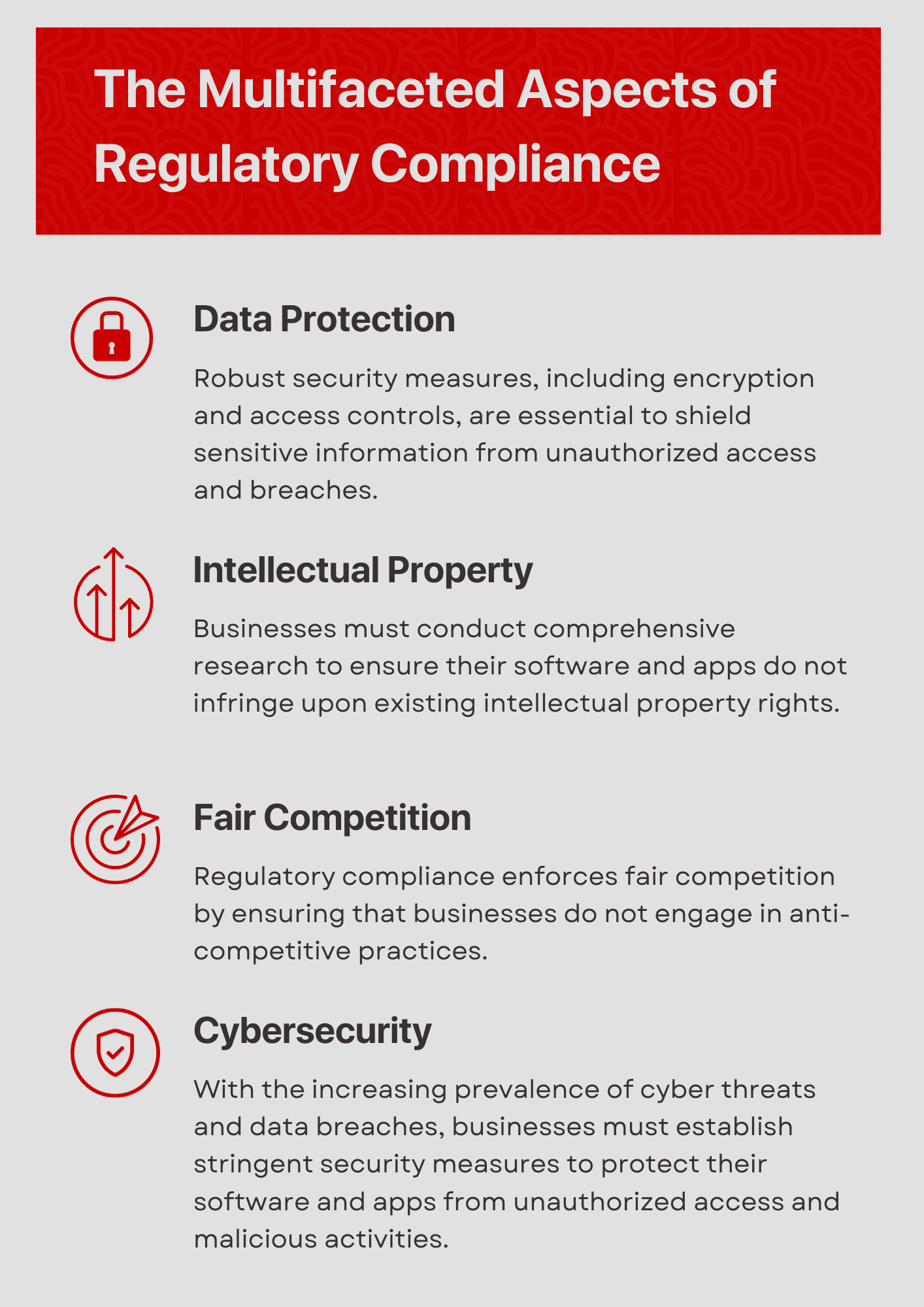
- Meeting Industry Standards: Legal requirements often align with industry best practices and standards, ensuring both legal compliance and the delivery of high-quality products and services to customers.
- Ensuring Fair Competition: Compliance regulations protect against anti-competitive practices, promoting ethical competition in the market and facilitating a level playing field for businesses.
- Maintaining Cybersecurity: Compliance requirements encompass cybersecurity measures, guarding against data breaches and cyber threats. These measures protect user data and safeguard a business's intellectual property and trade secrets.
- Protecting User Data: Regulatory compliance prioritizes the protection of user data and privacy, building customer trust, and establishing businesses as responsible custodians of user information.
Why Regulatory Compliance Is an Important Part of Business
Regulatory compliance covers a vast spectrum of areas, including data protection, privacy, security, intellectual property, accessibility, competition, consumer rights, and more. Ensuring compliance necessitates ongoing vigilance to stay updated with the latest regulations, adapt practices accordingly, and undergo regular audits and assessments.
In the intricate realm of regulations, having a clear grasp of what regulatory compliance entails is indispensable. Regulatory compliance demands aligning your business operations, policies, and practices with the laws, regulations, and guidelines established by regulatory bodies. These regulatory bodies can vary depending on the industry and region, and in the UK's tech industry, key regulators include the Information Commissioner's Office (ICO), the Financial Conduct Authority (FCA), and the Competition and Markets Authority (CMA).

How to Implement an Effective Regulatory Compliance Plan
Regulatory compliance is of paramount importance for businesses across various sectors, especially in the domain of app development. A well-structured regulatory compliance plan is the cornerstone of app success while ensuring adherence to legal standards and industry-specific regulations.
Here's your roadmap to implementing an effective regulatory compliance plan:
- Understand the Regulatory Landscape: Begin by comprehending the intricate web of regulations that apply to your app. This includes data protection laws, accessibility standards, and industry-specific regulations. Awareness is the first step in crafting a robust compliance plan.
- Identify App-Specific Requirements: Recognize the unique requirements of your app, considering its nature, data collection practices, and user base. Tailor your compliance plan to address these specific needs.
- Appoint Compliance Officers: Designate individuals within your organization responsible for ensuring compliance. These compliance officers should possess in-depth knowledge of the relevant regulations and a strong commitment to upholding them.
- Create Compliance Policies: Develop comprehensive compliance policies that clearly outline your commitment to meeting regulatory requirements. These policies should encompass data privacy, security, accessibility, and other relevant aspects.
- Training and Awareness: Conduct regular training sessions to keep your team well-informed about compliance standards and policies. Fostering a culture of compliance is pivotal.
- Monitoring and Auditing: Regularly monitor your app's compliance with internal audits and assessments. Promptly identify and rectify any non-compliance issues.
- Regulatory Updates: Stay vigilant about changes in laws and regulations, adapting your compliance plan to align with new requirements.
- Documentation: Maintain comprehensive documentation of your compliance efforts. This documentation serves not only to ensure accountability but also as valuable support when facing a regulatory audit.
Challenges Faced In App Development Compliance
App development offers a realm of opportunities but is simultaneously accompanied by numerous challenges, especially in the context of regulatory compliance. Sustaining compliance in a dynamic and ever-evolving regulatory landscape is no small feat. Here are some of the primary challenges faced by app developers in ensuring compliance:
- Evolving Regulations: Regulatory standards are in constant flux. App developers must vigilantly monitor these changes to ensure their apps remain compliant.
- Data Privacy: Heightened concerns about data privacy necessitate robust measures to protect user data. Compliance with GDPR or HIPAA is imperative for apps handling sensitive information.
- Accessibility: Guaranteeing that apps are accessible to all users, including those with disabilities, is a significant challenge. Developers must adhere to accessibility standards like WCAG to ensure inclusivity.
- Regular Updates: As laws and regulations change, apps must adapt to meet new requirements. Maintaining consistent compliance is an ongoing process.
- Testing and Quality Assurance: Rigorous testing is essential to ensure an app's compliance. Developers must ensure that their apps meet both functional requirements and regulatory standards.
- Legal Consequences: Non-compliance can lead to severe legal consequences, including fines and damage to reputation, which can be detrimental to an app's success.
Key Best Practices for Legal & Regulatory Compliance
- Stay Informed: The app development landscape is subject to a constantly changing regulatory environment. Staying informed about the latest legal requirements and updates relevant to your app is essential.
- Privacy by Design: Incorporate privacy measures into the core design of your app. Ensure that you follow industry standards and relevant data protection laws, such as GDPR or HIPAA, depending on your app's nature.
- Secure Data Handling: Implement stringent data security measures, encompassing encryption, secure authentication methods, and data access controls to protect sensitive user information.
- Accessibility Compliance: Ensure your app is accessible to all users, including those with disabilities. Comply with accessibility standards like WCAG to make your app inclusive.
- Thorough Testing: Rigorous testing is crucial. This involves both functionality testing to ensure your app meets its intended purpose and compliance testing to verify adherence to legal requirements.
- Regular Updates: Laws and regulations change. Keep your app compliant by performing regular updates, especially when new laws are enacted.
Note: GeekyAnts is your go-to partner for unleashing ingenious applications while maintaining the perfect harmony between success and integrity.
With a track record of helping numerous UK businesses navigate the labyrinth of compliances and regulations, we've become the architects of success stories.
It's your turn to be one of these inspiring success stories.
Explore our case studies and discover the blueprint to your triumph!
FAQs
- What does regulatory compliance mean in software?
Regulatory compliance in software refers to adhering to specific rules, standards, and regulations set by authorities or industry bodies to ensure that software applications meet legal and quality requirements.
- What is regulatory compliance in the pharmaceutical industry?
Regulatory compliance in the pharmaceutical industry entails following strict guidelines and laws to ensure pharmaceutical products' safety, efficacy, and quality. This includes Good Manufacturing Practices (GMP), labeling requirements, and more.
- What is the difference between compliance and regulation?
The main difference between compliance and regulation is that compliance refers to adhering to established rules or standards. In contrast, regulation is the process of creating and enforcing those rules and standards. Compliance is following the regulations.