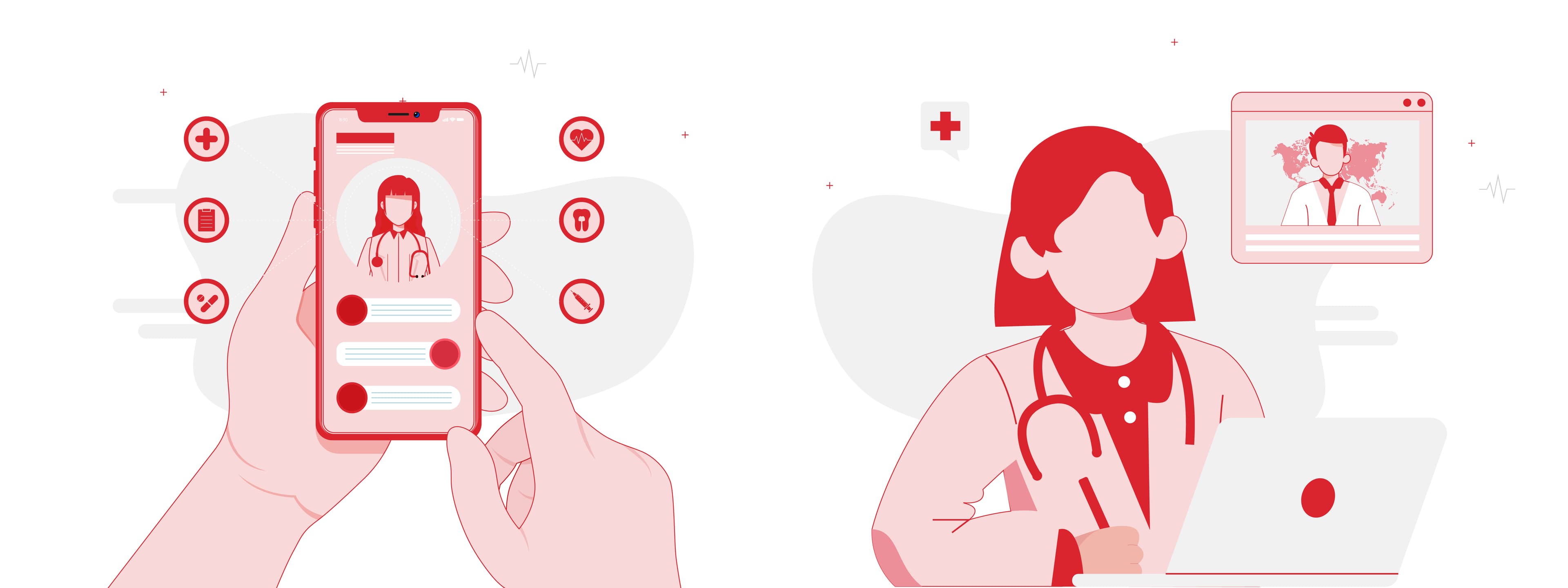

With the course of time, technology has intertwined itself into an inseparable conjunction with our lifestyles. It is majestic to experience the way that technology has juxtaposed old-age methods with new inventions, creating a whole new simplified way to live. Industries and businesses have embraced technology into their operations to constantly build, innovate and seamlessly adapt to them; taking the forefront in the 21st century, one such domain being healthcare.
To say that we have come a long way in how technology has impacted healthcare would be nothing short of an understatement. In the modern world, where technology is the new norm, it has positively impacted multiple verticals within healthcare by providing better and more accessible treatment, improved care and efficiency as well as revolutionising diagnostics, thus establishing its place and future in medical care.
Advancements brought by technology in Healthcare:
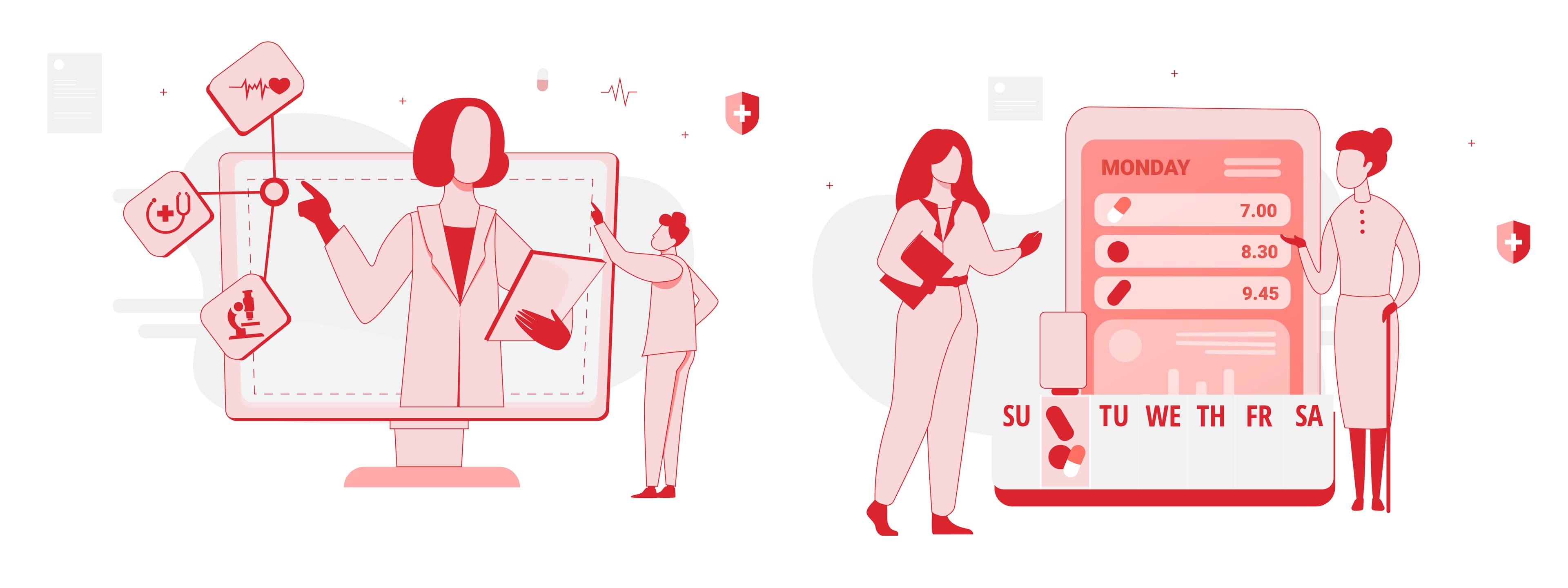
Administrative- E-health Records are the easiest way to store authorised patient records and other information securely in real-time. Since computers have become all the rage since the 1980’s, many amendments have been made to how data is stored, while the advancement and innovation of technology has made this process seamless, fast and secure rendering it almost unrecognisable to how it was. EHRs also record complications in patient cases, hence helping with storage of medical data which can be further used for research and are now commonplace and innovative technologies like cloud-storage and IoT healthcare devices ensure further security and better data storage.
Diagnostics- This branch widely encompasses two sub-branches: 1. Radiology, which uses medical imaging to come to a consensus and 2. Pathology, which is primarily concerned with origin cause and effect of diseases and other illnesses. Since its humble beginnings, diagnostics has seen a massive advancement globally with phenomena like 3D imaging, genetic testing and microbiology.
Trackable technology- Modern wearable technology analyses and transmits data from signals emitted from one’s body. It's all the rage today with devices like smartwatches and smartphones tracking parameters such as movements, sleep patterns, heart rate and blood oxygen levels. Conducting an ECG done or measuring blood oxygen levels can now be done at one’s home instead of physically visiting a hospital. Trackable technology is a boon for preventive healthcare, as all user details are uploaded to cloud storage. Giants like Apple and Samsung offer smartwatches which call your emergency contact(s) in case they sense an anomaly in your medical readings.
Robotics- Though there was once a point where people were apprehensive about relying on technologies like robotics or Artificial Intelligence for their health and medical needs, things have come a long way since. Robotics has changed the face of medicine, including surgery, with the introduction of both semi and wholly operated robotic surgeons offering advanced diagnostics, cost-efficiency and precision. To illustrate, PARO, a Japanese interactive robot which responds to human speech is being used to provide animal therapy in hospitals prohibiting the entry of animals.
GeekyAnts’ contribution to the healthcare industry:
As the entire world is collectively on a mission towards a digitalised future, we at GeekyAnts, believe in delivering the best digital solutions to collectively achieve this combined goal. Our projects, in collaboration with other organisations, have contributed to this, such as the below:
- In 2019, we collaborated with Marigold to create an app where people with mental health conditions could virtually meet-up and discuss their problems anonymously. We were the pioneers to create such an app during a time when people refrained from doing so. In the development of the app, a combination of React, React Native & FeatherJS was used with Redux & mobx-state-tree to manage states. The end product was a success and we were delighted to work with our partner towards this exceptional and unique goal.
- Partnering with a healthcare company, we designed a Neuroacoustic app to improve overall sleep quality by naturally activating a “slow down” message in the brain. It was different from other similar apps because of the app being connected to Biosignal Discs. Our developers used Flutter Firestore and CastlabSDk(for DRM contents) for the audio player, allowing users to download audio sessions locally and play it later when offline at their convenience.
- We worked with an organisation that envisioned a streamlined and effective national healthcare system, based on a web-app to manage organizations & teams within organizations while also featuring Role Based Access Controls to maintain organizational hierarchy. We used ReactJS with Ant Design to build the UI with VanillaJS as the API SDK. ExpressJS was used as the backend API to support the frontend. Our partners were delighted to receive their final product which fulfilled their mission to provide better, effective healthcare for their country.
As the world forays into a digitalised, productive domain, healthcare professionals are doing just the same, allowing them to work more effectively and manage time while engaging with various digital solutions. It has now become possible to consult with a doctor or perform diagnostics with a mere tap on our smartphones. We hope to give it our best to exceed the expectations of our clients as we collectively work towards a modern and digitised medical future!