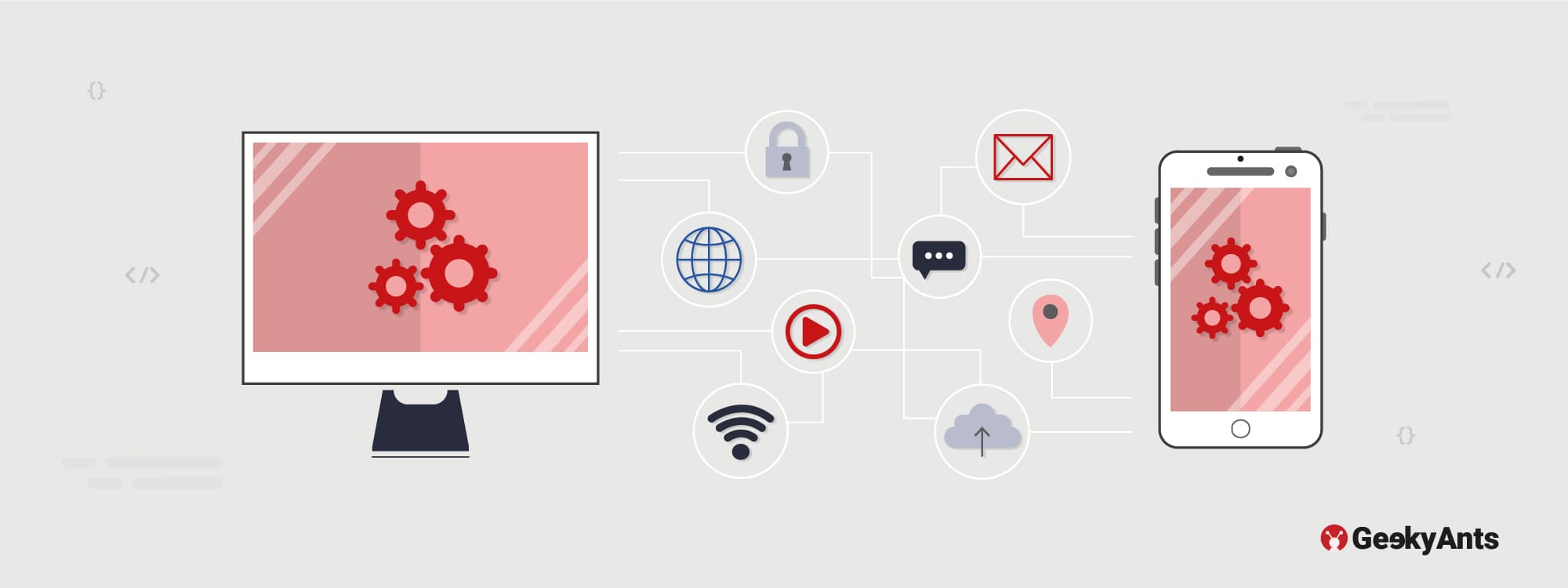

The debate between developing a mobile app or a web app has been around for many years. While the answer to this question largely depends on the specific needs of your business, there are a few key considerations that can help you make a decision. Let's look at how web apps differ from mobile apps while also discussing the features of each to see which one would suit your business better.
Differences between web apps and mobile apps
There are a few key differences between mobile apps and web apps:
- Mobile apps are typically installed on a device, whereas web apps are accessed through a web browser and do not need to be installed on your device. The first is also usually specific to one platform (Android or iOS), while you can use web apps on any platform.
- Mobile apps typically have more features than web apps; however, they are expensive to develop and maintain. Web apps are cheaper to develop, but they don't offer as many features as mobile apps do.
- Developing a mobile app can be more expensive than developing a web app because you need to create different app versions for various platforms. In contrast, web apps are considerably cheaper to develop as it is meant only for a single type of platform.
- Another critical difference between mobile apps and web apps is that you can be more assured of the quality when it comes to the first. On the other hand, web applications need not be approved in the stores, so they may be a little compromised in terms of quality.
Advantages of mobile and web apps
If your business is looking to reach as many users as possible, a mobile app is the way to go. Mobile apps can be installed on devices all over the world, thus providing you with a larger audience. Conversely, if your business is targeting niche industries for users who want to have more control over their experience, then a web app is the way to go with the con being that they can’t be used offline. The most important thing is to understand your users and their needs.
There are many factors to consider when developing a mobile app or a website. The following is a high-level overview of some of the critical factors to consider along with the pros and cons of implementing mobile and web apps:
1. Audience
Web and mobile apps are two different ways of delivering a particular software to its target audience. A web app is a program that you can access through your web browser, while a mobile app is a program that you can install on your phone or tablet. Your audience is likely to be different on mobile and web. Your mobile app is likely to be visited by a broader range of people than your web app as smartphones are much more accessible in today's digital age.
2. Purpose
What is the purpose of your app or website? The purpose of your app will likely dictate the platform you choose. For example, if you want to sell products or services, you would need a mobile app. In contrast, if you're targeting a particular kind of audience who have a determined purpose of visiting your platform, it's more likely that they'll use the web version. For example, banking, investment, healthcare, and real estate sectors benefit more from a web application as it provides a much more secure experience. The target audience can also make use of detailed functionalities that would be harder to access via mobile.
3. Budget
When it comes to deciding whether to develop a mobile app or web app, there are quite a few factors to consider. Cost is one such important factor to consider. Developing a mobile app can be more expensive than developing a web app because you need to create different versions of the app for different types of screens, making the maintenance harder as well. Mobile apps typically have more features than web apps and they can access the devices' hardware and software features. On the other hand, web apps are much cheaper to maintain as they do not have as many features like mobile apps.
Conclusion
There are pros and cons to both mobile and web applications and it can get hard to analyze which one is right for your business needs. In this article, we compared and contrasted the two types of apps and gave you some tips on choosing the right one for your company. If you are still not sure which type of app is right for you, don't hesitate to contact us for help. We would be happy to discuss your options with you!