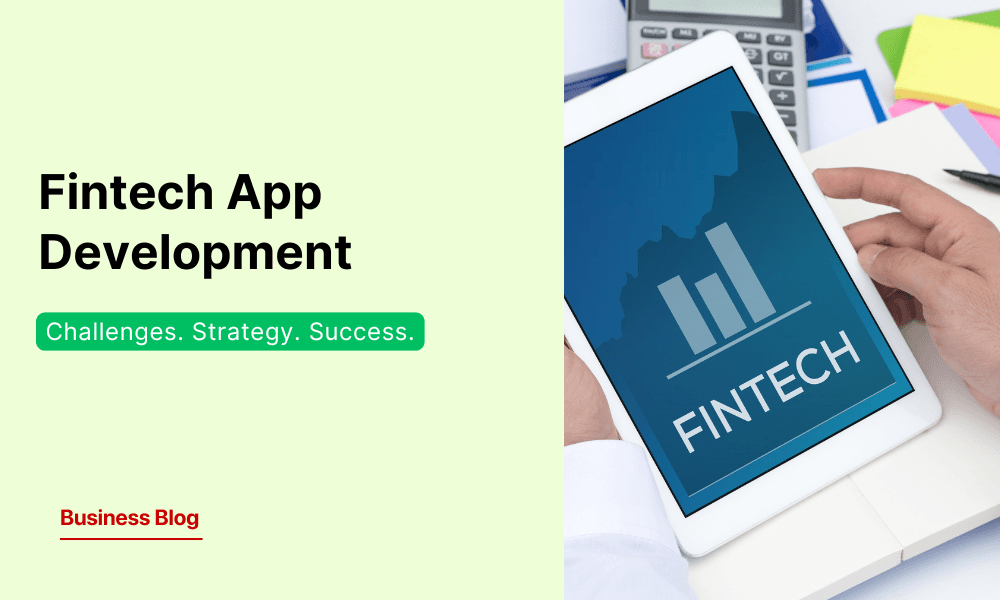

Trust is the currency of fintech, but earning it is harder than ever. The global fintech market is projected to reach $556.58 billion by 2030, yet 90% of fintech startups fail due to poor execution, security flaws, or regulatory hurdles. Financial apps must be secure, compliant, and scalable, yet many struggle with data breaches, complex regulations, and customer retention issues—challenges that can make or break a FinTech product.
This blog explores the biggest roadblocks in fintech app development and the proven strategies businesses can adopt to build secure, high-performing, and regulation-compliant fintech applications.
Key Challenges in Fintech App Development
FinTech app development is fraught with challenges that range from regulatory hurdles to security threats and performance issues. Addressing these complexities requires strategic planning, cutting-edge technology, and a user-first approach.
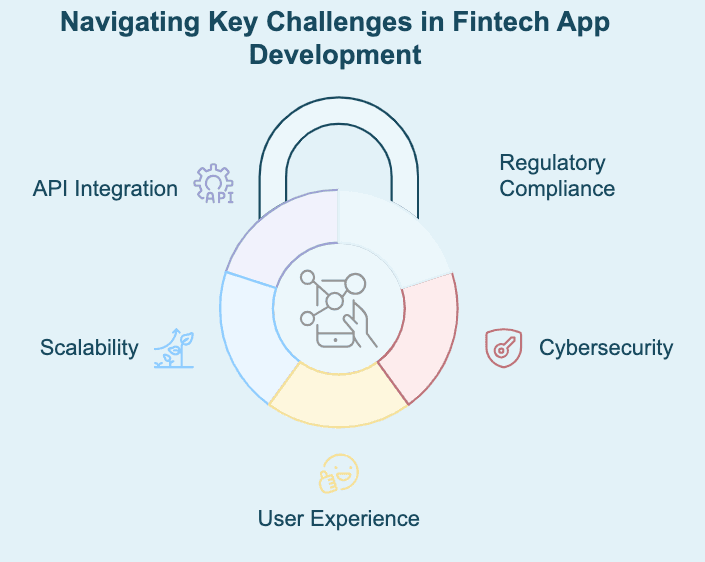
1. Regulatory compliance and legal complexities
Fintech apps operate in a highly regulated landscape, bound by laws such as GDPR, PSD2, PCI DSS, and AML. These regulations differ by region, making compliance a moving target. Failure to meet legal standards can result in hefty fines and reputational damage—just as Revolut experienced when compliance concerns slowed its expansion into new markets. To stay ahead, fintech firms are leveraging RegTech solutions that automate compliance checks and integrate legal frameworks into the development lifecycle, ensuring adherence from day one.
2. Cybersecurity and Fraud Prevention
With cyber threats evolving daily, security remains the foremost concern for FinTech providers. A 2021 breach in Cash App exposed sensitive user data, underscoring the need for a security-first approach. From phishing scams to identity theft, fintech platforms are prime targets for cybercriminals. The only way forward is to build trust through robust security, implementing multi-factor authentication (MFA), AI-driven fraud detection, end-to-end encryption, and Zero Trust Architecture (ZTA) to ensure airtight protection.
3. Seamless User Experience (UX) and Trust-Building
Speed and simplicity are non-negotiable in fintech. Yet, 40% of users abandon apps due to sluggish onboarding and poor UX. Lengthy KYC verifications and complex interfaces create friction, driving users away. Fintech leaders are countering this with progressive onboarding, AI-powered identity verification, and biometric authentication—ensuring a frictionless yet secure user experience that fosters trust.
4. Scalability and Performance Bottlenecks
As fintech platforms scale, performance bottlenecks emerge. Robinhood’s infamous 2020 outage, caused by a surge in trading activity, revealed the risks of an unprepared infrastructure. High transaction volumes, especially during market peaks, can cripple platforms if they lack scalable cloud architectures. The solution lies in microservices-based infrastructure, cloud computing (AWS, Google Cloud), and auto-scaling mechanisms that dynamically adjust to demand.
5. API Integration and Open Banking Challenges
Fintech relies on connectivity, but linking with banks and third-party services can be tricky. Open Banking rules (PSD2) require secure data sharing between banks and fintech apps. This makes secure API frameworks essential. Companies are using API gateways, OAuth-based authentication, and standard frameworks like OpenAPI and FDX. These tools help achieve secure, smooth integrations that meet global standards.
Best Practices & Strategies for Successful Fintech App Development
Success in fintech app development hinges on a foundation of compliance, security, seamless UX, and performance scalability. A well-structured approach ensures resilience in an evolving financial landscape.
- Compliance-First Development: Regulatory requirements should not be an afterthought. Embedding compliance checks directly into the DevOps pipeline ensures adherence from the outset. With global regulations constantly shifting, leveraging RegTech solutions enables real-time monitoring and automated compliance reporting—preventing costly legal setbacks.
- Security at the Core: Fintech apps handle sensitive financial data, making security non-negotiable. Implementing Zero Trust Security (ZTS) eliminates implicit trust within networks, while AI-driven fraud detection helps preempt cyber threats. Blockchain technology further strengthens security by creating tamper-proof transaction records, reducing the risk of fraud and data breaches.
- Personalized & AI-Enhanced UX: A frictionless user experience builds trust and engagement. AI-powered chatbots provide instant customer support, reducing the burden on human agents. Smart transaction categorization and AI-driven spending insights personalize financial management, keeping users engaged and proactive with their finances.
- Performance & Scalability Without Compromise: Fintech apps must remain stable under high transaction loads. Cloud-native microservices architecture outperforms monolithic structures, enabling seamless scaling. Real-time data processing ensures that transactions are executed without lag, even during peak demand.
- AI & ML for Fraud Prevention: Fraudulent activities are constantly evolving, but machine learning models can detect anomalies and flag suspicious transactions in real time. Advanced authentication methods, such as biometric and behavioral analytics, add an extra layer of security, ensuring only legitimate users gain access.
The Road Ahead for Fintech Innovation
As Fintech continues to evolve, success hinges on a foundation of security, compliance, and seamless user experience. Businesses must embrace agile development, AI-powered security, and cloud scalability to stay competitive in this dynamic landscape.
With the right strategy and technology partner, fintech companies can build secure, high-performance applications that foster user trust and drive market growth. GeekyAnts is your trusted partner in fintech innovation—let’s collaborate to create scalable, future-ready fintech solutions that redefine financial technology.