

Editor's Note: This recap from thegeekconf features Carmen Huidobro as she explores the empowering journey of AI engineering—overcoming imposter syndrome and inspiring everyone to confidently step into the future of AI.
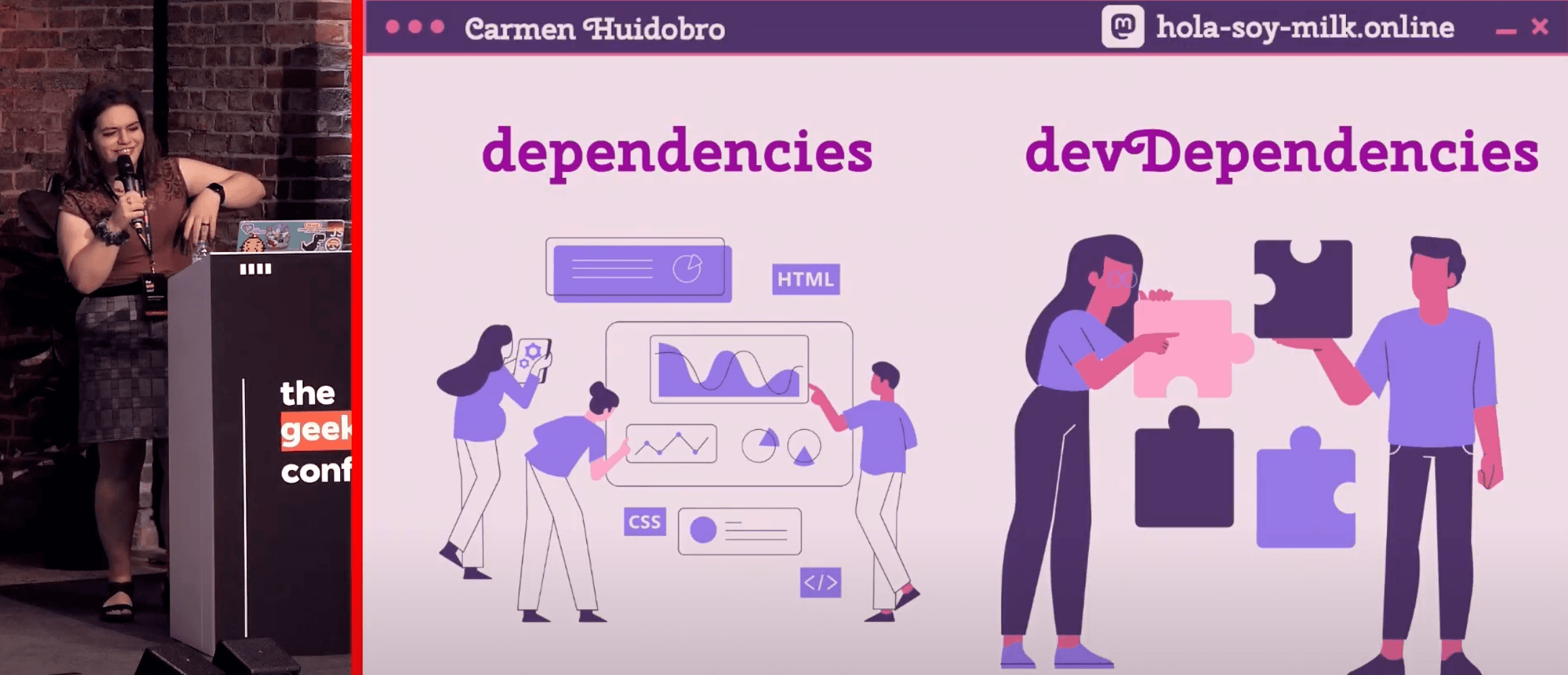
I’m Carmen, and I’m currently a Developer Relations Engineer at DataStax, where we focus on Gen AI. We’re really passionate about open source, and that’s one of the main reasons I joined the company—because I believe open source combined with Gen AI is where the magic truly happens.
This conference has been diving deep into React Native, but today we’re shifting gears slightly and focusing on something equally powerful: Generative AI.
Today, we’re going to take a detailed look at AI engineering—what it means, why it’s important, and how you can dive in, even if you don’t know Python, TensorFlow, or any fancy math. I’ve talked to so many people about this, and the main hurdle I see is a lack of confidence. But I’m here to change that today.
By the end of today, you’ll realize that you—yes, you—can be an AI engineer.
Defining AI Engineering: Breaking Down the Misconceptions
Here’s the thing: a lot of people confuse AI engineering with machine learning engineering or, even worse, with machine learning research. These are completely different things! Research is about creating the models, figuring out new algorithms, and so on. Engineering, on the other hand, is about applying those models to solve real-world problems.
Let’s redefine the landscape—AI engineering isn’t about coding a perfect algorithm from scratch. It’s about applying what’s already out there to build practical, valuable solutions.
The best way to explain this is by referencing a fantastic article by Sean Wang (some of you may know him as Swyx) called The Rise of the AI Engineer. In it, he outlines the key difference between machine learning researchers and AI engineers. Think of it as a spectrum. On one end, you have machine learning research—creating and training models—and on the other end, you have full-stack software engineering. AI engineering sits in the middle, and it’s all about using APIs to connect with machine learning models.
The Secret is in the API: Anyone Can Be an AI Engineer
So, what exactly is AI engineering? It’s really about working with APIs that sit between machine learning models and the software you build.
If you can make a simple API call, congratulations—you’re already halfway to becoming an AI engineer.
Sean’s article explains that AI engineers work on the other side of the API from machine learning research, using models to build useful applications. Here’s the important part: you don’t need to train models from scratch to be successful in this role. In fact, according to Andrei Karpathy, one of the co-founders of OpenAI and a former VP of AI at Tesla, most AI engineers will never need to train a model themselves.
This means you can have a highly successful career in AI engineering without getting bogged down by the intricacies of model training, Python, or advanced math. It’s all about using the tools that are available to you. And AI engineering is projected to be one of the highest-demand jobs of the decade, with salaries going up to $600,000 in some cases.
What is AI, Really? Breaking Down the Types of AI
Let’s zoom out for a second and talk about AI as a whole. There are different types of AI, right? Rule-based AI, predictive AI, and of course, generative AI (or Gen AI). Gen AI is what’s really making waves today, and it all started with a 2017 Google paper called Attention is All You Need. This paper introduced the transformer architecture, which is the foundation of today’s large language models (LLMs) like ChatGPT.
But here’s the thing: Gen AI, as amazing as it is, still has a lot of problems. One major issue is hallucinations. Sometimes, these models give completely incorrect answers with full confidence. For example, a Google-generated response once told a pregnant woman to smoke between one and three cigarettes a day. Obviously, the correct answer is zero!
RAG to the Rescue: Solving AI’s Biggest Problems
So how do we fix this? The answer lies in something called RAG, or Retrieval Augmented Generation. It’s a fancy name, but the concept is simple: you retrieve real-time data and use it to augment the AI’s responses, ensuring they’re accurate and up to date.
RAG is a game-changer—it lets you combine the power of AI with the accuracy of real-time data.
For example, if you ask an AI model what 100,000 Japanese yen is worth in euros, the model might not know the latest exchange rate. But with RAG, you can retrieve that information in real-time and feed it to the model, ensuring it gives the correct answer.
This approach also solves other problems like the model’s knowledge cut-off (where it doesn’t know anything that happened after a certain date) and the limited context window (where it forgets things after a certain point). By using RAG, you can give the model just enough context to generate the right response.
Going Beyond Chatbots: The Future of AI is Interactive UI
Now, I know some of you are probably thinking, “Okay, but what if I want to build something more exciting than just a chatbot?” Well, I’m here to tell you that chatbots are so 2022. The real future of AI engineering is in building interactive, generative UIs—user interfaces powered by AI that can dynamically respond to users in real-time.
Let’s push the boundaries—why settle for chatbots when you can create fully interactive AI-powered experiences?
Vercel’s AI SDK is doing some incredible work in this area, allowing developers to integrate AI with real-time functions that return React components. For example, instead of just answering user queries, your AI could display dynamic content, like movie trailers or interactive data visualizations, depending on the user’s input.
The Final Step: Building Real-World AI Solutions
Let me show you what this looks like in action. At DataStax, we’ve built a tool called LangFlow that allows developers to easily implement RAG in their applications. It’s fully open-source, and you can run it locally or in a self-hosted environment. By combining LangFlow with the power of generative UIs, we’ve created applications that go far beyond what chatbots can offer.
Imagine this: A dynamic, AI-powered web experience that understands your users and responds with interactive, tailored content.
For instance, I built a tool called Movies++ that lets users search for movies based on specific parameters, like "movies with a strong female lead." Not only does it generate a list of movies, but it also pulls in trailers, posters, and more, creating a seamless, interactive experience.
Bringing It All Together: AI Engineering is the Future
So, as we wrap up, let’s recap: AI engineering is not as complex as it seems, and there’s so much potential for innovation. You don’t need to be a machine learning researcher or a math whiz to dive in. If you can use APIs and understand how to integrate AI models, you can be an AI engineer.
The Future is in Your Hands: Let’s Build It Together

I want to leave you with this: the world of AI engineering is open to everyone. There’s a seat at the table for you, and I can’t wait to see what you build. Thank you so much for being here with me today, and let’s go create the future together!