



ChatGPT and Software Development
Ever since ChatGPT took the world by storm, the tech community has been grinding to make generative AI models extremely conversational, intellectual, and loaded with creative capabilities. The results have been sensational — ChatGPT and similar AI-powered tools are now capable enough to write full blocks of code, debug code, write technical blogs, and even poetry. Apps integrated with ChatGPT are also highly intuitive and personalized.
Businesses are leveraging these advantages for faster development and better user experience. Using ChatGPT, dev teams are now shipping apps faster; there are fewer instances of idea limitations, and project timelines are reduced.
But what about Quality Testing(QA)? Can ChatGPT handle the thought process with which an application needs to be evaluated? Is the practice business viable?
This blog will answer these questions through examples. Let us start by evaluating cases where ChatGPT is used as a QA tester.
ChatGPT as QA Tester — What are the Benefits?
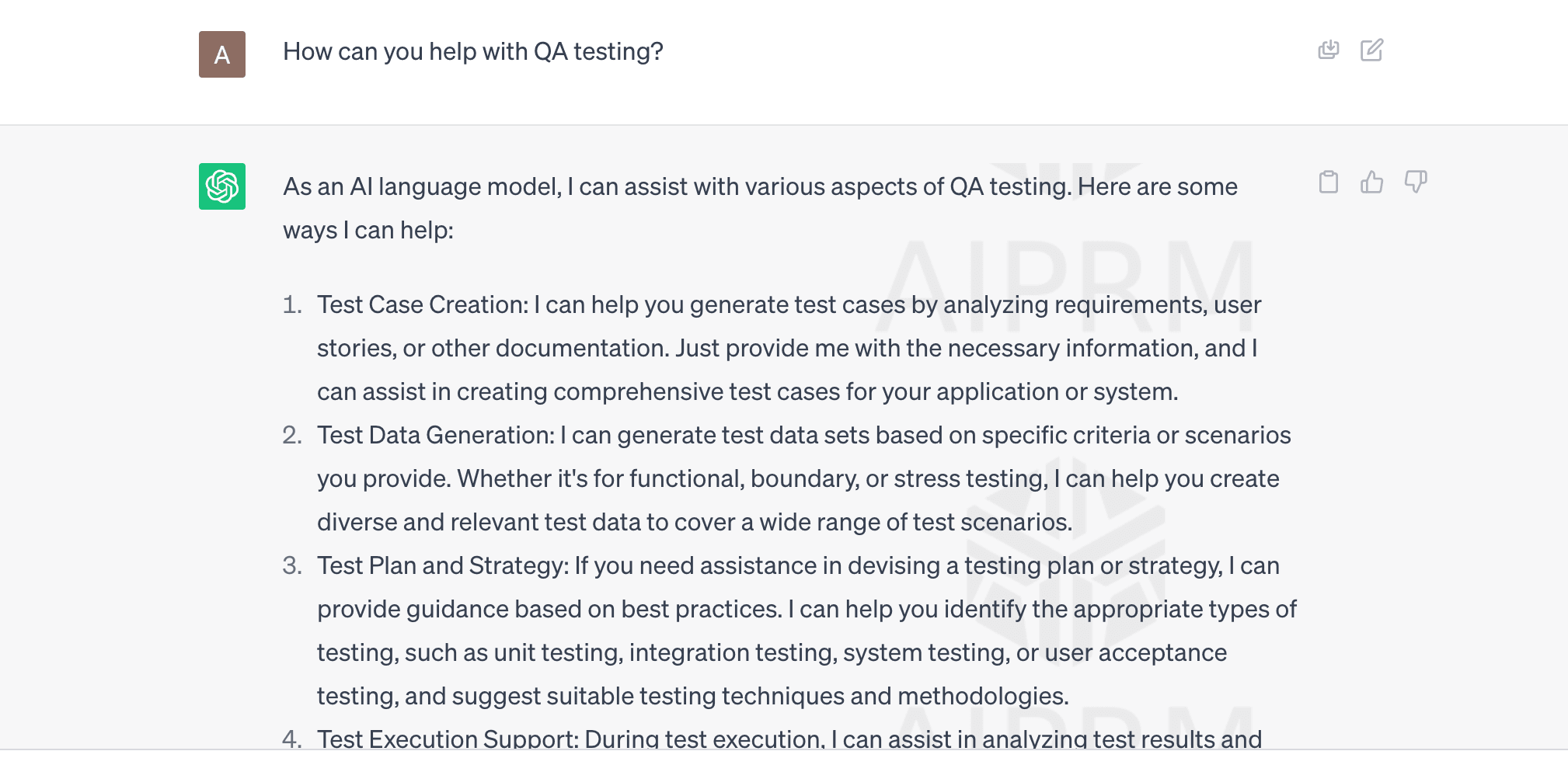
Some of the multiple advantages of using ChatGPT as a QA assistant include test case creation and documentation. Couple these with better turnaround time and scalability, and we have a formidable assistant.
Key Benefits in Detail
ChatGPT can help you write code for test automation quickly and easily. It adapts to different frameworks, languages, and even challenging scenarios that can be difficult for testers to automate. Plus, it ensures code quality and takes care of documentation for you.
- Writing detailed test cases quickly: ChatGPT can create step-by-step instructions that outline the actions to be performed, the expected results, and any preconditions or postconditions for a specific test scenario.
- Increased and Realistic Test Coverage: Code coverage using automated testing can be two or even three times better than that achieved by an actual tester when implemented correctly. ChatGPT can analyze requirements, user stories, or documentation. It helps identify potential test scenarios that might be overlooked. This increases test coverage and ensures a more thorough and realistic testing process.
- Better Scalability Reduces Turnaround Time: ChatGPT can handle high volumes of test cases and test data requests. This makes it ideal for projects with tight deadlines or a lot of testing needs. It can easily work with different project sizes and different software applications.
- Clear Documentation for Future Reference: ChatGPT can serve as a knowledge repository by documenting the generated test cases and test data. This allows for easy retrieval and reference in future testing cycles, promoting knowledge-sharing and consistency in testing efforts.
- Code Analysis and Correction Using ChatGPT: ChatGPT can be used to analyze code, find and fix human errors, and obtain suggestions for code optimization. Developers can get guidance on test automation frameworks, tools, and best practices. They can even fix issues in coding languages they are not very familiar with.
Examples of ChatGPT-assisted QA Testing
ChatGPT can automate several aspects of software testing successfully. Let us take a look at a few examples.
- Test Case Creation: Suppose you are developing a social media application, and you need to create test cases for the registration feature. You provide ChatGPT with the following information:
- User registration requirements: The application should allow users to create an account using their name, email address, and password. The system should validate the email format and ensure that the password meets certain complexity criteria.
- User stories: One user story states that a user should receive a confirmation email after a successful registration. Another user story highlights the need for error handling when users provide invalid or duplicate email addresses.
Based on this information, ChatGPT can generate the following test cases:
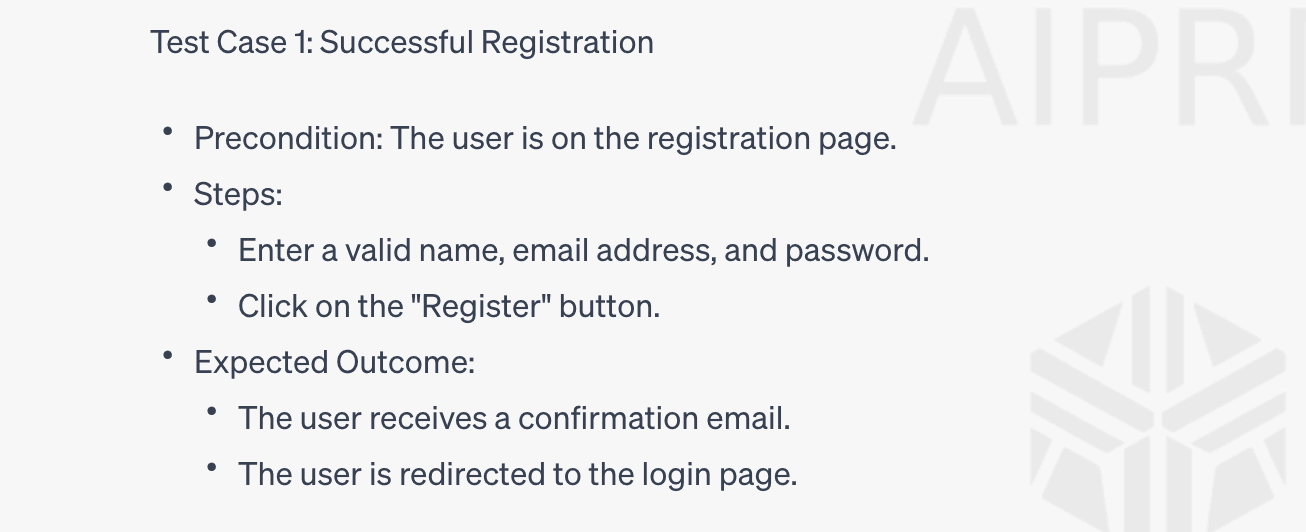
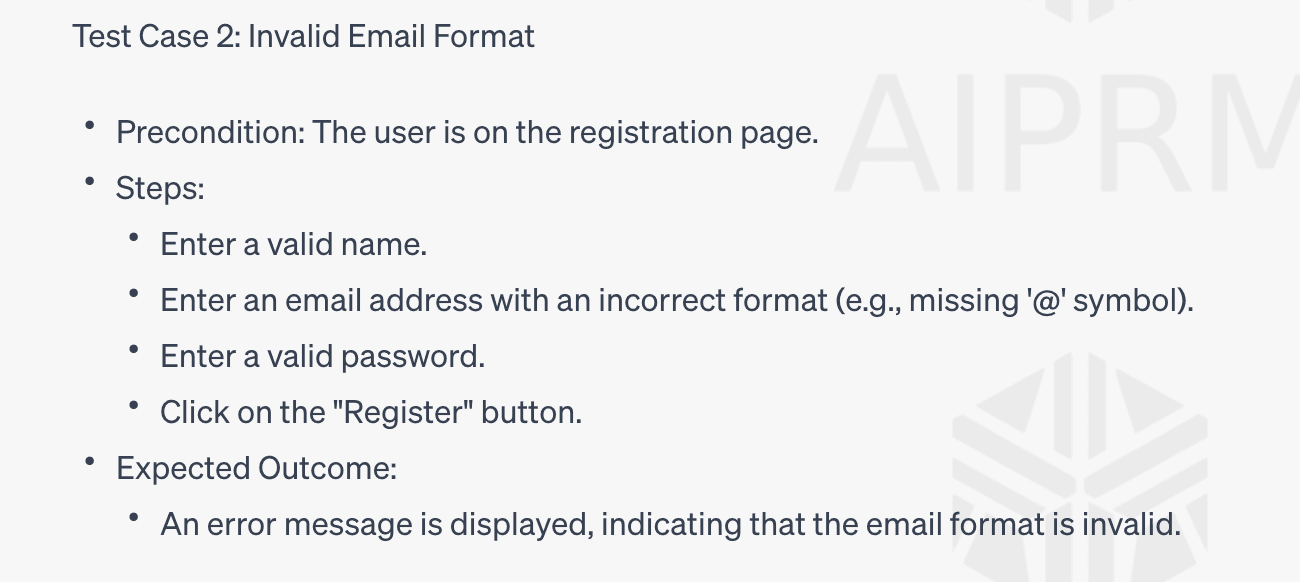
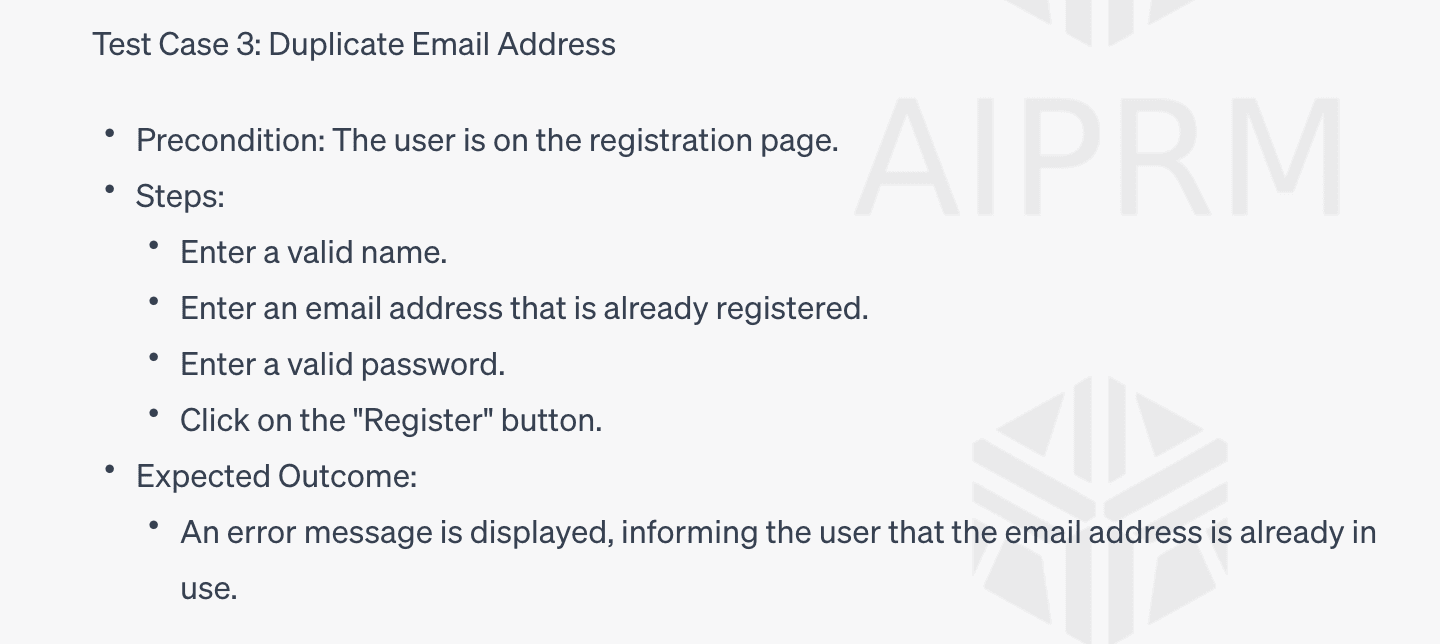
- Generating Test Data in a Programming Language of Your Choice: Let us see how you can use ChatGPT to generate test data for the same example, developing a social media application. You can ask ChatGPT to generate test data for the test case previously mentioned in a language of your choice, for example, Python.
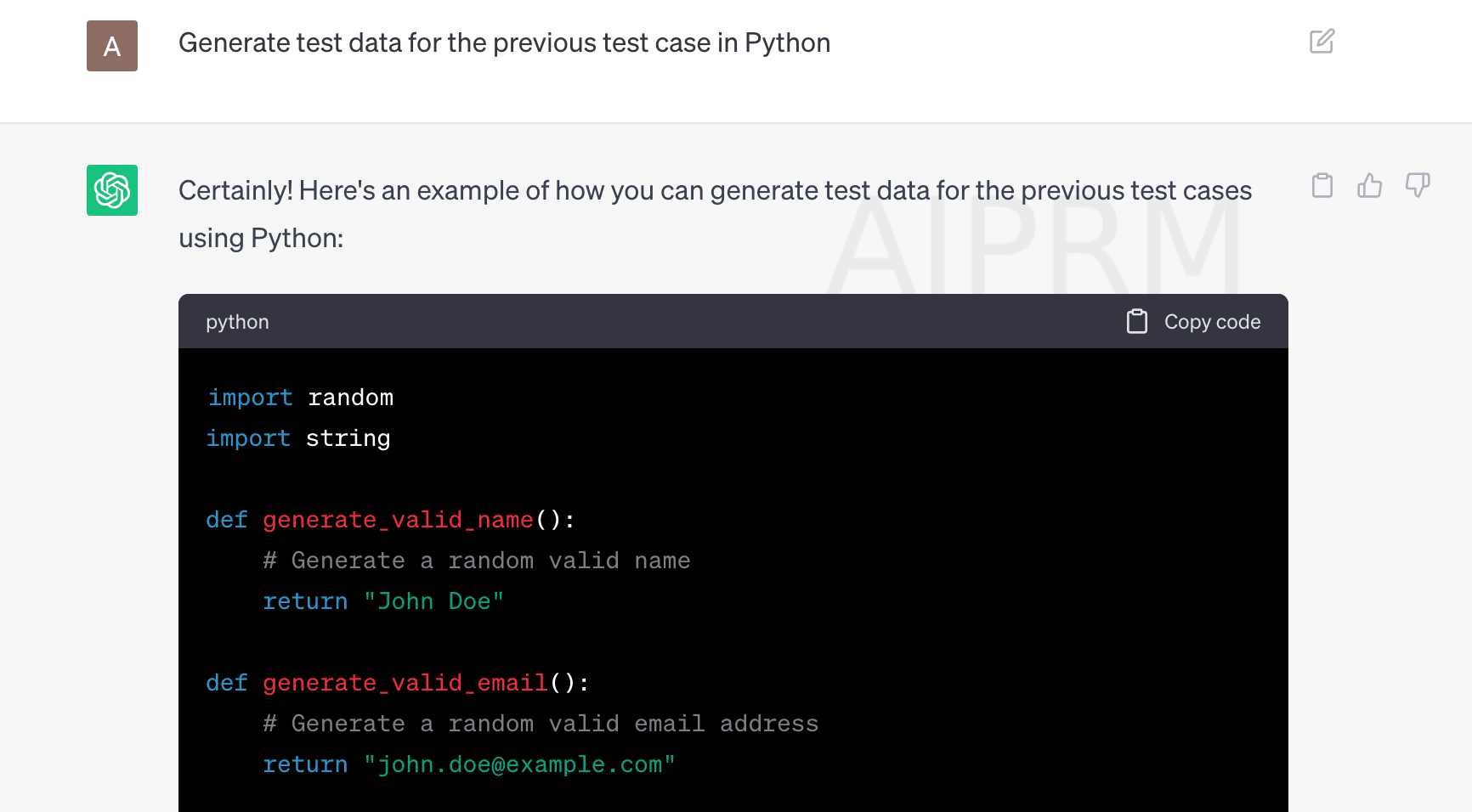
ChatGPT generates a response accordingly, providing the following test data:
import random
import string

def generate_valid_name():
    # Generate a random valid name
    return "John Doe"

def generate_valid_email():
    # Generate a random valid email address
    return "john.doe@example.com"

def generate_invalid_email():
    # Generate an invalid email address without '@' symbol
    return "johndoeexample.com"

def generate_duplicate_email():
    # Generate a duplicate email address that is already registered
    return "existinguser@example.com"

def generate_valid_password():
    # Generate a random valid password with a combination of letters, numbers, and special characters
    password_length = random.randint(8, 12)
    password_characters = string.ascii_letters + string.digits + string.punctuation
    return ''.join(random.choice(password_characters) for _ in range(password_length))

# Generate test data for Test Case 1: Successful Registration
valid_name = generate_valid_name()
valid_email = generate_valid_email()
valid_password = generate_valid_password()

# Generate test data for Test Case 2: Invalid Email Format
invalid_email = generate_invalid_email()
valid_password = generate_valid_password()

# Generate test data for Test Case 3: Duplicate Email Address
valid_name = generate_valid_name()
duplicate_email = generate_duplicate_email()
valid_password = generate_valid_password()

# Use the generated test data in your test cases
# ...
ChatGPT also explains the code and provides additional information:
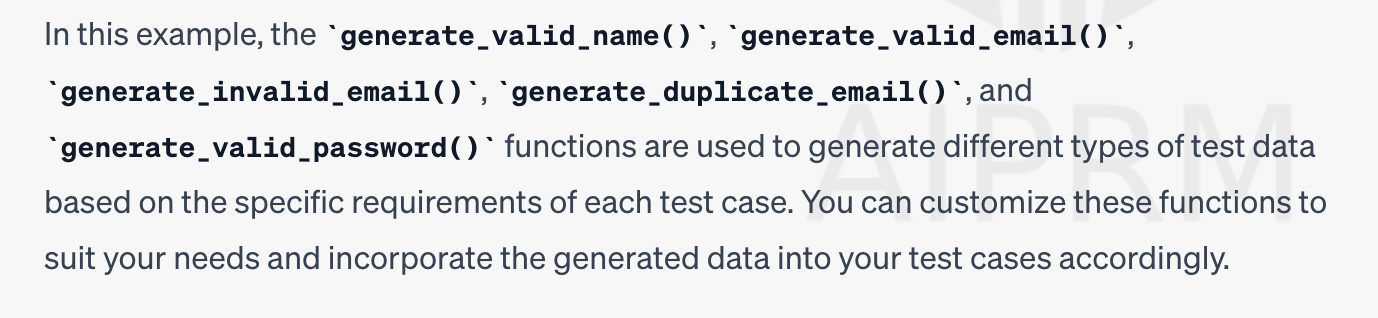
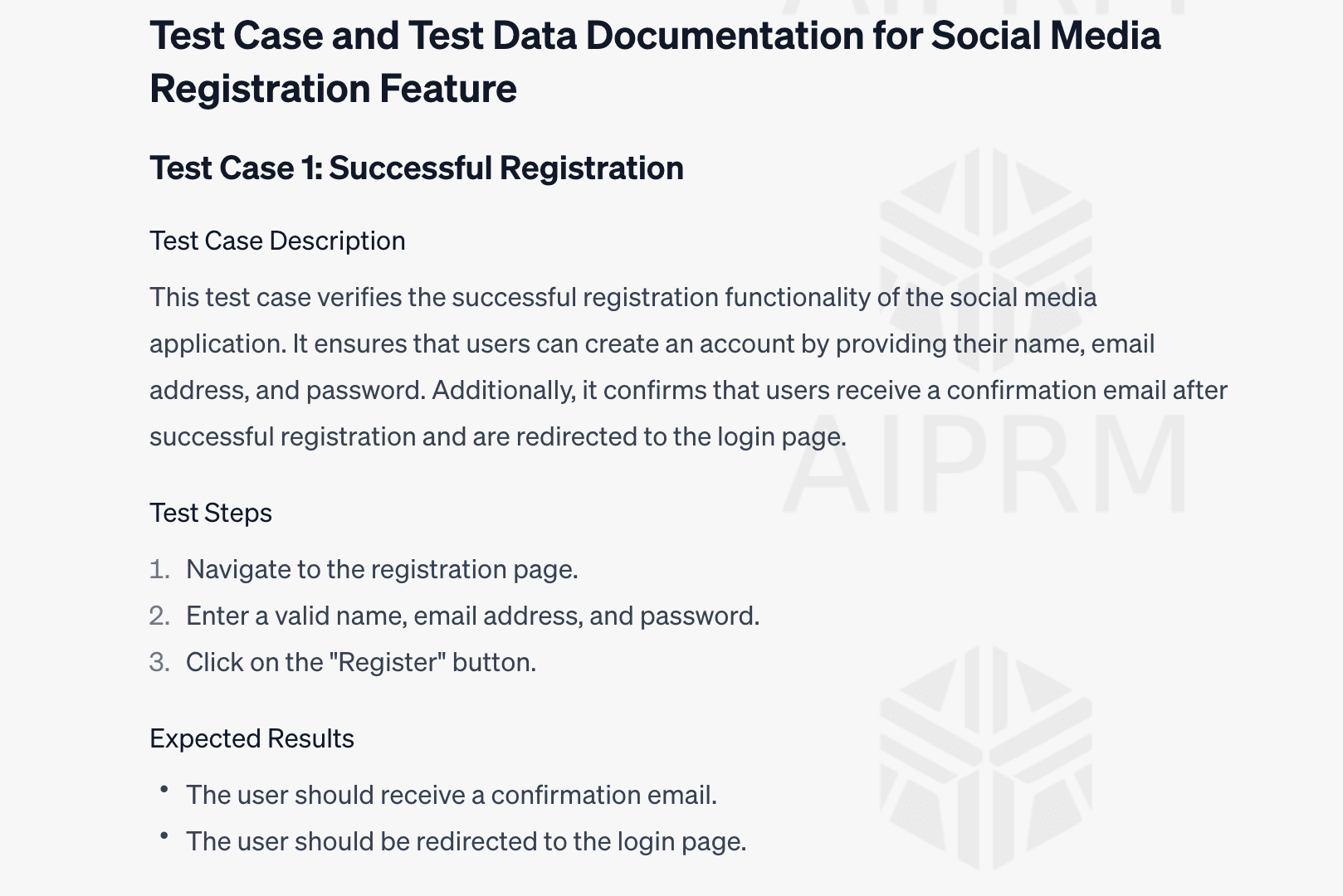
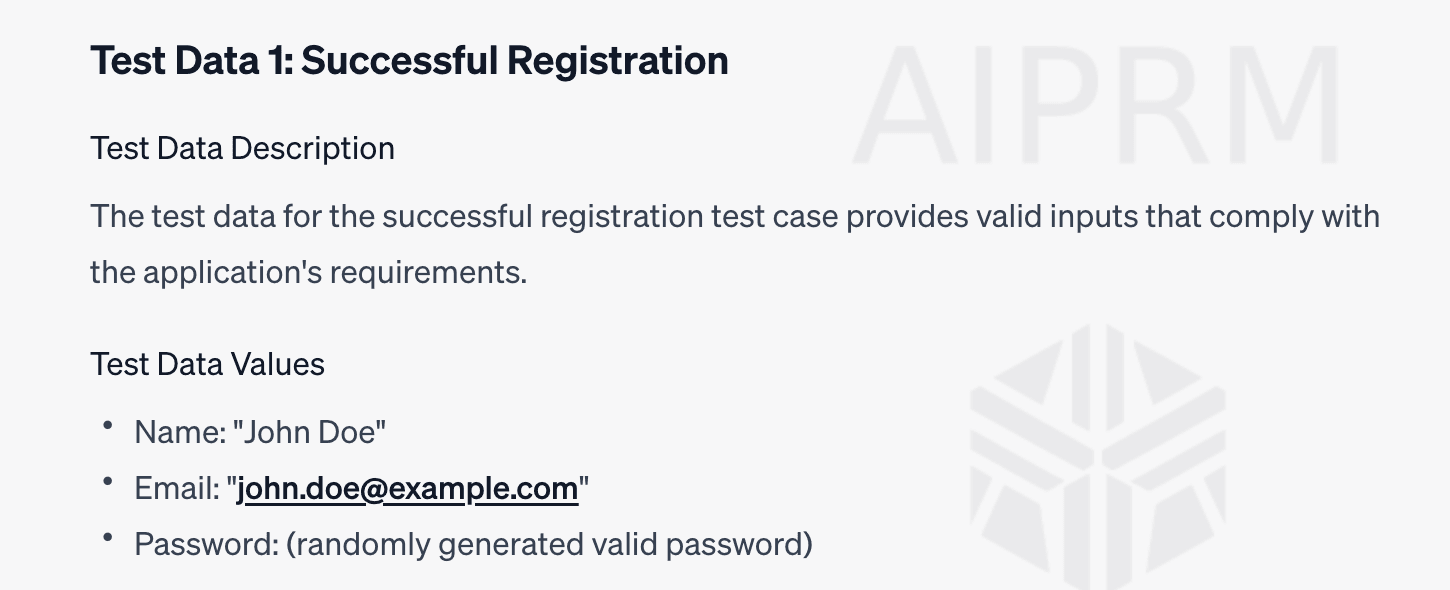
- Generating Documentation for Test Cases and Test Data: Its ability to generate clear explanations allows ChatGPT to provide documentation of the test cases and data mentioned above, describing their purpose, steps, and expected results. In the image below, you can see the documentation for the first test case and data, which was successful registration:
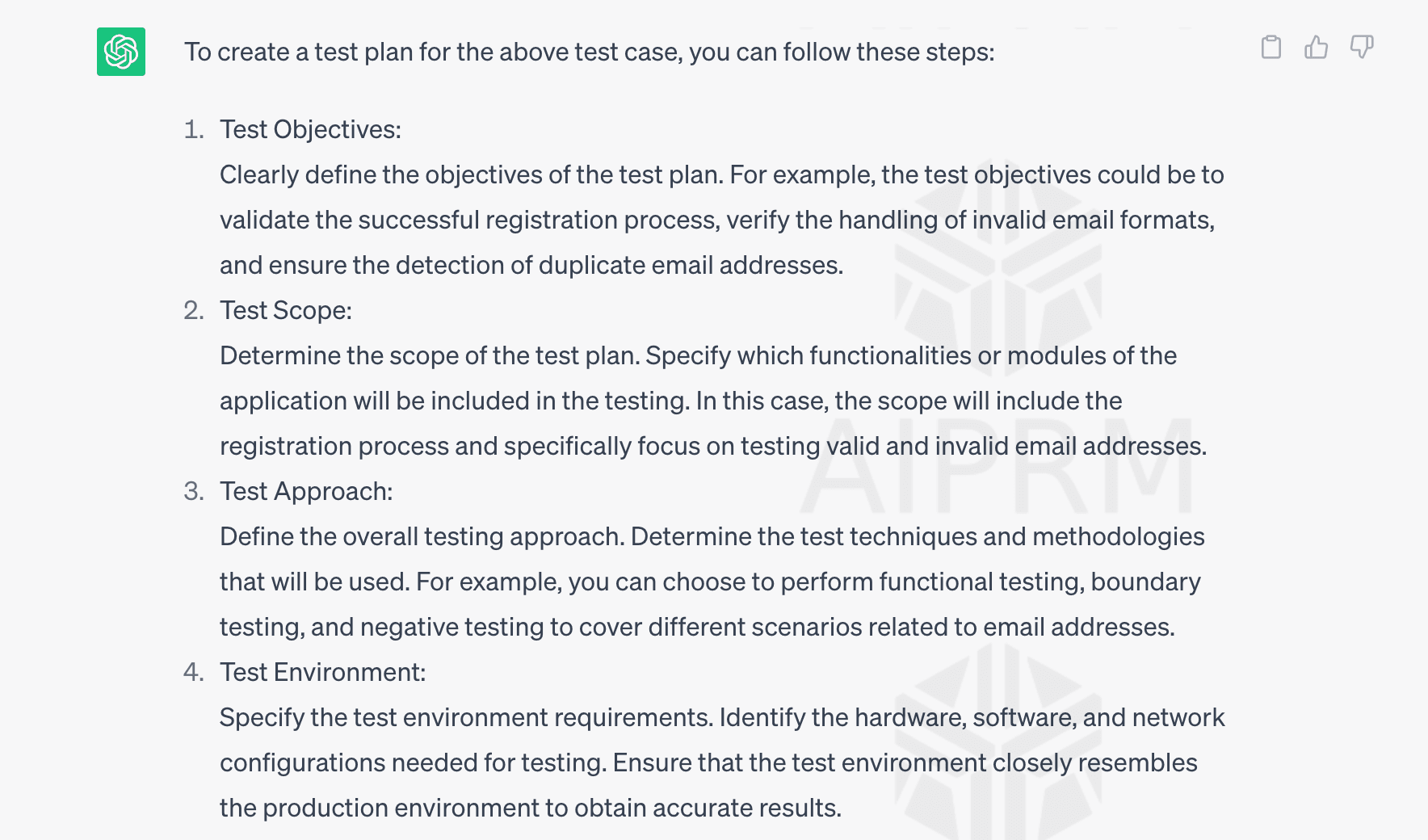
- Generating a Testing Plan Based on Best Practices: As a large language model (LLM) trained on huge amounts of data, ChatGPT is more than capable of creating test plans that are compliant with best practices:
Some Disadvantages of Using ChatGPT for QA Testing
Although ChatGPT does wonders when assisting with software testing, it does have some limitations.
- Lack of Specialized Knowledge: ChatGPT needs to gain specialized knowledge in software testing as a general-purpose language model. It may need help understanding the context of complex queries, leading to incorrect suggestions or answers.
- Fact-checking is Necessary: Since ChatGPT answers are sometimes limited, inaccurate, or even incomplete, validating the data generated is crucial. This may become an additional step for testers.
- Quality of Suggestions Dependent on Training Data: ChatGPT answers are heavily influenced by the data it has been trained on. This limitation can lead to biased or outdated software testing information.
- Lack of Real-time Feedback: ChatGPT operates on a request-feedback basis and, therefore, cannot provide crucial real-time feedback or error detection, which can hamper the timely fixing of issues.
How GeekyAnts is Leveraging ChatGPT
The business implications of using ChatGPT as a QA assistant in software testing are significant. While there are still some challenges to overcome, ChatGPT offers several benefits that can enhance the efficiency and effectiveness of QA processes.
We are experimenting and creating AI-based solutions on a large scale at GeekyAnts, which allows us to provide the most updated software solutions to our partners. Take our work with topgeek, for example. Topgeek is an automated interview platform that is ChatGPT-powered and can automate multiple tasks in the recruitment process.
If you have a specific business goal or a problem statement, we can help you leverage the best of AI and find the best solution. All you have to do is schedule a call with us, and we will reach out to you. CLICK HERE to schedule a call.
