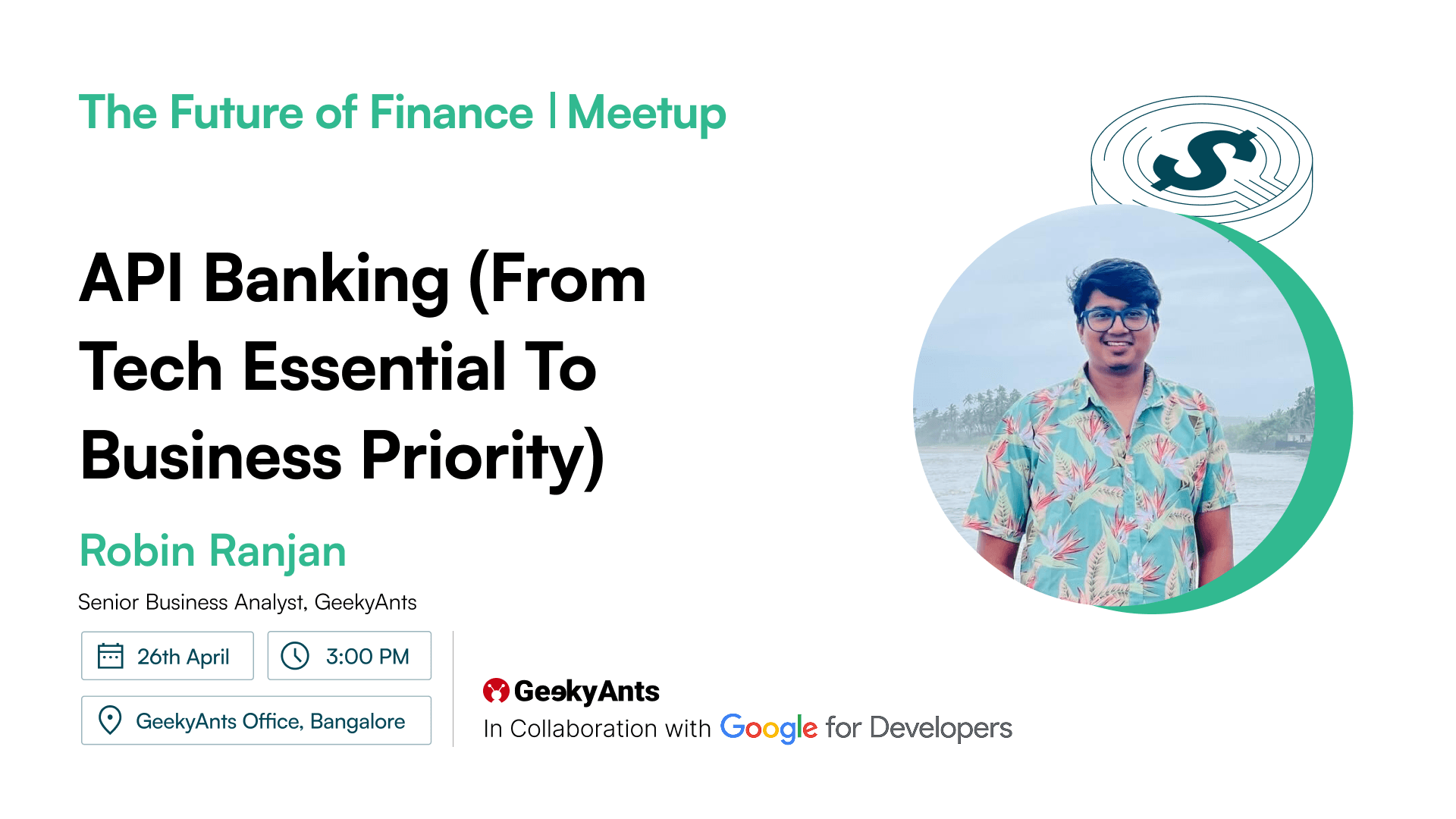

Editor’s Note: This blog is adapted from a talk by Robin Ranjan, Senior Business Analyst at GeekyAnts, delivered during the Future of FinTech meetup at GeekyAnts. In this session, he draws upon his extensive experience in FinTech to demystify the evolving landscape of digital lending.
Hi, I am Robin Ranjan, a Senior Business Analyst at GeekyAnts. I have experience primarily in FinTech projects, which include payment gateways, digital banking, and building loan applications. In today's session, I will explore the critical aspects of digital lending. I will focus on loan products, loan cycles, and compliance requirements in the FinTech sector.
Whether you are a lending professional, an investor, or simply curious about how digital loans work, this session will provide you with a clear understanding of the ecosystem.
Why does this topic matter? The lending space has transformed access to credit, allowing seamless loan approvals and digital disbursements. However, with innovation comes responsibility. It is essential to ensure fair lending practices, regulatory compliance, and robust security to protect both customers and investors.
The agenda for today's presentation will include breaking down different loan products available in the market, understanding the loan cycle from application to repayment, and discussing key regulatory compliances and security protocols required in digital lending.
Loan Products: The Building Blocks of Digital Lending
Digital lending products typically fall into two categories: short-term loans and long-term loans.
- Short-term loans usually range from 6 to 12 months. These are often used for emergency funding, working capital, or educational purposes.
- Long-term loans usually extend beyond three years and are ideal for housing, business expansion, and structured financial planning.
Under these two categories, the most common products include — Personal loans, SME business loans, Educational loans, and Buy Now, Pay Later (BNPL) products
Case Study: Educational Loan Models
Let me present a case study on educational loans offered by digital lending platforms. These platforms design customized schemes based on students' financial needs.
The first model is a short-term monthly repayment plan, designed for a single academic year with a flexible tenure of twelve months. The loan amount equals the institution's fee and is paid directly to the institution. Borrowers receive lower interest rates if the institution partners with the lending platform; non-partnered institutions attract higher rates.
The second model is a long-term financing plan, typically spanning over three years. Loan amounts adjust annually for inflation, while fixed EMIs ensure predictable repayments. Borrowers have the option to foreclose if they relocate or no longer require the loan. To drive profitability, lending platforms offer competitive rates to trusted institutions, generate commissions through partnerships, and structure payouts to secure investor returns.
Loan Lifecycle: From Application to Closure
The loan cycle consists of several well-defined stages:
- Application and Approval:
Borrowers apply via digital platforms. AI-powered risk assessments evaluate creditworthiness based on income, employment, and credit history. Credit limits and loan tenures are determined accordingly. - Disbursement:
Approved loans are disbursed directly to schools, vendors, or borrowers. Investor-backed escrow accounts ensure liquidity. - Payment Cycle:
Monthly EMI payments are automatically deducted via ENACH mandates (Electronic National Automated Clearing House), with real-time transaction tracking for timely payments. - Late Payments and Defaults:
- Outstanding: Active loan with EMI due.
- Overdue: EMI unpaid beyond due date; late fees applied.
- Delinquent: Non-payment for 30+ days; flagged for collection.
- NPA (Non-Performing Asset): 90+ days overdue; may result in legal action.
5. Foreclosure and Prepayment:
Borrowers may repay loans early, though prepayment charges may apply
The Money Trail: How Funds Flow
In digital lending, fund movement follows a clear path. Investors deposit money into an escrow account, from which loans are disbursed to institutions or business partners. Borrowers repay EMIs, which flow back to investors. To safeguard these transactions, AI-powered fraud detection monitors for unauthorized activity, while manual checks handle disputes and suspicious payments.
Compliance & Security: The Backbone of Trust
Regulatory compliance is the foundation of any FinTech platform. The Reserve Bank of India mandates full transparency on interest rates, APRs, and fees, and prohibits increasing credit limits without borrower consent. Borrowers must also have access to a clear grievance redressal system.
KYC and AML protocols require borrowers to complete digital KYC using Aadhaar and PAN, helping platforms prevent identity fraud and money laundering.
Data security is equally critical. Borrower data is protected through AES 256 encryption, transactions are secured with multi-factor authentication, and API access is controlled via OAuth 2.0. Grievances can be escalated to the RBI Ombudsman, with resolutions mandated within thirty days.
Additionally, digital lenders must register under NBFC P2P regulations, report loan performance to credit bureaus, and comply with data privacy laws like GDPR.
Final Thoughts: The Road Ahead for FinTech Lending
Digital lending offers both short and long-term loan products, tailored to meet varied financial needs. The loan cycle moves through multiple stages, balancing flexibility with security. RBI’s regulatory framework ensures fairness, privacy, and protection for borrowers. As the sector evolves, platforms that combine AI-driven risk management, automation, and strict compliance will shape the next wave of FinTech success.