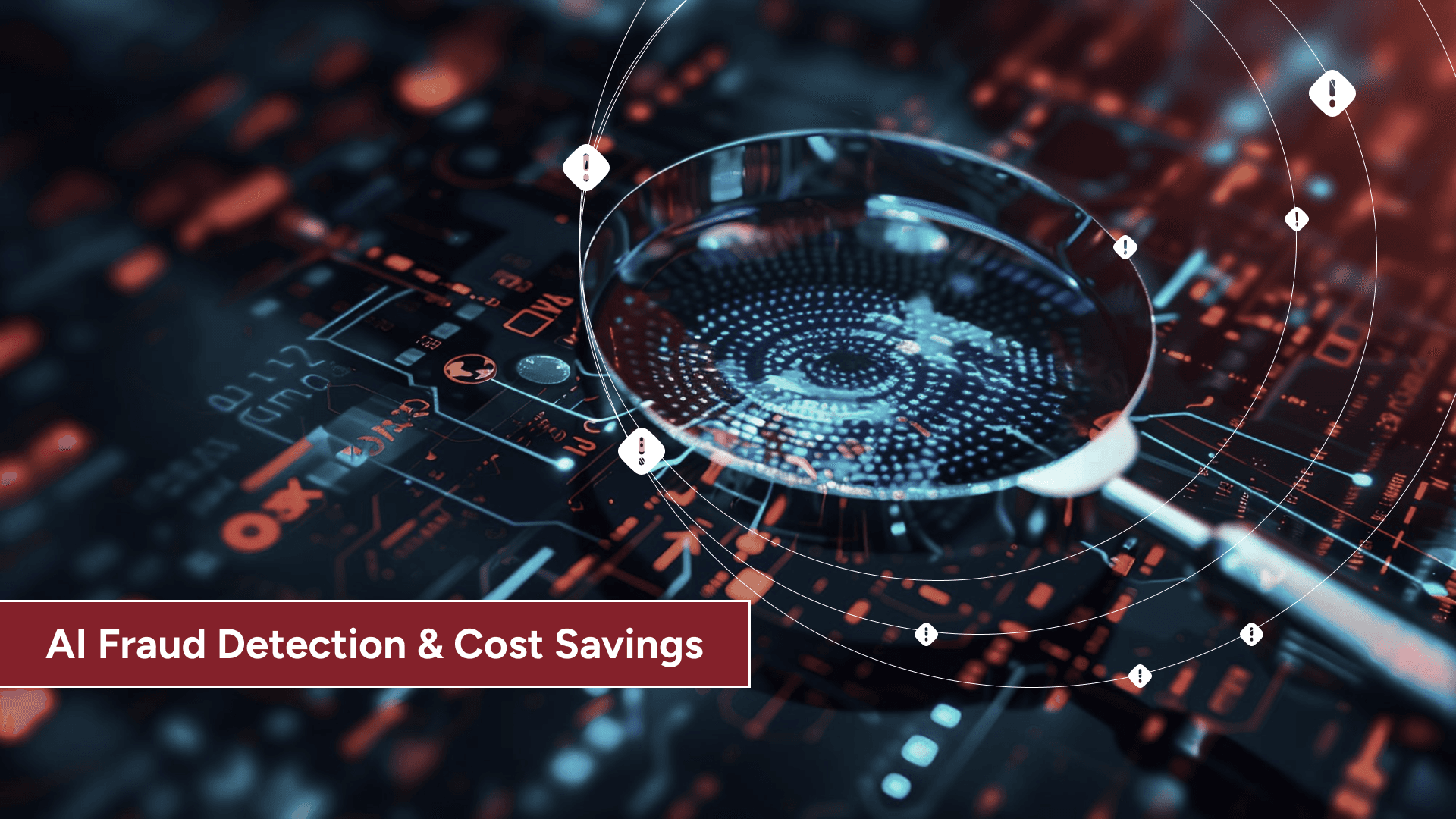

Fraud teams at most financial institutions share a common frustration: the systems built to catch fraud are also blocking good customers, burying analysts in false alerts, and still missing attacks that slip through in new forms. The fraud problem itself has grown harder to ignore. US consumer fraud losses hit $12.5 billion in 2024, a 25% increase year over year per the Federal Trade Commission. Global banking losses from fraud are projected to reach $58.3 billion by 2030. Meanwhile, AI-enabled fraud tactics grew 1,210% between January and December 2025 alone.
Organizations running rule-based fraud detection systems are bearing the sharpest operational impact. Those systems were designed for a threat environment that no longer exists.
The Hidden Cost of Getting Detection Wrong
Most fraud cost conversations focus on what fraud takes in immediate losses. The less-discussed problem is what bad detection costs on both sides of the error.
When a system misses fraud, the financial loss is obvious, but when it flags legitimate transactions, the costs are harder to track and easier to underestimate. LexisNexis Risk Solutions puts the total cost of fraud at $3.75 for every $1 of actual fraudulent activity. A significant share of that figure comes from the operational overhead of manual reviews: analysts working through queues of flagged transactions, most of which turn out to be legitimate. High false positive rates also cause customers to abandon transactions or close accounts, which shows up as revenue loss, and rarely gets attributed correctly.
Rule-based systems compound this problem because they cannot update themselves when fraud patterns shift. Each new attack method requires a manual rule update, which means the detection system is always working from yesterday's picture of fraud.
Where AI Changes the Calculation
Machine learning fraud detection works differently from rules in one foundational way: it builds a model of normal behavior and scores deviations from that model, rather than checking transactions against a fixed list of conditions. That approach handles novelty in a way fixed rules cannot. A fraud pattern with no prior history will still deviate from normal behavior, and the model will catch it.
Institutions that have made this shift have published results worth examining. HSBC's AI fraud system processes 1.35 billion transactions per month, reduced false positives by 60%, and detects two to four times more suspicious activity than the previous system. Review times dropped from weeks to days. The US Treasury's AI-enhanced detection program recovered $4 billion in fraudulent payments in fiscal year 2024, compared to $652.7 million the year before.
Detection speed is another variable worth examining. Traditional detection averages around 72 hours to identify a breach or fraudulent pattern. AI-based systems bring that down to under five minutes. In fraud, that gap is the difference between stopping a transaction and recovering losses after the fact.
The Operational Cost Argument
Most conversations about AI fraud detection stall at the upfront investment. One year into a deployment, the cost picture looks different.
Banks on Visa's AI authorization system have reported a 35% reduction in fraud losses and a 25% drop in manual review costs, because fewer flagged transactions need human attention. Clients of Forter, a fraud prevention platform, report up to a 70% reduction in false declines and roughly a 20% decrease in investigation costs as a result. A 2025 arXiv analysis of machine learning fraud detection deployments found that between loss avoidance and reduced operational overhead, organizations typically recover the technology investment within six to twelve months.
Unlike manual fraud teams, AI systems do not scale in proportion to workload. A human review operation that handles 10 million monthly transactions needs more analysts when that volume doubles. An AI system handles the increase without a corresponding rise in staffing costs, which means the cost-per-transaction falls as the business grows.
Chargeback fees follow the same pattern. Each transaction that goes through as fraud carries downstream costs: the chargeback itself, processing fees, and penalty rates from payment networks when volumes cross certain thresholds. Catching fraud before a transaction completes removes that entire cost chain from the equation.
What Good Implementation Requires
Effective AI fraud detection depends on how well the system is integrated into your existing infrastructure. Off-the-shelf models trained on generic transaction data will underperform on your customer base until they are tuned to your behavioral patterns. Connecting the detection layer to your payment infrastructure, identity systems, and case management tools is what produces a deployment that works in practice.
GeekyAnts works with financial services and fintech teams to build fraud detection systems that fit their existing infrastructure. If your current setup produces too many false alerts, misses emerging attack types, or breaks under transaction volume growth, that is an engineering problem with a defined solution path. Reach out to our team to scope what a more capable detection system would look like for your stack.