
Editor’s Note: To maintain client confidentiality and comply with our NDA, the organization referenced here is whitelabeled.
As part of Pillar Engine, one of our ongoing projects to broaden the AI modernization journey, we at GeekyAnts have been exploring the agentic capabilities available within AWS. The goal extends beyond building conversational assistants. We aim to enable autonomous, task-aware AI systems that can plan, execute, and integrate with our enterprise tools and workflows.
Through this evaluation, two platforms emerged as core to our strategy: Amazon Bedrock, an AWS-managed foundation model platform, and Strands Agents, banking AI-driven process automation agents. Both enable a secure, scalable way to deploy automation that improves speed, reduces manual work, and delivers measurable operational value.
The Full AWS Agentic Ecosystem
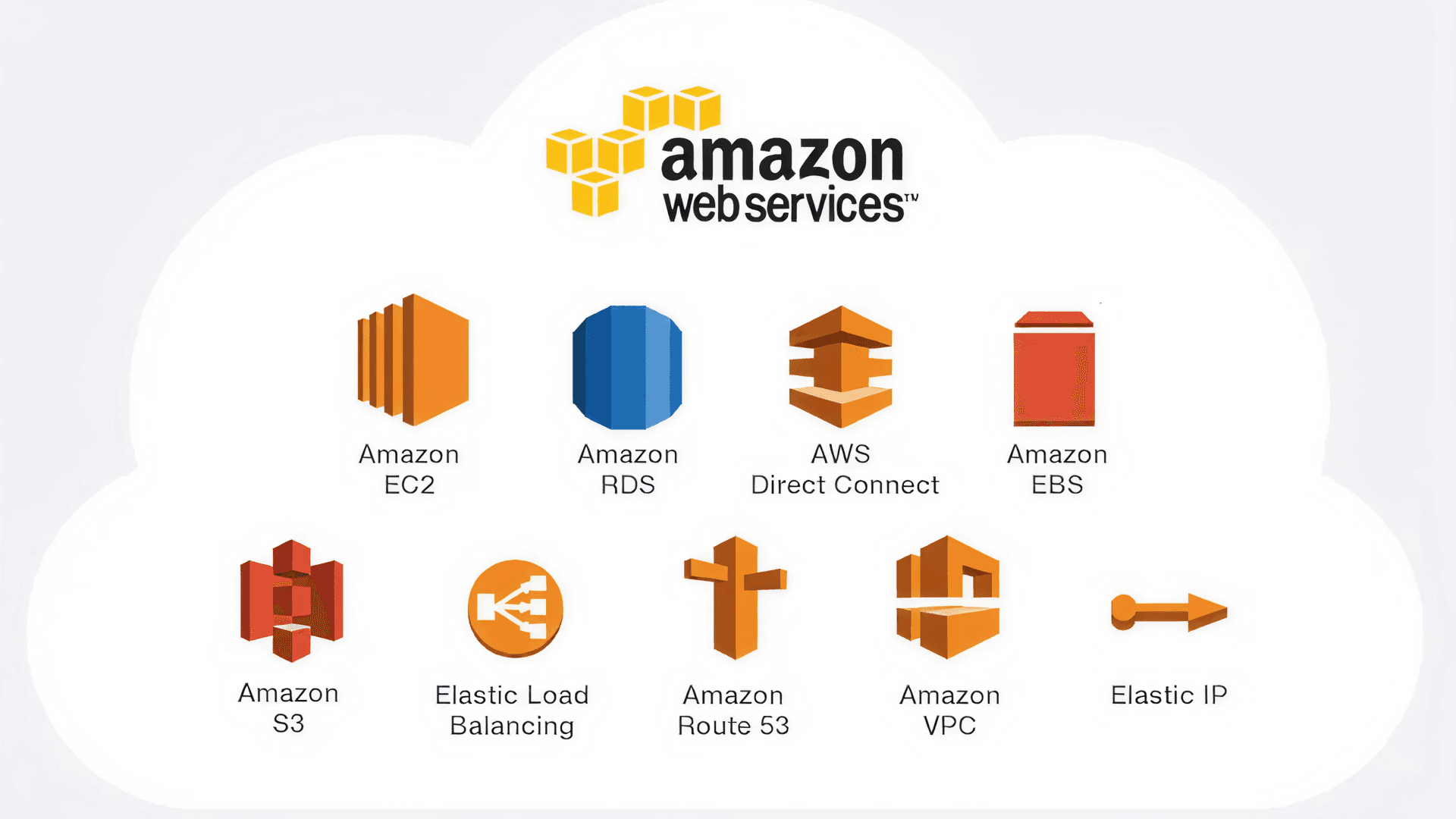
AWS offers multiple agentic tools, each designed for different use cases and technical requirements. Understanding this landscape explains why we selected Bedrock and Strands over other available options.
Foundational Platforms
- Amazon Bedrock: This provides fully managed access to foundation models (FMs) and offers secure runtime, memory, guardrails, and agent orchestration. The platform handles model hosting and complex orchestration without requiring internal infrastructure management.
- Amazon Bedrock AgentCore: This platform provides building blocks for deploying and running AI agents at enterprise scale. AgentCore includes services for secure execution, memory, identity management (IAM-based permissions), and observability.
Developer Tooling and Frameworks
- Strands Agents SDK: This open-source Python SDK builds AI agents with minimal code. Developers define a prompt and a set of tools (APIs, databases); Strands uses the LLM’s reasoning to plan steps, call tools, and reflect on results. It integrates natively with AWS services, allowing teams to transition from a prompt to a production-grade agent quickly.
- Kiro: Kiro is an AI-powered developer IDE and CLI for spec-driven software development. It translates high-level natural-language requests into formal requirements and sequenced implementation tasks. Kiro then invokes AI agents ("hooks") to write code, tests, and documentation for each task.
No-Code/Low-Code Tools
- Amazon Quick Suite: It unifies research, business intelligence, and automation agents into one interface. It provides agents for research, generative BI, and automated workflow building using conversational prompts.
Bedrock And Strands: Why This Combination Became Our Standard
We evaluated all AWS agentic options against Pillar Engine's requirements: enterprise security, multi-step reasoning, API integration, and developer control.
Quick Suite did not meet our needs because it prioritizes business user interfaces over programmatic control. Pillar Engine requires deep integration with internal APIs, databases, and custom workflows. Quick Suite's no-code approach limits the complexity we can build and maintain.
While Kiro serves a different purpose, it focuses on software development automation rather than business process automation. Pillar Engine needed agents that interact with systems, generate reports, and execute workflows.
However, AgentCore provides the necessary infrastructure components, but building directly on AgentCore would require significant custom orchestration logic. Strands Agents SDK sits on top of AgentCore and provides pre-built patterns for planning, reasoning, tool execution, and observability. This reduces our development time while maintaining the enterprise-grade security and scalability that AgentCore provides.
We chose Bedrock and Strands because this combination delivers:
- Secure deployment aligned to enterprise IAM and governance
- Scalable access to multiple best-in-class models without managing infrastructure
- The ability to integrate with APIs, data systems, and internal services
- Reusable and observable automation patterns
- Support for reasoning, planning, and multi-step execution—not only Q&A
This framework enables us to create repeatable agent blueprints that can support multiple business use cases across the organization.
How Bedrock and Strands Function in Our Architecture
Below is a simplified view of what these tools are and how they fit into our approach for Pillar Engine:
Tool | What It Is | How We Use It for the client | Business Value | Comparison to Market Alternatives |
|---|---|---|---|---|
Amazon Bedrock | A fully managed platform for accessing foundation models with secure runtime, memory, guardrails, and agent orchestration. | Bedrock is our core runtime for deploying and operating agents. | Reduced infrastructure overhead, faster deployment, better compliance alignment, and elastic scaling. | Other platforms require model hosting or complex orchestration. Bedrock accelerates production readiness. |
Strands Agents SDK | A framework for planning, reasoning, tool execution, workflow automation, memory, and observability. | We use it to build workflow agents, copilots, reporting agents, and automation pipelines. | 40–60% reduction in development time, reusable patterns, and increased reliability in multi-step automation. | Other frameworks (LangChain, LlamaIndex, ReAct agents) offer tool-calling, but lack enterprise-grade reliability and observability at scale. |
Business Impact of Pillar Engine After Leveraging Amazon Bedrock and Strands Agents
We have altered the Pillar Engine’s approach by leveraging Amazon Bedrock and Strands agents. These tools automate tasks and streamline workflows.
Report Generation Time
Teams previously spent hours or days assembling and validating reports. Bedrock and Strands automate the entire flow. Reports now generate in minutes. This shift shortens cycles and allows teams to redirect time toward analysis and strategy.
Knowledge search and decision support
Teams relied on manual digging through siloed documents and inconsistent data sources. Agents now retrieve information instantly from multiple systems. This eliminates search time and increases decision confidence.
Workflow execution
Processes that relied on sequential, human-driven steps have moved to agents that plan and execute across tools automatically. This reduces delays, removes handoffs, and leads to higher operational efficiency.
Development effort
Instead of building custom components and stitching together fragmented tools, teams can work within a unified agent framework. Reusable components reduce engineering effort and long-term maintenance, making delivery smoother and more predictable.
Pillar Engine has reduced manual effort, streamlined processes, and improved decision-making. Teams focus on higher-value work while agents handle repetitive tasks.
How Does This Position Pillar Engine
The AWS ecosystem aligns seamlessly with Pillar Engine’s needs because its security and governance standards extend naturally into existing AWS operational environments. This makes integration straightforward and reduces friction during the adoption process. As a result, automation became secure, repeatable, and scalable, with the flexibility to evolve in tandem with business needs.
References:
https://aws.amazon.com/quicksuite/research/
https://docs.aws.amazon.com/quicksuite/latest/userguide/quicksight-gen-bi.html